


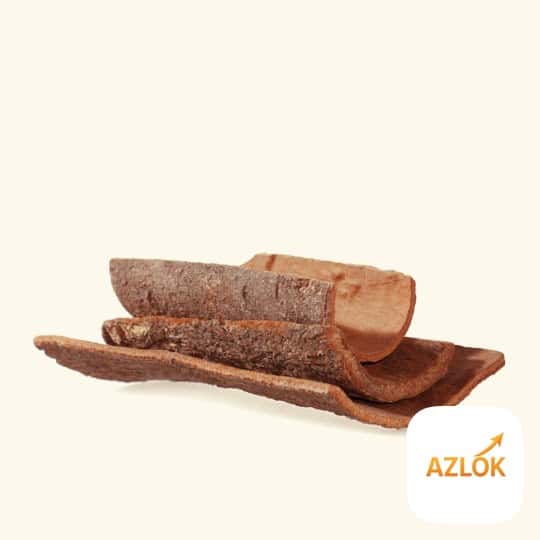
Cinnamon Bark Essential Oil
Minimum Order: 1 units
Description
Cinnamon Bark Essential Oil by Azlok is steam-distilled from cinnamon bark and delivers a warm, spicy aroma widely used in aromatherapy, massage blends, diffuser recipes, and DIY soap or candle making. Available from 100 g to 25 kg to suit personal users and bulk buyers alike.
History & Discovery
Cinnamon comes from the inner bark of trees in the Cinnamomum genus. True cinnamon (Cinnamomum verum) is native to Sri Lanka and parts of southern India. It is one of the oldest traded spices. It was valued in ancient Egypt, Greece and Rome, and Arab and Indian merchants carried it westward while keeping its source closely guarded. In India, dalchini has long been part of home cooking and Ayurvedic practice. From the 16th century, Portuguese and later Dutch traders competed to control the cinnamon trade from Sri Lanka. As steam distillation became more widespread, perfumers and flavourists began extracting oil from the bark to capture its warm, spicy aroma in concentrated form. Today the oil is produced mainly in Sri Lanka and is used in fragrance, flavour and craft work.
Scientific & Medicinal Importance
Cinnamon bark essential oil is a volatile oil obtained by steam distillation of the dried inner bark of the cinnamon tree, usually Cinnamomum verum (also listed as C. zeylanicum). It is a thin liquid, typically pale yellow to reddish-brown, with a sweet, warm, spicy aroma. Its main aromatic compound is cinnamaldehyde, which gives the oil its characteristic scent. Smaller amounts of eugenol, cinnamyl acetate, linalool and beta-caryophyllene are usually present, and the exact profile varies with origin and distillation. The oil does not mix with water but dissolves in alcohol and carrier oils. Cinnamaldehyde is a known skin sensitiser, so the oil is used only at very low dilutions in skin-applied products. Always patch test, use externally only, and consult a doctor if pregnant or on medication. Store it tightly closed in a cool, dark place, as air and light can darken it over time.
Ayurvedic and Traditional Uses
In Ayurveda, cinnamon (Twak or Dalchini) is classified as a warming herb with a pungent and sweet rasa (taste). It is considered to balance Vata and Kapha doshas and is traditionally used to support digestion, circulation, and respiratory comfort. Classical texts such as the Charaka Samhita mention cinnamon as part of aromatic formulations. While traditional Ayurvedic practice uses cinnamon primarily as a whole spice or decoction, the essential oil is a modern concentrated extract and is not the same as the preparations described in classical texts. Use of the essential oil should follow current safety guidelines rather than directly substituting classical Ayurvedic doses.
Modern-Day Applications & Benefits
Cinnamon bark essential oil is widely used in the fragrance and flavour industry, personal care formulations, and DIY crafts. In aromatherapy, it is diffused (highly diluted) to create a warm, grounding ambience, especially in cooler months. It blends well with citrus oils, clove, cardamom, and vanilla. In soap and candle making, cinnamon bark oil is valued for its strong, lasting scent; however, it can accelerate trace in cold-process soap and may discolour some formulations. In candle wax it should be used within safe fragrance load limits. For massage or skincare use, dilution in a carrier oil such as coconut or sweet almond oil at 0.05–0.5% is standard practice. Never apply undiluted cinnamon bark oil directly to skin. Keep out of reach of children. Avoid contact with eyes and mucous membranes. Use in a well-ventilated space when diffusing. Do not ingest essential oils unless under qualified supervision.
Why Azlok's Version is Trusted Today
Azlok
Frequently asked questions
Can cinnamon bark essential oil be applied directly to the skin?
No. Cinnamon bark essential oil contains high levels of cinnamaldehyde, a potent skin sensitiser. It must always be diluted in a carrier oil (such as coconut or sweet almond oil) to 0.05–0.5% before any skin contact. Undiluted use can cause irritation or chemical burns.
What sizes does Azlok offer for cinnamon bark essential oil?
Azlok offers cinnamon bark essential oil in 100 g, 500 g, 1 kg, 5 kg, 10 kg, 20 kg, and 25 kg packs, making it suitable for individual buyers as well as small businesses and bulk manufacturers.
Is cinnamon bark essential oil safe to use in a diffuser?
Yes, when properly diluted. Add 2–4 drops to a diffuser with water and use in a well-ventilated room. Avoid prolonged diffusion and keep children and pets away from the diffused area, as cinnamon oil can be irritating to airways in high concentrations.
Can I use cinnamon bark oil in cold-process soap making?
Yes, but be aware that cinnamon bark essential oil can accelerate trace (cause the soap batter to thicken quickly) and may cause the finished soap to turn brown. Work quickly once you add the oil and test small batches first.
What is the difference between cinnamon bark oil and cinnamon leaf oil?
Cinnamon bark oil is steam-distilled from the bark and has a high cinnamaldehyde content, giving it a stronger, sweeter-spicy scent but also making it a stronger skin sensitiser. Cinnamon leaf oil is distilled from leaves and is higher in eugenol, with a spicier, clove-like aroma and somewhat lower sensitisation risk, though it still requires dilution.
Specifications
How to use Cinnamon Bark Essential Oil
Guides covering uses, dilution, safety and storage.