

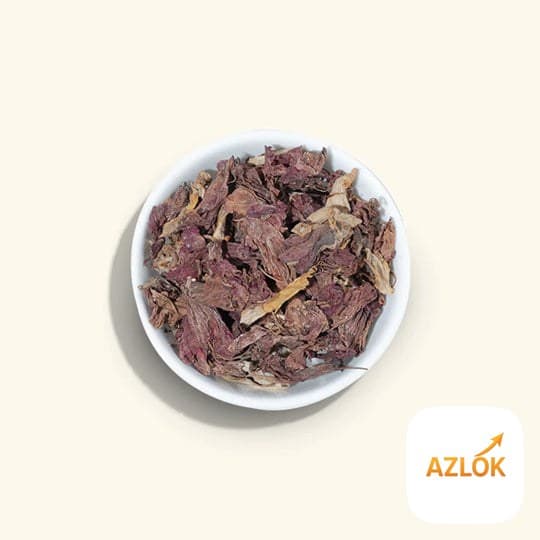

Dried Hibiscus Flower
Minimum Order: 1 units
Description
Dried Hibiscus Flowers (Hibiscus rosa-sinensis) are the whole dried calyces used in herbal teas, ayurvedic preparations, natural dyes, and DIY hair and skin care. Azlok supplies food-grade dried hibiscus in deep red, tangy petals, available from 100 g to 25 kg for home and bulk buyers.
History & Discovery
Hibiscus has been cultivated and used across tropical and subtropical regions for thousands of years. In Egypt, a hibiscus drink called karkade was consumed as far back as ancient times, and the plant spread along trade routes to South Asia, the Caribbean, and West Africa. In India, the red hibiscus (locally called gudhal or jaswand) has a long history of use in religious offerings, folk medicine, and daily hair-care rituals, particularly in Bengali and South Indian households. Dried hibiscus calyces became a significant trade commodity in the 19th and 20th centuries, especially from Sudan, Egypt, and Mexico, and are now cultivated in India's warmer states such as Maharashtra, Tamil Nadu, and Andhra Pradesh. The sour, cranberry-like flavor made hibiscus tea popular globally as a caffeine-free herbal infusion.
Scientific & Medicinal Importance
Dried hibiscus is the dehydrated flower material of the hibiscus plant. The garden red hibiscus is Hibiscus rosa-sinensis, while most tangy hibiscus sold for tea comes from the fleshy calyces of roselle (Hibiscus sabdariffa). Check the pack label to confirm which one you have. Its deep red colour comes from anthocyanins, mainly delphinidin and cyanidin glycosides. Its sharp, sour taste comes from organic acids such as citric, malic and hibiscus acid. It also contains plant fibre, mucilage and small amounts of natural sugars. The pigments are water-soluble and pH-sensitive. Infusions stay bright red in acidic conditions but shift towards purple, blue or dull grey-green as alkalinity rises. This is why hibiscus often browns in cold-process soap. The colour also fades with heat, light and long storage. The dried material absorbs moisture easily, so it keeps best airtight, cool and dark.
Ayurvedic and Traditional Uses
In Ayurveda, the red hibiscus (Japa pushpa) is classified under several classical texts and is associated with the goddess Kali, making it sacred in Bengal and parts of South India. Ayurvedic practitioners have traditionally used hibiscus flower preparations for hair growth, to reduce excess pitta (heat), and to support uterine and menstrual health. The flower is considered madhura (sweet) and kashaya (astringent) in taste with a cooling potency. Hibiscus flower oil and paste have been used topically to condition the scalp, reduce dandruff, and promote hair growth. Internally, flower decoctions are used in classical preparations as a mild laxative and to soothe inflammation. Always consult a qualified Ayurvedic practitioner before using hibiscus therapeutically, especially during pregnancy, as it is traditionally considered an emmenagogue.
Modern-Day Applications & Benefits
Dried hibiscus flowers are used widely today in the food and beverage industry (herbal teas, hibiscus-infused syrups, jams, and coolers), the cosmetics industry (hair oils, shampoos, face packs), and the natural dye industry. The deep red anthocyanins act as a natural colorant for food and fabric. In India, hibiscus-based shampoo bars and hair rinses are popular in the handmade soap and cosmetics community. Azlok's dried hibiscus is food-grade and available in bulk packs (up to 25 kg), making it practical for small businesses, herbal tea blenders, ayurvedic formulators, and candle or soap makers who use hibiscus powder as a natural colorant or botanical additive. Store in a cool, dry, airtight container away from direct sunlight to maintain color and shelf life of up to 2 years.
Why Azlok's Version is Trusted Today
Azlok
Frequently asked questions
Can dried hibiscus flowers be eaten or used to make tea?
Yes. Azlok dried hibiscus flowers are food-grade and safe for making herbal tea, infusions, syrups, and culinary use. Steep 1–2 teaspoons in hot water for 5–7 minutes for hibiscus tea. Avoid boiling for too long as it reduces Vitamin C content.
How do I use dried hibiscus for hair?
Soak dried hibiscus flowers in warm coconut or sesame oil overnight, strain, and apply the oil to the scalp. Alternatively, brew a strong hibiscus tea, cool it, and use as a post-wash hair rinse to add shine and condition the scalp. Always patch-test before applying to the scalp.
Is dried hibiscus safe during pregnancy?
Traditionally, hibiscus is considered an emmenagogue (a substance that stimulates menstrual flow) in Ayurveda and herbal medicine. Pregnant women should avoid consuming hibiscus in medicinal quantities and consult a doctor before use.
What is the shelf life and how should it be stored?
Azlok dried hibiscus flowers have a shelf life of 2 years from the date of manufacture when stored in a cool, dry, airtight container away from direct sunlight and moisture. Exposure to light and humidity will cause the color to fade and reduce quality.
Can hibiscus flowers be used as a natural dye or colorant in soap making?
Yes. The deep red anthocyanin pigments in dried hibiscus act as a natural colorant in soap, bath bombs, and fabric dyeing. Note that hibiscus color can shift to purple or grey in high-pH environments (such as cold-process soap with lye). Test in your specific formulation before large-scale use.
Specifications
How to use Dried Hibiscus Flower
Guides covering uses, dilution, safety and storage.