

Ethylene Diamine Tetra Acetic Acid ( EDTA)
Minimum Order: 1 units
Description
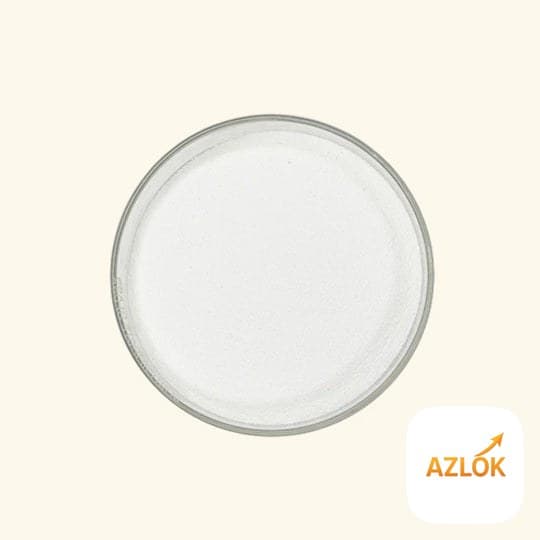
EDTA (Ethylene Diamine Tetra Acetic Acid) is a white, odourless, water-soluble chelating powder used in cosmetics and personal care formulations. It binds metal ions such as calcium, magnesium and iron, preventing them from interfering with product performance. Available in cosmetic grade (99% purity) from Azlok in pack sizes from 100 g to 25 kg.
History & Discovery
EDTA was first synthesised in the 1930s by German chemist Ferdinand Münz as a substitute for citric acid in chelation applications. It was patented and later developed commercially by BASF. Through the mid-twentieth century its ability to bind polyvalent metal ions made it valuable in industrial water treatment, food preservation, and medical chelation therapy. By the 1970s and 1980s cosmetic chemists had adopted EDTA as a stabiliser and preservative booster in personal care products, a role it continues to hold today. In India, EDTA is manufactured synthetically using ethylenediamine, formaldehyde, and sodium cyanide as precursor materials. It is available in several salt forms — disodium, tetrasodium, and the free acid — each suited to different pH requirements and applications.
Scientific & Medicinal Importance
EDTA is a hexadentate ligand — it has six donor atoms (two nitrogen and four carboxylate oxygen atoms) that wrap around a metal ion and form a stable, water-soluble complex. This chelation prevents free metal ions from catalysing oxidative reactions that degrade cosmetic formulations, cause rancidity in oils, or reduce the effectiveness of preservatives. The chemical formula is C10H16N2O8 with a molecular weight of 292.24 g/mol. Azlok's cosmetic-grade EDTA has 99% purity, appears as a white crystalline powder, is odourless, and is readily soluble in water. Its pH in solution is approximately 4.57 and its specific gravity is 1.05 g/ml. The boiling point is reported at approximately 614 °C and flash point at approximately 325 °C, making it stable under normal processing conditions. CAS number: 13235-36-4.
Why Azlok's Version is Trusted Today
Azlok
Frequently asked questions
What is EDTA used for in cosmetics?
EDTA acts as a chelating agent in cosmetic products such as shampoos, creams, lotions and sunscreens. It binds calcium, magnesium and iron ions in hard water, preventing them from reducing lather, causing dullness or degrading the formulation.
What is the recommended usage concentration of EDTA in formulations?
In most cosmetic formulations, EDTA is used at 0.1% to 0.5% by weight. Always follow your specific formulation guidelines and conduct stability testing before finalising a product.
Is this EDTA safe for skin? Are there any precautions?
Cosmetic-grade EDTA is intended for external use only in finished formulations at approved concentrations. Avoid direct contact with eyes; rinse thoroughly with water if contact occurs. Keep out of reach of children. Do not ingest. Wear gloves and a dust mask when handling the raw powder to avoid irritation.
What pack sizes are available and how should EDTA be stored?
Azlok offers EDTA in 100 g, 500 g, 1 kg, 5 kg, 10 kg, 20 kg and 25 kg packs. Store in a cool, dry place in a tightly sealed container away from moisture and direct sunlight. Shelf life is 24 months from the date of manufacture.
What is the difference between EDTA and Tetrasodium EDTA?
EDTA (the free acid form, CAS 13235-36-4) and Tetrasodium EDTA (the fully neutralised sodium salt) are related compounds. The free acid has a lower pH and is less soluble; the tetrasodium salt dissolves more easily and is used where a higher pH is acceptable. The INCI name for the salt form used in cosmetics is Tetrasodium EDTA. Choose the form that suits your formulation's pH requirements.
Specifications
Documents
Safety data sheet not yet published for this product — request one below and we will email it.