


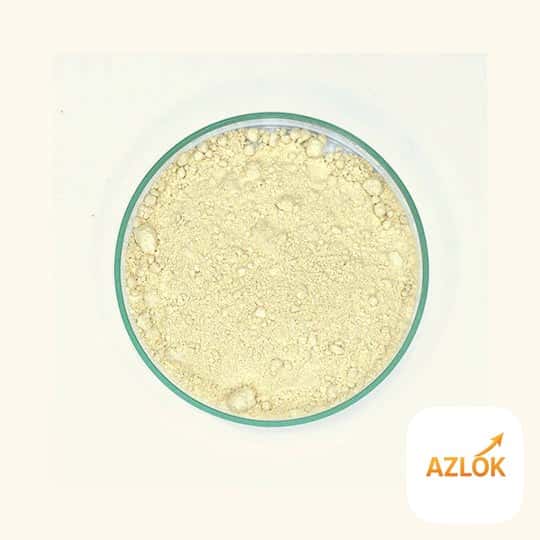
Fenugreek Powder
Minimum Order: 1 units
Description
Fenugreek Powder (Methi Powder) is made from dried, ground fenugreek seeds and is available in edible and cosmetic grade. It is rich in protein, fibre, iron, potassium, and Vitamin C. Used in cooking, hair care, and skin care, it is a versatile herbal powder suitable for home and small-business use.
History & Discovery
Fenugreek (Trigonella foenum-graecum) is one of the oldest cultivated plants, with records of its use dating back to ancient Egypt, Greece, and India. Charred fenugreek seeds have been found at archaeological sites in Iraq dating to around 4000 BCE. In ancient India it was grown both as a food crop and a medicinal herb, and references to it appear in early Sanskrit texts. It spread along trade routes to the Mediterranean, the Middle East, and North Africa, where it became a staple in traditional cuisines and folk medicine alike. In India, fenugreek has been a kitchen essential for millennia. The leaves (methi) are eaten as a vegetable, and the seeds are a core spice in dal, curries, and pickles. Ground fenugreek powder became popular as a convenient form that blends easily into spice mixes, hair masks, and face packs — a tradition that continues today.
Scientific & Medicinal Importance
Fenugreek seeds contain a notable array of bioactive compounds. The primary ones include steroidal saponins (especially diosgenin), galactomannan (a soluble dietary fibre), alkaloids such as trigonelline, flavonoids, and 4-hydroxyisoleucine — an amino acid studied for its role in glucose metabolism. The seeds are approximately 45–50% dietary fibre, 23–26% protein, and contain meaningful amounts of iron, magnesium, potassium, and Vitamin C. Galactomannan gives fenugreek its characteristic gel-like texture when soaked in water, which is why fenugreek paste coats hair strands and skin effectively. Diosgenin is a phytosterol precursor studied in relation to hormonal pathways. Trigonelline contributes to the slightly bitter taste and has been studied for its antioxidant properties. The strong, slightly maple-like aroma of fenugreek powder comes from sotolone, a lactone compound produced during the roasting or grinding of seeds.
Ayurvedic and Traditional Uses
In Ayurveda, fenugreek is called Methi or Medhika and is classified as having a bitter (tikta) and pungent (katu) taste with a heating potency (ushna virya). It is considered to balance Vata and Kapha doshas while potentially aggravating Pitta in excess. Classical Ayurvedic texts such as the Charaka Samhita and Ashtanga Hridayam mention fenugreek as useful for supporting digestion, relieving flatulence, and as a galactagogue (to support milk production in nursing mothers). Fenugreek seed powder has traditionally been used externally in Ayurvedic preparations for scalp care — as a paste applied to reduce hair fall, address dandruff, and condition the scalp. For skin, it has been used in lepa (herbal paste) formulations to soothe inflammation and manage oily skin. Note: Ayurvedic use of fenugreek during pregnancy should only be undertaken under the guidance of a qualified Ayurvedic practitioner, as large amounts may stimulate uterine contractions.
Modern-Day Applications & Benefits
Fenugreek powder is widely used today in three main areas: culinary, hair care, and skin care. In cooking, it is an ingredient in spice blends like sambar powder, curry powder, and panch phoron, and is used in dals, pickles, and parathas. Its slightly bitter note is characteristic of many South and North Indian dishes. In hair care, fenugreek powder is mixed with yogurt, coconut milk, or oils to prepare hair masks. Regular use of such masks is traditionally associated with reducing hair fall and adding shine. In skin care, it is blended into face packs with honey, rose water, or gram flour to address oily skin, mild acne, and dull complexion. Always do a patch test before applying any herbal powder mask to the face or scalp, especially for sensitive skin. Azlok's fenugreek powder is available in sizes from 100 g to 20 kg, making it suitable for home users, salon professionals, and small manufacturers of herbal products.
Why Azlok's Version is Trusted Today
Azlok
Frequently asked questions
How do I use fenugreek powder for hair fall?
Mix 2–3 tablespoons of fenugreek powder with yogurt or coconut milk to form a smooth paste. Apply to the scalp and hair, leave for 30–45 minutes, then rinse with plain water and a mild shampoo. Use once or twice a week. Always do a patch test first if you have a sensitive scalp.
What is the shelf life of Azlok Fenugreek Powder and how should it be stored?
The shelf life is 2 years from the date of manufacture. Store the powder in a cool, dry place away from direct sunlight and moisture. Keep the container tightly closed after each use to prevent clumping and loss of aroma.
Can fenugreek powder be used for a face pack to reduce acne?
Yes. Fenugreek powder can be mixed with rose water or honey and applied as a face pack. Its galactomannan content gives a soothing texture, and its traditional use includes managing oily skin and mild acne. Apply for 15–20 minutes and rinse off. Do a patch test first; discontinue if irritation occurs. This is a topical home remedy — not a medical treatment for acne.
What sizes are available and which is best for a small business?
Azlok Fenugreek Powder is available in 100 g, 500 g, 1 kg, 5 kg, 10 kg, and 20 kg packs. For a small herbal product business or salon, the 5 kg or 10 kg pack offers a good balance of quantity and freshness. Home users typically find the 100 g or 500 g pack sufficient.
What is the difference between edible grade and cosmetic grade fenugreek powder?
Edible grade is meant for cooking, such as spice blends, pickles, dals and parathas. Cosmetic grade is meant only for external use in hair packs, face packs and similar formulations, and should not be eaten. Pick the grade that matches your use and check the label. For skin or hair, do a patch test first and consult a doctor if pregnant or on medication.
Specifications
How to use Fenugreek Powder
Guides covering uses, dilution, safety and storage.