

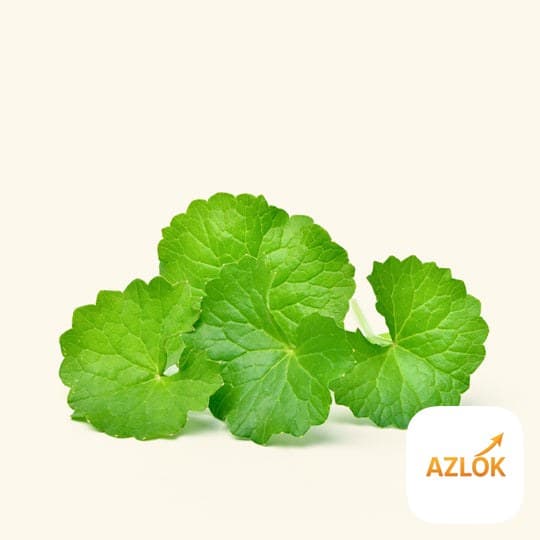

Gotu Kola Liquid Extract
Minimum Order: 1 units
Description
Gotu Kola Liquid Extract (Centella asiatica) from Azlok is a cosmetic-grade herbal extract available in both water-soluble (glycerin-based) and oil-soluble (soy-oil-based) forms. At a 4:1 concentration, it delivers active compounds asiaticoside and madecassoside to support collagen production, skin repair, and soothing in creams, serums, and lotions at 1–2% usage.
History & Discovery
Gotu kola (Centella asiatica) is a small creeping herb with rounded, fan-shaped leaves. It grows in damp, marshy ground across India, Sri Lanka and much of tropical Asia, and in parts of Africa. The name "gotu kola" comes from Sinhala, where it is usually translated as "cone-shaped leaf". In India it is called Mandukaparni in Sanskrit and vallarai in Tamil, and it has been part of Ayurvedic practice for centuries. The plant has also long been eaten. In Sri Lanka the fresh leaves are finely shredded into gotu kola sambol, and in Thailand and other parts of Southeast Asia they are blended into drinks. Its use in skincare grew during the twentieth century, when researchers began isolating its triterpene compounds. Today it is a familiar ingredient in creams and serums worldwide.
Scientific & Medicinal Importance
Gotu kola (Centella asiatica) leaves contain a group of plant compounds called triterpenoids. The best known are asiaticoside and madecassoside, along with asiatic acid and madecassic acid. The plant also contains flavonoids, phytosterols and other minor constituents. These triterpenoids are the compounds most often referred to when gotu kola appears in cosmetic ingredient lists. This liquid extract is made at a 4:1 herb-to-extract ratio. It comes in two carriers. The glycerin-based version is water-soluble. It blends into the water phase of creams, lotions, gels and toners. The soy-oil-based version is oil-soluble. It suits the oil phase, balms and facial oils. As with most botanical extracts, colour and odour can vary slightly from batch to batch. Add it to the cool-down phase rather than heating it for long, and patch test the finished product before regular use.
Ayurvedic and Traditional Uses
In Sanskrit, gotu kola is known as Mandukaparni, often explained as "frog-leaf". The name may come from the plant's love of wet, marshy ground where frogs live. It is described in classical Ayurvedic texts and has been part of Ayurvedic and Siddha practice for centuries. In some parts of India it is called Brahmi, which is also the name of a different herb, Bacopa monnieri. Because of this, the two plants have often been confused in regional use. Outside formal practice, gotu kola is a familiar kitchen green. In Bengal it is eaten as thankuni, and in Kerala it is known as kudangal. In Sri Lanka it is chopped fine for mallung or blended into a green porridge. Today its long traditional use is one reason formulators choose it for herbal-themed skincare.
Modern-Day Applications & Benefits
In contemporary cosmetic formulation, Gotu Kola extract is a well-established active used in anti-ageing serums, scar-repair creams, stretch mark oils, calming moisturisers, and post-procedure skin products. Dermatology literature supports its role in improving skin firmness and reducing the appearance of fine lines through collagen-stimulating activity. It is also increasingly incorporated into products targeting hyperpigmentation, since some studies suggest its compounds help regulate melanin synthesis pathways. The recommended usage rate of 1–2% in finished formulations makes it cost-effective: even the 100 g size from Azlok is sufficient for several kilograms of finished product. The extract is free from gluten, artificial colour, heavy metals, and fertilisers and has a two-year shelf life when stored in a cool, dry place. Formulators should note that the oil-soluble version (soy oil base with BHT) is not suitable for people with soy allergies in leave-on products, and should be disclosed appropriately on finished product labels.
Why Azlok's Version is Trusted Today
Azlok
Frequently asked questions
What is the difference between the water-soluble and oil-soluble versions of this Gotu Kola extract?
The water-soluble version is extracted using vegetable glycerin (palm-derived), making it suitable for water-phase formulations like toners, serums, and gel-creams. The oil-soluble version uses soy oil as the solvent and contains BHT as a preservative, making it compatible with oil-phase products such as facial oils, balms, and anhydrous creams.
What percentage of Gotu Kola extract should I use in my formulation?
Azlok recommends using this extract at 1–2% in finished formulations. At a 4:1 concentration, this level is sufficient to deliver the active compounds asiaticoside and madecassoside effectively without causing skin sensitivity.
Is this extract safe to use directly on the skin without dilution?
No. Like most concentrated herbal extracts, this product should not be applied undiluted to the skin. It is a cosmetic raw material intended for use in finished formulations at 1–2%. Always incorporate it into a complete formula and perform a patch test on the finished product before full use.
What types of products can I make with Gotu Kola Liquid Extract?
It is commonly used in anti-ageing creams and serums, scar and stretch-mark treatments, calming face masks, moisturising lotions, under-eye gels, and post-procedure skin-repair products. Both the glycerin-based (water-soluble) and oil-based versions can be incorporated depending on your formulation type.
How should I store Gotu Kola Liquid Extract and what is its shelf life?
Store in a cool, dry place away from direct sunlight and heat. Keep the container tightly sealed when not in use. The shelf life is 2 years from the date of manufacture under recommended storage conditions. Keep out of reach of children and avoid contact with eyes.
Specifications
How to use Gotu Kola Liquid Extract
Guides covering uses, dilution, safety and storage.