

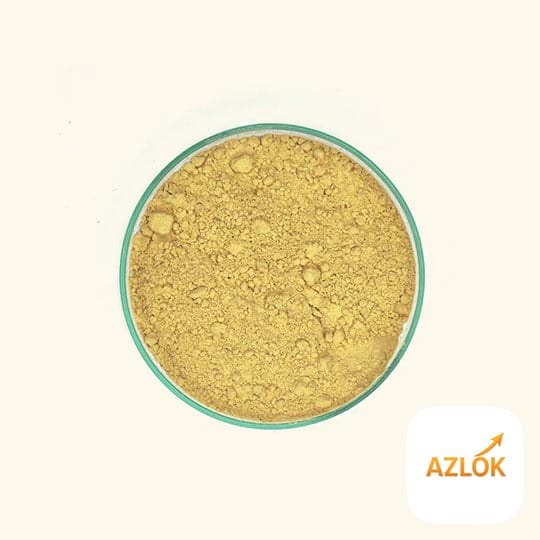

Haritaki Powder
Minimum Order: 1 units
Description
Haritaki Powder is made from dried fruits of Terminalia chebula (Indian walnut) and is a staple in Ayurvedic medicine. It is used for skin exfoliation, reducing acne and dark spots, scalp nourishment, dandruff control, and general herbal wellness. Available in food and cosmetic grade from Azlok in packs from 100 g to 25 kg.
History & Discovery
Haritaki (Terminalia chebula) is one of the oldest documented medicinal plants in India. It is the first of the three fruits in Triphala, the classical Ayurvedic formulation, the other two being Bibhitaki and Amalaki. References to haritaki appear in the Charaka Samhita and Sushruta Samhita, ancient Ayurvedic texts compiled over two thousand years ago. The fruit was traded along early spice and medicine routes across South and Southeast Asia, and it also holds a prominent place in Tibetan medicine, where it is depicted in the hand of the Medicine Buddha. In India the tree grows widely across the sub-Himalayan foothills, Central India, and parts of South India, and the dried fruit has been collected and powdered for household and commercial use for centuries.
Scientific & Medicinal Importance
Haritaki powder is made by drying and grinding the mature fruit of Terminalia chebula, a deciduous tree found across India and much of South Asia. The fruit is also called chebulic myrobalan. The powder is usually light brown to yellowish-brown, with a faint earthy smell and a strongly astringent, slightly bitter taste. Most of its character comes from hydrolysable tannins, especially chebulinic acid and chebulagic acid, along with gallic acid and ellagic acid. These tannins cause the dry, puckering feel on the tongue and are why myrobalan fruit has long been used in leather tanning and as a mordant in natural textile dyeing. The fruit also contains sugars, small amounts of fixed oil and other plant compounds. The powder does not dissolve in water but disperses into a paste or brown infusion.
Ayurvedic and Traditional Uses
In Ayurvedic texts, haritaki is known by several Sanskrit names, including Abhaya and Pathya, and is given a place of particular respect among plants. Classical descriptions say the fruit carries five of the six tastes recognised in Ayurveda, missing only salty, with astringency (kashaya) being the most prominent. The texts also describe several varieties of the fruit, distinguished by shape, colour and the region where it grows. In Indian households, haritaki has been part of daily routines for generations, usually as a powder taken in small amounts or combined with other herbs. It has also gone into traditional hair packs, herbal tooth powders and ubtan-style face mixes. Anyone planning to use it as part of an Ayurvedic routine should consult a qualified practitioner first, especially if pregnant or on medication.
Modern-Day Applications & Benefits
In modern cosmetic formulations, haritaki powder is used as a natural exfoliant, in face masks, and in herbal hair packs. Its astringent and antioxidant properties make it suitable for oily and acne-prone skin types. It is incorporated into shampoos, hair oils, and scalp treatments targeting dandruff and hair fall. In the food and nutraceutical industry, haritaki is available as churna (powder) and capsules for digestive support. Azlok supplies haritaki powder in both small packs (100 g) for home use and bulk quantities up to 25 kg for manufacturers, cosmetic formulators, Ayurvedic clinics, and food supplement brands. The product is dual-grade (food and cosmetic), making it versatile for multiple applications. Store in a cool, dry place away from moisture and direct sunlight; shelf life is two years from manufacture.
Why Azlok's Version is Trusted Today
Azlok
Frequently asked questions
Can Haritaki Powder be used directly on skin?
Yes. Mix a small amount of haritaki powder with water, rose water, or honey to form a paste and apply to clean skin. Leave for 10–15 minutes, then rinse. Always do a patch test on your inner arm first, as the astringent tannins can cause dryness or irritation in sensitive skin.
Is this Haritaki Powder food-grade and safe to consume?
Azlok's haritaki powder is dual-grade (food and cosmetic). For internal use, it is traditionally taken in small quantities (typically 3–5 g) mixed with warm water or honey. Pregnant women, nursing mothers, and individuals with chronic illness should consult a doctor before consuming it regularly.
What pack sizes are available and what is the shelf life?
Haritaki Powder from Azlok is available in 100 g, 500 g, 1 kg, 5 kg, 10 kg, 20 kg, and 25 kg packs, making it suitable for individual buyers as well as bulk manufacturers. Shelf life is two years from the date of manufacture when stored in a cool, dry place.
Can haritaki powder be used in Triphala preparations at home?
Yes. Traditional Triphala churna is made by mixing equal parts of haritaki, bibhitaki (baheda), and amalaki (amla) powders. The standard ratio is 1:1:1 by weight. Home preparation is possible, but sourcing each ingredient from a reliable, food-grade supplier like Azlok ensures quality and hygiene.
Can haritaki powder be used for natural dyeing of fabric?
Yes. Haritaki (myrobalan) is a traditional tannin source in Indian natural dyeing and block printing. Simmered in water, it is used as a mordant or pre-treatment on cotton, helping dyes like madder or indigo bind evenly. On its own it gives pale yellow tones, which turn grey or black with iron. Test on a small swatch first.
Specifications
How to use Haritaki Powder
Guides covering uses, dilution, safety and storage.