

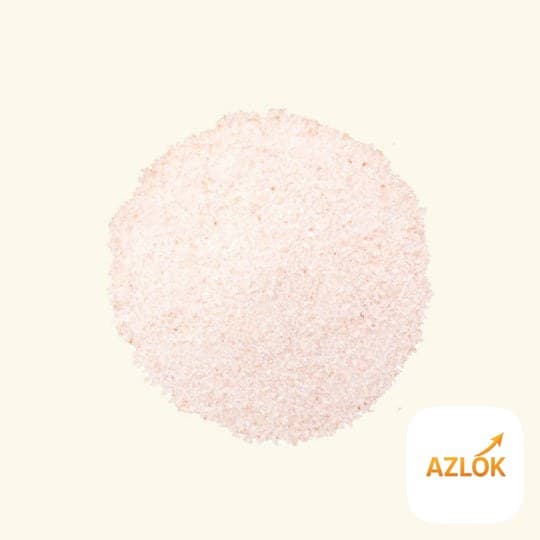

Himalayan Salt
Minimum Order: 1 units
Description
Himalayan Salt (Pink Himalayan Salt) is a minimally processed rock salt mined from ancient sea-bed deposits in the Himalayan region. Rich in trace minerals including potassium and magnesium, it is widely used as a cosmetic-grade ingredient in scrubs, bath soaks, hair care, and skincare formulations.
History & Discovery
Himalayan salt is mined from the Khewra Salt Mine in Pakistan-administered Punjab and from deposits along the broader Himalayan belt, including the Indian side. These deposits formed approximately 250 million years ago when ancient shallow seas evaporated and their mineral-laden waters were buried under layers of rock and ice. The salt remained protected from modern pollution for millennia, which is why it is often described as one of the less-processed mineral salts available today. Traditionally, communities in the Himalayan foothills used this pink rock salt for food preservation, cooking, and basic wound care long before it entered the global wellness and cosmetics market.
Scientific & Medicinal Importance
Himalayan salt is chemically sodium chloride (NaCl, CAS 7647-14-5) with trace amounts of minerals such as potassium, magnesium, calcium, and iron oxide — the last giving it its characteristic light-peach to dark-peach colour. The exact mineral content varies by deposit and batch. In cosmetic applications, the salt works as a physical exfoliant: its granules mechanically remove dead skin cells when used in scrubs, improving surface texture. Its hygroscopic nature also means it draws moisture, which is why it is a popular ingredient in bath soaks and mineral-rich foot scrubs. The osmotic properties of concentrated salt solutions can help cleanse pores and temporarily firm skin surfaces, though these are mechanical and physical effects rather than pharmacological ones.
Ayurvedic and Traditional Uses
In Ayurvedic texts, saindhava lavana (rock salt) is considered one of the most sattvic and easily digestible of the five classical salts. It is categorised under the kshara group and is described as having deepana (digestive stimulant) and pachana (digestive) properties. Ayurvedic practitioners have traditionally used saindhava lavana in abhyanga (oil massage) preparations, nasya (nasal therapy) formulations, and as a gentle cleansing agent in oral hygiene. While Azlok's Himalayan Salt is supplied as cosmetic grade and is not intended as an Ayurvedic medicine, its identity as saindhava lavana gives it a long, documented traditional background in Indian wellness practices.
Modern-Day Applications & Benefits
Today, cosmetic-grade Himalayan salt is a standard ingredient in commercial and DIY formulations including body scrubs, bath bombs, bath salts, foot soaks, facial masks, and hair scalp scrubs. Its natural mineral content and appealing pink colour make it a preferred choice over plain refined salt for personal care products. Soap and candle makers also use coarse Himalayan salt to create mineral salt bars and decorative embedments. Azlok supplies this salt in sizes ranging from 500g to 25kg, making it accessible for both individual DIY makers and small-to-medium cosmetic manufacturers. When used in scrubs, it is typically blended with a carrier oil such as coconut or sweet almond oil to prevent over-abrasion on sensitive skin.
Why Azlok's Version is Trusted Today
Azlok
Frequently asked questions
Is this Himalayan salt food grade or cosmetic grade?
Azlok lists this product as cosmetic grade. It is intended for use in skincare, haircare, and personal care formulations such as scrubs and bath soaks. If you need food-grade salt for cooking or consumption, please look for a product specifically labelled food grade.
What is the colour and particle size of this salt?
The salt ranges from light peach to dark peach in colour due to naturally occurring iron oxide. Azlok supplies it in powder form; the exact mesh size can be confirmed with the product team at the time of purchase.
How do I use Himalayan salt in a DIY body scrub?
Mix Himalayan salt with a carrier oil (coconut, sweet almond, or jojoba) in roughly a 2:1 ratio by weight. You can add essential oils for fragrance. Apply to damp skin, massage gently in circular motions, then rinse thoroughly. Avoid using on broken, irritated, or very sensitive skin.
What pack sizes are available and what is the price?
Azlok offers this cosmetic-grade Himalayan salt starting at ₹249 in sizes of 500g, 1kg, 5kg, 10kg, 20kg, and 25kg, making it suitable for individual DIY users as well as small and medium cosmetic manufacturers.
Are there any safety precautions for handling this salt in cosmetic production?
Himalayan salt is generally low-hazard, but fine powder can irritate eyes and airways during bulk handling. Work in a ventilated area, wear a dust mask and safety glasses when measuring large quantities. Keep away from children. Do not apply scrubs to broken or severely irritated skin, as the abrasive and osmotic action can cause stinging.
Specifications
Documents
Safety data sheet not yet published for this product — request one below and we will email it.