

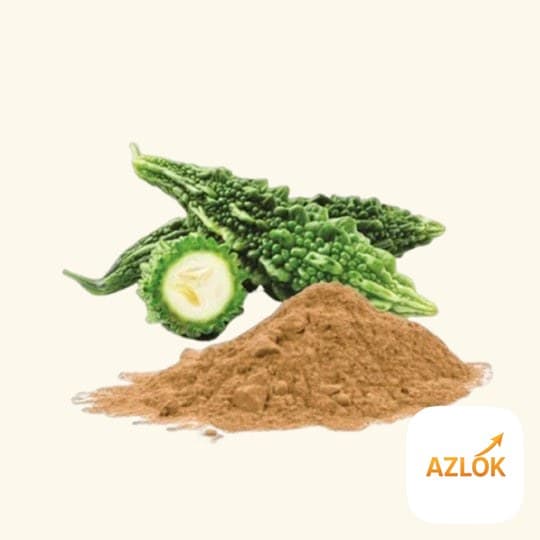

Karela Powder
Minimum Order: 1 units
Description
Karela Powder (Bitter Gourd Powder) is a, food-grade powder made from dried bitter gourd (Momordica charantia). Available from Azlok in sizes from 100 g to 20 kg.
History & Discovery
Bitter gourd (Momordica charantia) is a climbing vine of the cucumber family that has been cultivated in tropical Asia for a very long time, and India is often named among the regions where it was first domesticated. From there it spread across South and Southeast Asia and China, and later to Africa, the Caribbean and parts of South America, where it is still grown and cooked today. In Indian homes, karela has always been a seasonal vegetable, eaten stuffed, fried, or cooked into sabzi. Sun-drying sliced vegetables to keep them for the off-season is an old household practice, and dried karela slices were stored this way in many regions. Grinding dried karela into a fine powder is a more recent, practical step that makes the familiar bitter flavour easy to store and measure.
Scientific & Medicinal Importance
Karela powder is made by washing, slicing and drying bitter gourd, then milling it into a fine powder. It usually looks pale green to brownish-green and has a strong, sharp bitter taste with a light vegetal smell. Since most of the water is removed, the powder keeps far longer than the fresh vegetable, but it can absorb moisture from the air, so it should be kept in an airtight container away from damp and sunlight. The bitterness of karela comes mainly from a group of natural plant compounds called cucurbitane-type triterpenoids, which include momordicines. The powder also contains dietary fibre, plant proteins and minerals that come from the vegetable itself. Nutrient levels vary with the variety, maturity of the fruit and drying method, and some heat-sensitive vitamins found in fresh karela are reduced during drying.
Ayurvedic and Traditional Uses
Karela, called karavellaka in classical Sanskrit texts, has been part of Ayurvedic practice and Indian household cooking for centuries. Ayurveda groups foods by six tastes (rasas), and karela is one of the best-known examples of tikta, or bitter taste. Because of this, it has long held a special place in traditional meal planning, where bitter foods were included alongside sweet, sour, salty, pungent and astringent ones to keep the plate varied. In many regions, families sun-dried thin karela slices during the summer harvest so they could be stored and cooked later in the year. Grinding dried karela into powder follows the same old idea of preserving a seasonal vegetable. Today the powder carries that traditional association into a form that is easier to store, measure and mix.
Modern-Day Applications & Benefits
In the kitchen, karela powder is a handy way to add the familiar bitter flavour of bitter gourd without washing, scraping and chopping fresh vegetables. Home cooks stir small amounts into dal, sabzi, kadhi and paratha dough, or mix it with besan and spices for a dry masala. Some people add a pinch to buttermilk, soups or smoothies. Because the taste is strong, start with a quarter teaspoon and adjust. Small food brands and caterers use karela powder in herbal powder blends, spice mixes, khakhra, namkeen and health-food style snacks where a bitter note is wanted. Larger packs suit regular production runs. Some DIY users also add it in small amounts to homemade face packs for its fine texture; for any skin use, patch test first and keep it for external use only.
Why Azlok's Version is Trusted Today
Azlok
Frequently asked questions
How much karela powder should I take per day?
A common starting amount is 1/2 to 1 teaspoon (2–4 g) mixed in water or juice, taken once daily. Do not exceed recommended amounts and consult a doctor if you are on medication.
Is Azlok karela powder food-grade and safe to consume?
Yes, Azlok Karela Powder is food-grade and made from 100% natural dried bitter gourd. It is safe for regular use by healthy adults when consumed in reasonable amounts.
What is the shelf life and storage for karela powder?
Azlok Karela Powder has a shelf life of 2 years from the date of manufacture. Store in a cool, dry place in an airtight container, away from direct sunlight and moisture.
How can I reduce the bitterness of karela powder in cooking?
Use small amounts and pair it with balancing flavours. Cooking it with onion, jaggery, tamarind, amchur, besan or roasted peanuts softens the bitter edge. In dough or dal, a quarter to half teaspoon per serving is usually enough to notice the flavour without overpowering the dish. Taste and increase gradually.
Can karela powder be used in homemade face packs?
Some DIY users add a small amount to face packs with besan, multani mitti or curd for its fine texture. Always patch test on a small area of skin first, keep it away from the eyes, and use it externally only. If you are pregnant or on medication, consult a doctor before use.
Specifications
How to use Karela Powder
Guides covering uses, dilution, safety and storage.