

Micro Crystalline Wax
Minimum Order: 1 units
Description
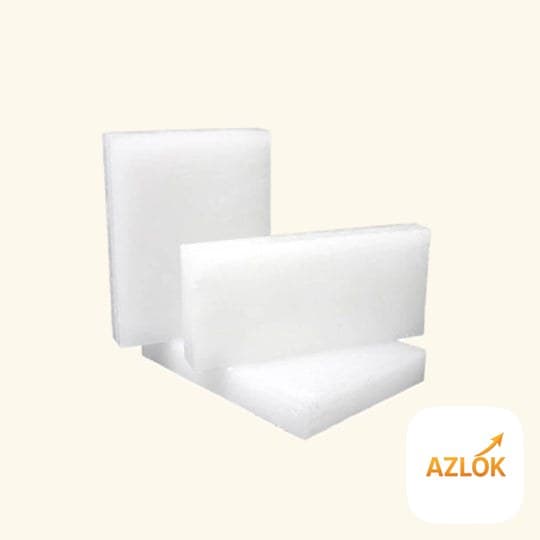
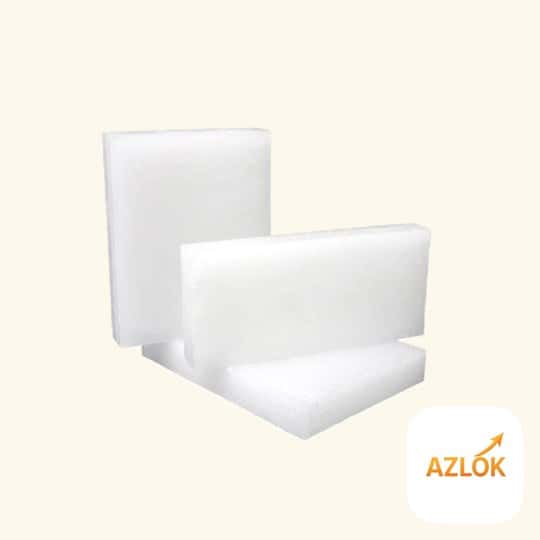
Microcrystalline wax is a petroleum-derived wax with a fine crystalline structure, valued for its flexibility, adhesion, and moisture resistance. Available from Azlok in slabs ranging from 500 g to 25 kg, it suits cosmetics, candle making, pharmaceuticals, food packaging, and industrial applications. CAS No. 63231-60-7.
History & Discovery
Microcrystalline wax emerged as a commercial product in the early 20th century when petroleum refiners discovered that the residual fraction left after removing paraffin wax contained a distinct, finer-grained wax. Unlike paraffin, which has a coarser crystal lattice, microcrystalline wax has much smaller, tightly interlocked crystals, giving it superior flexibility and toughness. By the mid-20th century it had found wide use in packaging, pharmaceuticals, and personal-care products across the globe.
Scientific & Medicinal Importance
Microcrystalline wax is a complex mixture of saturated hydrocarbons (mainly isoparaffinic and naphthenic) obtained by solvent de-oiling and clay or hydro-finishing of heavy petroleum distillate fractions. Its CAS number is 63231-60-7. Compared to paraffin wax, it has a higher melting point range (typically 54–95 °C depending on grade), smaller crystal size, and higher oil content, which collectively contribute to its flexibility, tackiness, and stronger adhesion. It is chemically inert under normal conditions and resistant to water and many dilute acids and bases.
Modern-Day Applications & Benefits
Today microcrystalline wax is used across several industries. In cosmetics and skincare it is a key structuring agent in lip balms, lipsticks, creams, and lotions, providing a smooth, stable texture and acting as an effective moisture barrier. Candle makers blend it with paraffin to improve opacity, flexibility, and adhesion to container walls. In the pharmaceutical sector it is used as a coating and binding agent. Food-grade grades are permitted as glazing agents for certain food products under FSSAI and international food safety standards. Industrial uses include electrical insulation, rust-prevention coatings, and rubber compounding.
Why Azlok's Version is Trusted Today
Azlok
Frequently asked questions
What is microcrystalline wax used for?
Microcrystalline wax is used in cosmetics (lip balms, lipsticks, creams), candle making, pharmaceutical coatings, food packaging glazing, and industrial applications such as electrical insulation and rust-prevention coatings.
How is microcrystalline wax different from paraffin wax?
Microcrystalline wax has smaller, tightly packed crystals, a higher melting point, more flexibility, and better adhesion than paraffin wax. Paraffin is harder and more brittle, making microcrystalline wax preferable where elasticity and stickiness are needed.
Is microcrystalline wax safe for use in lip balms and cosmetics?
Yes, cosmetic-grade microcrystalline wax is widely accepted for use in lip balms and skin-contact products. Ensure you are using cosmetic-grade material and follow standard formulation guidelines. It is generally considered non-toxic and odorless.
What are the safety precautions when handling microcrystalline wax?
Handle molten wax carefully as it can cause burns. Work in a well-ventilated area when melting large quantities. Keep away from open flames as wax is combustible. Store away from children. Industrial-grade material should not be ingested; use food-grade or cosmetic-grade versions for respective applications.
In what sizes is Azlok's microcrystalline wax available and what is the price?
Azlok's microcrystalline wax is available in 500 g, 1 kg, 5 kg, 10 kg, 20 kg, and 25 kg slab packs. The starting price is ₹299. Bulk packs are suitable for manufacturers and small businesses.