

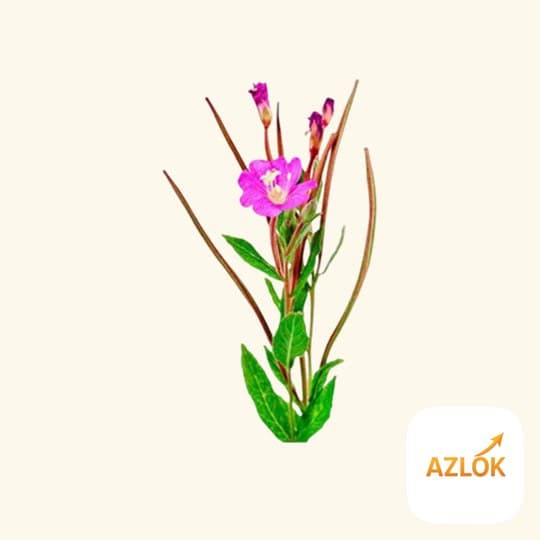

Palmarosa Essential Oil
Minimum Order: 1 units
Description
Palmarosa Essential Oil is steam-distilled from the leaves of Cymbopogon martini grass, yielding a pale yellow oil with a sweet, floral, rose-like aroma. Available at Azlok in sizes from 50 g to 10 kg for personal and commercial use.
History & Discovery
Palmarosa (Cymbopogon martini) is a wild-growing grass native to India, particularly found in the plains of northern and central India. Historically, the oil was traded under the name 'Indian geranium oil' or 'Turkish geranium oil' because it was exported via Turkey to Europe, where it was used to adulterate more expensive rose oil due to its similar aroma. Indian distillers have produced palmarosa oil commercially since at least the 19th century, and it remains a significant export commodity.
Scientific & Medicinal Importance
Palmarosa essential oil is obtained by steam distillation of the dried or fresh leaves and flowering tops of Cymbopogon martini, a grass in the same genus as lemongrass and citronella. The oil is thin, pale yellow to light olive in colour, dissolves in alcohol and carrier oils, and does not mix with water. Its rose-like aroma comes mainly from geraniol, which is the dominant constituent of the oil. Smaller amounts of geranyl acetate, linalool and farnesol add soft floral and slightly green notes. Because geraniol and linalool are recognised fragrance allergens, formulators should follow usage limits for leave-on and rinse-off products.
Ayurvedic and Traditional Uses
In traditional Indian herbal practice, Cymbopogon martini has been noted for its cooling and skin-soothing properties. While palmarosa is not a primary drug in classical Ayurvedic texts like Charaka Samhita or Ashtanga Hridayam, the plant is grouped with related aromatic grasses (trinadhanya varga) that were used in skin care preparations and perfumery. It is sometimes used by Ayurvedic practitioners today in formulations targeting skin infections and dryness, though such use reflects contemporary practice rather than ancient scripture.
Modern-Day Applications & Benefits
Today palmarosa oil is used mostly in perfumery and fragrance blending, where it extends or rounds off rose and geranium accords at a fraction of the cost of rose oil. It pairs well with sandalwood, cedarwood, lavender, ylang ylang and citrus oils, and is also a natural source of geraniol for the aroma industry. Small brands and DIY makers add it to cold-process and melt-and-pour soaps, candles, reed diffusers and room sprays for a sweet floral note. In skincare formulation it is used at low dilution to scent creams, lotions, toners and hair oils. For anything applied to skin, dilute well in a carrier oil, do a patch test, use externally only, and consult a doctor if pregnant or on medication.
Why Azlok's Version is Trusted Today
Azlok
Frequently asked questions
Can palmarosa essential oil be applied directly to the skin?
No. Like all essential oils, palmarosa oil must be diluted in a carrier oil (such as jojoba, sweet almond, or coconut oil) before applying to the skin. A typical dilution is 1–2% (roughly 6–12 drops per 30 ml of carrier oil). Always do a patch test first.
What does palmarosa essential oil smell like?
Palmarosa oil has a sweet, floral, rose-like aroma with a slight earthy grass undertone. It is often compared to geranium and rose but is distinctly lighter and less heavy than rose absolute.
Is palmarosa oil safe to use during pregnancy?
Pregnant women should consult a qualified doctor before using palmarosa essential oil. As a precaution, it should not be self-administered during pregnancy without medical advice.
What is the shelf life of Azlok palmarosa essential oil and how should it be stored?
The shelf life is 2 years from the date of manufacture when stored correctly. Keep the bottle tightly sealed, away from direct sunlight and heat, in a cool, dry place. Exposure to air and light can degrade the oil's quality over time.
Can palmarosa oil be used in soap and candle making?
Yes. Palmarosa essential oil is popular among soap makers for its skin benefits and floral scent. It can be used in cold-process and melt-and-pour soaps. However, note its flash point is 89.4°C, so it should not be added to wax or soap bases that are above this temperature to avoid fragrance loss. It is not typically recommended for candle making as the scent may not hold well in wax compared to fragrance oils.
Specifications
How to use Palmarosa Essential Oil
Guides covering uses, dilution, safety and storage.