


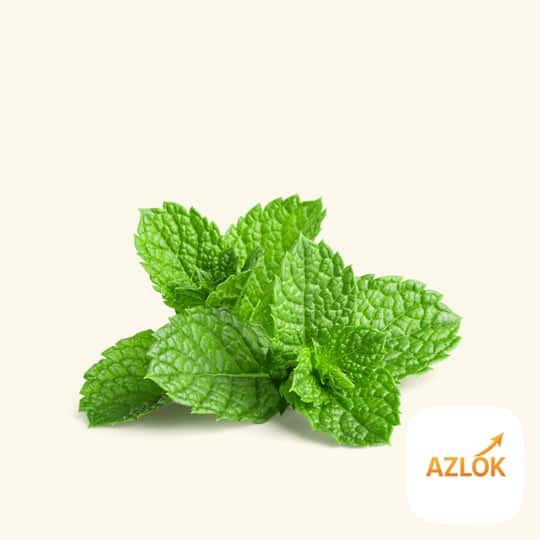
Peppermint Hydrosol
Minimum Order: 1 units
Description
Peppermint Hydrosol (Mentha piperita floral water) is the water-based co-product of peppermint essential oil steam distillation. It carries a light, cooling, minty scent and works as a gentle astringent toner suitable for oily and combination skin, DIY cosmetics, and aromatherapy sprays. CAS No. 84082-70-2. Available from Azlok in sizes from 100 g to 20 kg.
History & Discovery
Peppermint (Mentha piperita) is a hybrid mint, a cross between watermint and spearmint, first formally described in England in the late 17th century. Its use in medicine and personal care, however, traces back thousands of years across Egyptian, Greek, and Roman cultures, where dried mint leaves were used in remedies and as fragrance. The practice of steam-distilling aromatic plants to collect both the essential oil and the remaining aromatic water — now called a hydrosol or floral water — became refined in the Arab world around the 10th century and was later adopted widely in European apothecary traditions. Peppermint became one of the most commercially important aromatic plants, and its hydrosol became a staple in both perfumery and early skin-care preparations.
Scientific & Medicinal Importance
Peppermint hydrosol is produced by passing steam through fresh or dried Mentha piperita plant material. As the steam condenses, it carries water-soluble aromatic compounds including trace menthol, menthone, and other terpene derivatives that are too dilute to cause the irritation sometimes associated with concentrated peppermint essential oil. The result is a clear, colorless, mildly acidic aqueous solution with a pH generally in the range suitable for facial skin. Its water solubility makes it directly usable in water-based formulations such as toners, mists, shampoos, and cleansers without the need for an emulsifier. The CAS number 84082-70-2 identifies this specific plant-derived extract. Because the active compounds are present at very low concentrations compared to the essential oil, peppermint hydrosol is considerably gentler on the skin and mucous membranes.
Ayurvedic and Traditional Uses
In classical Ayurvedic texts, Mentha species (referred to broadly as Pudina) are classified as cooling (shita virya) and light (laghu) in quality, useful for pacifying Pitta and Kapha doshas. Pudina is traditionally used in digestive preparations, as a cooling topical application in summer, and in formulations to relieve headaches and nasal congestion. While Ayurveda uses the whole plant and expressed juice rather than a steam-distilled hydrosol specifically, peppermint hydrosol is consistent with Ayurvedic principles of using cooling herbal waters (arka preparations) for skin and scalp care. Practitioners sometimes incorporate it into herbal facial mists and hair rinses following these traditional principles.
Modern-Day Applications & Benefits
Peppermint hydrosol is widely used in the modern cosmetics and personal-care industry as a ready-to-use toner, refreshing facial mist, and ingredient in shampoos, conditioners, and after-shave preparations. Its mild astringent action helps tighten pores temporarily and gives oily skin a refreshed feel. DIY formulators and small cosmetic businesses value it because it blends easily into water phases without additional solubilisers. In aromatherapy, it is used in room sprays and linen mists to create a cooling, mentally stimulating atmosphere. Candle and soap makers occasionally use hydrosols as the water component in cold-process soap recipes. Azlok supplies peppermint hydrosol in bulk sizes up to 20 kg, making it practical for both home crafters and commercial formulators. Store in a cool, dry place away from direct sunlight; shelf life is up to 2 years when stored correctly.
Why Azlok's Version is Trusted Today
Azlok
Frequently asked questions
Is peppermint hydrosol safe to apply directly on the face?
Yes, for most skin types peppermint hydrosol can be applied directly as a toner or mist because the active compounds are at low concentrations compared to the essential oil. However, do a patch test before first use, and avoid contact with eyes. People with very sensitive skin or known mint allergy should consult a dermatologist.
What is the difference between peppermint hydrosol and peppermint essential oil?
Peppermint essential oil is a concentrated lipophilic extract containing high levels of menthol and menthone, which requires dilution before skin application. Peppermint hydrosol is the water-based co-product of the same distillation process, containing only trace water-soluble aromatics. It is much gentler, water-soluble, and can be used without dilution in most topical applications.
Can peppermint hydrosol be used in cold-process soap making?
Yes. Peppermint hydrosol can replace plain water in cold-process soap recipes. Because hydrosols contain organic material, they may cause slightly faster trace and some discolouration during the saponification process, which is normal. Use it chilled and lye-calculate as you would with water.
How should peppermint hydrosol be stored, and what is its shelf life?
Store peppermint hydrosol in a cool, dry place away from direct sunlight, preferably in a sealed container. When stored correctly, the shelf life is up to 2 years. Refrigerating after opening is recommended for long-term use. Discard if the colour changes noticeably or an off-odour develops.
Is peppermint hydrosol edible or food grade?
Peppermint hydrosol sold by Azlok is labelled for cosmetic use. It is not tested or certified as food grade. Do not ingest it. If you need peppermint water for culinary purposes, use a product specifically labelled and certified for food use.
Specifications
How to use Peppermint Hydrosol
Guides covering uses, dilution, safety and storage.