

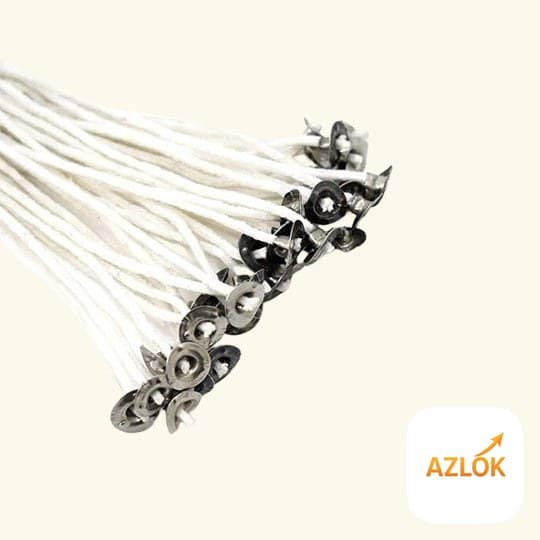

Pre Waxed Candle Wicks - 7 Inch
Minimum Order: 1 units
Description
Azlok 7-inch pre-waxed cotton candle wicks are ready to use straight from the pack. Made from natural cotton and pre-coated with wax, they stand upright easily, burn cleanly with minimal smoke, and suit soy wax candles. Available in packs of 50 to 3000 wicks, they are a practical choice for hobbyists and small candle-making businesses.
History & Discovery
Candle wicks have been used for thousands of years, evolving from rushes and plant fibres soaked in animal fat to the refined cotton braided wicks used today. The shift to pre-waxed cotton wicks became widespread in the 19th and 20th centuries as paraffin and later vegetable-based waxes (such as soy and coconut wax) became popular. Pre-waxing the wick stiffens it so it stands upright during candle pouring, eliminating the need for a separate priming step. In India, handcrafted candle making has a long tradition, and today small home-based and artisan candle businesses commonly use pre-waxed cotton wicks for consistent results.
Scientific & Medicinal Importance
A candle wick works by capillary action: the liquid wax is drawn up through the braided fibres and vaporised at the flame tip, where it combusts. The thickness and braid structure of the wick (1.2 mm in this product) determine how much wax is consumed per unit time, which in turn controls flame height, burn rate, and the diameter of melt pool formed. An undersized wick tunnels through the candle without melting the edges; an oversized wick produces excessive soot and a large, flickering flame. Pre-waxing stiffens the wick, reduces fraying during handling, and ensures the wick absorbs wax evenly once the candle is set. Cotton wicks are preferred for soy wax because soy burns at a lower temperature and cotton sustains a stable, cooler flame with minimal carbon mushrooming.
Modern-Day Applications & Benefits
Today, pre-waxed cotton wicks are a standard supply for candle makers ranging from home hobbyists to commercial producers. The 7-inch length suits container candles, pillar candles, and taper candles of moderate height. Azlok offers these wicks in bulk packs (50 to 3000 units), making them accessible for individual crafters as well as small businesses that need consistent stock. When using these wicks, centre them in the mould or container before pouring, use a wick holder or pencil to keep them taut, and allow the candle to cool completely before trimming the wick to about 6 mm for the best burn. Store unused wicks in a cool, dry place away from moisture to preserve their shelf life of up to 2 years.
Why Azlok's Version is Trusted Today
Azlok
Frequently asked questions
Are these wicks suitable for soy wax candles?
Yes. Azlok 7-inch pre-waxed wicks are specifically noted as compatible with soy wax. The 1.2 mm cotton wick sustains a stable flame suited to the lower melting point of soy wax.
What candle diameter is a 7-inch wick ideal for?
Wick length and diameter are separate considerations. A 7-inch wick is the vertical length for the candle. For a 1.2 mm wick, it generally suits container candles up to roughly 5–7 cm in diameter; always do a test burn to confirm performance for your specific wax and fragrance combination.
Do I need to add a metal sustainer tab to these wicks?
These wicks are supplied pre-waxed but the product listing does not specify that sustainer tabs are included. For container candles, a metal sustainer tab at the base is recommended to keep the wick anchored. Check the pack contents or contact Azlok to confirm whether tabs are included.
How should I store unused pre-waxed wicks?
Store them in a cool, dry place away from direct sunlight and moisture. Properly stored, the shelf life is up to 2 years. Exposure to moisture can affect the wax coating and the burn quality.
Can these wicks be used with paraffin or beeswax, not just soy wax?
The product is specified for soy wax, but natural cotton pre-waxed wicks are generally compatible with paraffin and beeswax as well. However, different waxes have different melt points and viscosities, so a test burn is always advisable before large-scale production.