

Rosehip Seed Oil
Minimum Order: 1 units
Description
Rosehip Seed Oil (Rosa canina) is a cold-pressed carrier oil rich in essential fatty acids, vitamin C, and lycopene. It is used in face serums, body oils, and hair care formulations to address hyperpigmentation, dryness, and sun-damaged skin. Available at Azlok in sizes from 100 g to 25 kg.
History & Discovery
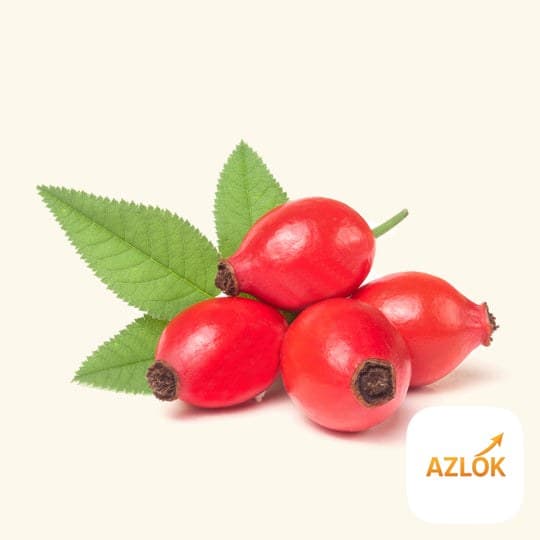
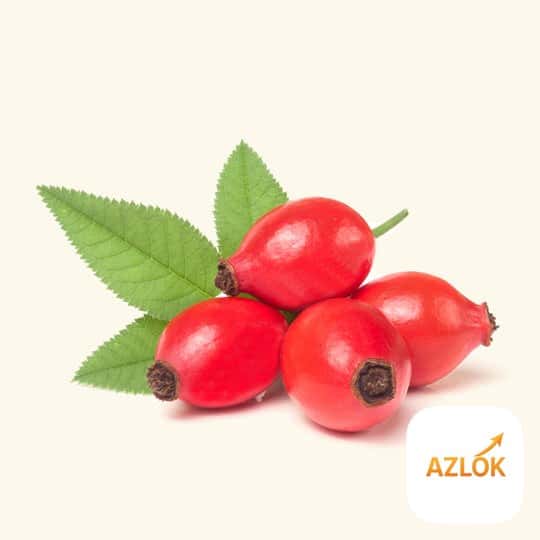
Rosa canina, commonly called the dog rose, is a wild climbing rose native to Europe, north-west Africa and western Asia. Its bright red fruits, known as rosehips, have long been gathered from hedgerows for food. They were cooked into jams, teas, soups and syrups, and in Britain during the Second World War people collected wild rosehips to make syrup. The oil pressed from the small seeds inside the fruit came into wider use much later. Wild roses, including Rosa canina and Rosa rubiginosa, grow abundantly in the Andes region of Chile, which became a major source of rosehip seed oil. From the late twentieth century the oil gained attention among cosmetic makers, and today it is a familiar carrier oil in face oils, serums and body care formulations worldwide.
Scientific & Medicinal Importance
Rosehip seed oil is extracted by cold pressing the seeds of Rosa canina. Its fatty acid profile is dominated by linoleic acid (omega-6, ~44–50%) and alpha-linolenic acid (omega-3, ~30–35%), both of which support the skin's lipid barrier. The oil also contains trans-retinoic acid (a natural form of vitamin A), tocopherols (vitamin E), carotenoids including lycopene and beta-carotene, and vitamin C precursors. Its specific gravity is 0.91–0.93 at 20°C and refractive index 1.470–1.487. The pale yellow to orange colour comes from its carotenoid content. The flash point above 200°F makes it stable for cosmetic use, and it is soluble in alcohol and most fixed oils.
Ayurvedic and Traditional Uses
Rosehip (Rosa canina) is not a traditional ingredient in classical Ayurvedic texts; it is primarily a European and South American botanical. However, related rose species (Rosa centifolia, Rosa damascena) do appear in Ayurveda. Some contemporary Ayurvedic-inspired formulators incorporate rosehip seed oil as a snehana (oleation) ingredient due to its skin-nourishing fatty acids, but this is a modern adaptation rather than a classical application. No classical Ayurvedic monograph specifically describes Rosa canina seed oil.
Modern-Day Applications & Benefits
In modern cosmetic formulation, rosehip seed oil is widely used in face serums, anti-aging creams, scar and stretch-mark oils, sunscreen bases, and hair care products. Its high linoleic acid content makes it suitable for acne-prone and oily skin types, as such skin is often deficient in linoleic acid. The natural trans-retinoic acid content supports cell turnover and may help reduce the appearance of fine lines and hyperpigmentation over consistent use. It blends well with lavender, peppermint, chamomile, and frankincense essential oils. Azlok supplies this oil in bulk sizes (up to 25 kg) suitable for small cosmetic businesses, soap and candle makers, and individual formulators. It should be stored in a cool, dark place and used within its 2-year shelf life.
Why Azlok's Version is Trusted Today
Azlok
Frequently asked questions
Can rosehip seed oil be used directly on the face without dilution?
Yes, rosehip seed oil is a carrier oil and can be applied directly to the skin. A few drops (2–3) massaged onto clean skin is a common usage. However, if you have sensitive skin, a patch test on the inner arm is recommended before full application.
Is this rosehip seed oil suitable for oily or acne-prone skin?
Yes. Rosehip seed oil is high in linoleic acid, which is often deficient in acne-prone skin. It is a dry-feeling oil that absorbs quickly and is generally considered non-comedogenic, making it a popular choice for oily skin types.
What is the extraction method and shelf life of Azlok's rosehip seed oil?
Azlok's rosehip seed oil is cold pressed from the seeds of Rosa canina. Cold pressing preserves its natural fatty acids and carotenoids without using heat. The shelf life is 2 years when stored in a cool, dark place away from direct sunlight.
Can rosehip seed oil be ingested or used in cooking?
No. This rosehip seed oil is for external (cosmetic and topical) use only. It is not food-grade and must not be ingested. Keep out of reach of children and avoid contact with eyes.
Which essential oils blend well with rosehip seed oil for DIY formulations?
Rosehip seed oil blends well with lavender, peppermint, chamomile, and frankincense essential oils. For a facial serum, a common ratio is 1–2% essential oil to rosehip carrier oil. Always calculate essential oil dilution carefully before applying to skin.
Specifications
How to use Rosehip Seed Oil
Guides covering uses, dilution, safety and storage.
- Rosehip Seed Oil: How to Use This Lightweight Carrier Oil for Skin and Hair
- Rosehip Fragrance Oil: A Sweet Floral Scent for Soaps, Candles and Balms
- Azlok Anti Aging Skin Care Kit: How Frankincense, Argan and Rosehip Oils Work Together
- Azlok Skin Brightening Kit: How to Use Kumkumadi, Rosehip & Saffron Oils