

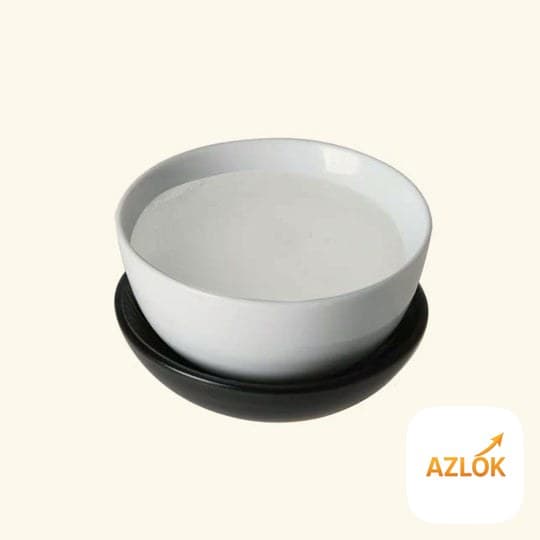

Sodium Lauryl Ether Sulphate (SLES)
Minimum Order: 1 units
Description
Sodium Lauryl Ether Sulphate (SLES) is an anionic surfactant and foaming agent widely used in shampoos, body washes, liquid soaps, and cosmetic formulations. Available at Azlok in packs from 500 g to 25 kg, this 27–28% active liquid grade SLES (CAS 9004-82-4) dissolves readily in hard and soft water and produces consistent, uniform foam.
History & Discovery
Synthetic detergents based on sulfonated fatty alcohols were developed in the early 20th century as alternatives to soap, which performed poorly in hard water. Sodium Lauryl Sulfate (SLS) was among the first of these, followed by its ethoxylated derivative SLES, which offered milder skin compatibility and better solubility. By the mid-20th century SLES had become one of the most widely produced surfactants globally and is today a standard raw material in the personal care and household cleaning industries. Its cost-effectiveness and reliable foaming behaviour have kept it dominant even as the surfactant market has expanded significantly.
Scientific & Medicinal Importance
SLES (chemical formula CH3(CH2)10CH2(OCH2CH2)nOSO3Na, CAS 9004-82-4) is produced by ethoxylating lauryl alcohol to introduce polyethylene glycol units, then sulfonating the result and neutralising with sodium hydroxide. The ethoxylation step is what distinguishes SLES from SLS: the ether linkages reduce skin irritation potential and improve water solubility. The 28% active concentration means that roughly 28 parts in 100 are the active surfactant; the remainder is primarily water. Its HLB value of approximately 40 classifies it as a strongly hydrophilic surfactant, making it effective at lowering surface tension, emulsifying oils, and generating copious lather. The specific gravity is approximately 1.05, boiling point 100°C, flash point above 93°C, and working pH around 6.86.
Modern-Day Applications & Benefits
SLES is one of the most commonly used raw materials in the formulation of shampoos, shower gels, liquid hand soaps, bubble baths, dish-washing liquids, and industrial cleaners. In cosmetics it also appears in creams, lotions, foundations, sunscreens, and conditioners where it functions as an emulsifier or secondary surfactant. Formulators typically use SLES at 5–15% active in rinse-off products. Because the commercial product is supplied as a roughly 28% aqueous solution, usage rates in the finished formula are calculated accordingly. Azlok supplies SLES in pack sizes from 500 g (suitable for home hobbyists and small-batch makers) up to 25 kg (suitable for small manufacturers), making it accessible across different production scales. Safety: SLES is for external use only. Always work in a ventilated area. Avoid contact with eyes — flush with plenty of water if contact occurs. Keep out of reach of children. Do not ingest. Wear gloves when handling concentrates, as undiluted SLES can cause skin irritation with prolonged exposure.
Why Azlok's Version is Trusted Today
Azlok
Frequently asked questions
What is the active concentration of this SLES?
Azlok's SLES is supplied as a 27–28% active aqueous liquid. When calculating usage in a finished formulation, account for this dilution — for example, to achieve 10% active in your product, you would use approximately 36% of this SLES solution.
Is SLES safe for use in shampoo and body wash?
Yes, SLES is widely used in personal care rinse-off products at typical usage levels of 5–15% active. It is considered less irritating than SLS due to ethoxylation. However, always conduct patch testing in your specific formulation and follow safety guidelines — avoid eye contact and keep away from children.
What pack sizes are available and which is right for me?
Azlok offers SLES in 500 g, 1 kg, 5 kg, 10 kg, 20 kg, and 25 kg packs. The 500 g and 1 kg packs suit hobbyists and small-batch testers. The 5 kg and above packs are better for regular home production or small commercial use.
Can SLES be used in cold-process soap making?
SLES is a synthetic detergent surfactant, not a soap base, and is used in liquid formulations rather than traditional cold-process bar soap. It is most suited to liquid soap, shampoo bars (melt-and-pour type), shower gels, and similar rinse-off products.
How should SLES be stored?
Store SLES in a tightly closed original container at room temperature (15–30°C), away from direct sunlight and heat sources. Shelf life is 24 months from manufacture when stored correctly. Keep out of reach of children and away from food and beverages.
Specifications
Documents
Safety data sheet not yet published for this product — request one below and we will email it.
How to use Sodium Lauryl Ether Sulphate (SLES)
Guides covering uses, dilution, safety and storage.