

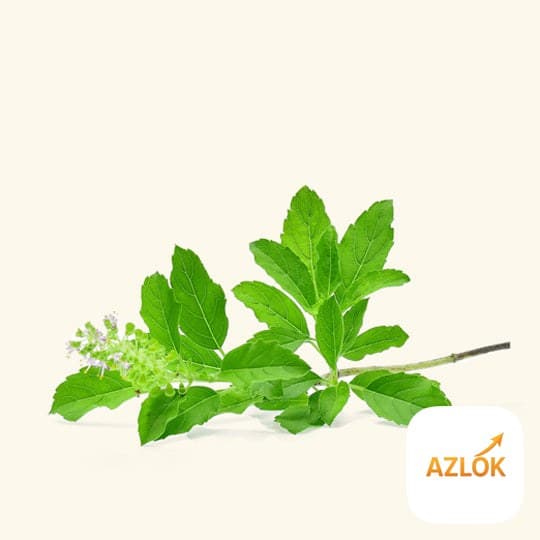

Tulsi Fragrance Oil
Minimum Order: 1 units
Description
Azlok Tulsi Fragrance Oil captures the fresh, herbal, and earthy scent of holy basil (Ocimum tenuiflorum). With sharp green top notes, aromatic herbal middle notes, and a calm woody base, it suits candles, soaps, bath bombs, creams, shampoos, and lip balms. Available from 100 g to 25 kg.
History & Discovery
Tulsi, known in English as holy basil (Ocimum tenuiflorum), has been revered in India for thousands of years as a sacred and medicinal plant. Its distinctive aroma—sharp, green, and slightly spicy—has made it a prized ingredient in Indian homes, temples, and traditional perfumery. The practice of extracting and using tulsi's fragrance in oils and attars dates back centuries, reflecting its deep cultural significance. Tulsi fragrance oil captures this heritage in a stable, ready-to-use liquid form suited for modern cosmetic and craft applications.
Scientific & Medicinal Importance
Tulsi fragrance oil is a synthetic or blended aromatic compound formulated to replicate the scent profile of Ocimum tenuiflorum. Its aroma character is shaped by volatile compounds such as eugenol, linalool, and methyl eugenol, which are responsible for the herbal, spicy, and slightly sweet notes associated with fresh tulsi leaves. As a fragrance oil (not an essential oil), it is designed for superior scent throw, colour consistency, and stability in formulations such as wax melts, cold-process soaps, and rinse-off and leave-on cosmetics. The flash point should be checked on the product's MSDS before use in candle making or heated applications.
Modern-Day Applications & Benefits
Today, tulsi fragrance oil is widely used by Indian DIY makers, home-based soap businesses, and cosmetic formulators. It blends well with other herbal and floral fragrance oils such as neem, rose, and sandalwood, making it versatile for product lines with a natural or Ayurvedic positioning. Azlok supplies it in bulk sizes from 100 g up to 25 kg, making it practical for both small-batch crafters and commercial manufacturers. For best results, use at recommended usage rates (typically 1–3% in cosmetics and up to 6% in cold-process soap and candles) and always perform a patch test or stability test before full-scale production.
Why Azlok's Version is Trusted Today
Azlok
Frequently asked questions
Is Azlok Tulsi Fragrance Oil safe for use in lip balms and lipsticks?
Yes, it is listed as suitable for lip balms and lipsticks. However, always use it within safe cosmetic usage rates and ensure your complete formulation complies with applicable cosmetic regulations. Fragrance oils are not the same as essential oils and should not be ingested.
What is the recommended usage rate for tulsi fragrance oil in candles and soaps?
A typical usage rate is 1–3% for rinse-off cosmetics, around 3% for leave-on products, and up to 6% for cold-process soap and candles. Always start with a small test batch and adjust based on your formulation and desired scent strength.
How should Tulsi Fragrance Oil be stored?
Store in a cool, dry place away from direct sunlight and heat sources. Keep the container tightly closed when not in use. Proper storage helps maintain scent quality for up to its 2-year shelf life.
Is this a natural essential oil or a synthetic fragrance oil?
This is a fragrance oil formulated to replicate the scent of tulsi (holy basil). It is not a steam-distilled essential oil. Fragrance oils offer greater scent consistency and stability in formulations compared to pure essential oils.
Can I apply Tulsi Fragrance Oil directly on my skin?
Fragrance oils should not be applied undiluted directly on the skin. They are intended for use as an ingredient in finished cosmetic formulations such as creams, lotions, or soaps—not for neat skin application. Always perform a patch test with the finished product.
Specifications
How to use Tulsi Fragrance Oil
Guides covering uses, dilution, safety and storage.