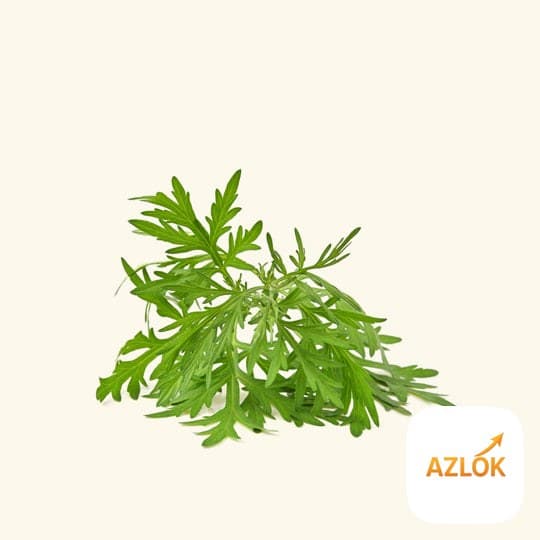

Armoise essential oil is a steam-distilled oil from the aromatic Artemisia herb, known for its fresh, green, herbal scent with a distinct camphor note. It is used mainly in aromatherapy, perfumery and natural fragrance blending, and is meant strictly for external use — never to be swallowed.
What is Armoise essential oil?
Also called Armoise oil, this is a thin, yellow to dark-yellow liquid obtained by steam distillation of the leaves of the mugwort-family plant (Artemisia vulgaris / Artemisia herba-alba). Azlok sources it in India and offers it in sizes from small 50 gm bottles right up to 10 KG for makers and small businesses. Its aroma is sharp and camphoraceous, sitting somewhere between herbal and woody, which makes it a useful top-to-middle note in blends.
Quick reference
- Botanical name: Artemisia vulgaris
- CAS No: 8008-93-3
- Extraction: steam distillation of leaves
- Form: thin liquid, yellow to dark yellow
- Solubility: soluble in alcohols and fixed (carrier) oils
- Shelf life: around 2 years
Common uses
Because of its bright, camphor-like character, Armoise oil is valued more for scent and atmosphere than for the skin. Typical uses include:
- Aromatherapy diffusion: a few drops in a diffuser to create a fresh, clearing, herbal atmosphere many people find grounding.
- Perfumery and fragrance blending: as an accent note in natural perfumes, colognes and room sprays, where it adds a green, mildly medicinal lift.
- Candle and soap making: as a fragrance component in cold-process soap, wax melts and candles, since it is soluble in alcohols and fixed oils.
- Home scenting: in reed diffusers and linen sprays for a crisp herbal note.
How to use it
A little goes a long way — Armoise is potent, so measure conservatively.
- Diffuser: add 3–5 drops to the water reservoir of an aroma diffuser. Blend well with citrus, lavender or rosemary to soften its sharpness.
- Room or linen spray: combine a few drops with alcohol or a solubiliser before adding to water, then shake before each use.
- Soap and candles: follow your recipe's recommended fragrance load and always test a small batch first.
- Blending: it pairs nicely with lavender, cedarwood, rosemary and citrus oils.
If you ever plan to use it on skin, always dilute heavily in a carrier oil and do a patch test first — but given its strong composition, most people keep this oil for diffusing and fragrance work rather than direct skin application.
Safety notes
Please treat this oil with respect. It is concentrated and meant for external purposes only.
- Do not ingest. Essential oils are not food and should never be swallowed.
- Keep away from children and pets. Store bottles out of reach.
- Avoid contact with eyes. If it gets in the eyes, flush with plenty of water.
- Patch-test and dilute before any topical use, and stop if irritation occurs.
- Pregnancy and health conditions: Artemisia oils are best avoided during pregnancy and by anyone with medical concerns — speak to a qualified practitioner first.
- Ventilation: diffuse in a well-aired room and don't run a diffuser continuously for hours.
Buying and storage tips
Choose a pack size that suits your use — the 50 gm and 100 gm bottles are ideal for home hobbyists, while the 500 gm to 10 KG options work for soap, candle and fragrance makers. Look for a batch that comes with COA and MSDS documentation, which Azlok can provide on request.
- Store in a cool, dark place away from sunlight and heat.
- Keep the cap tightly closed to slow oxidation and scent loss.
- Amber or dark glass helps protect the oil; avoid leaving it near a stove or window.
- Use within about two years for the best aroma.
FAQ
What does Armoise essential oil smell like?
It has a fresh, green, herbal aroma with a noticeable camphor note. Many people find it clarifying and grounding, which is why it is popular in diffuser blends and natural perfumery.
Can I apply Armoise oil directly to my skin?
No. Never use it undiluted. It is a concentrated oil intended for external, aromatic use. If you do want a topical blend, dilute it well in a carrier oil and patch-test first, and avoid it during pregnancy.
Is Armoise oil safe to swallow or add to food?
No. Despite its FEMA reference, this product is sold for external and fragrance purposes only and should not be ingested. Keep it away from children.
How many drops should I use in a diffuser?
Start with 3–5 drops in the water reservoir and adjust to taste. Blending it with lavender or citrus makes the camphor note gentler.
How long does it last and how should I store it?
It has a shelf life of about two years. Store it in a cool, dark spot with the cap tightly closed to preserve the aroma.