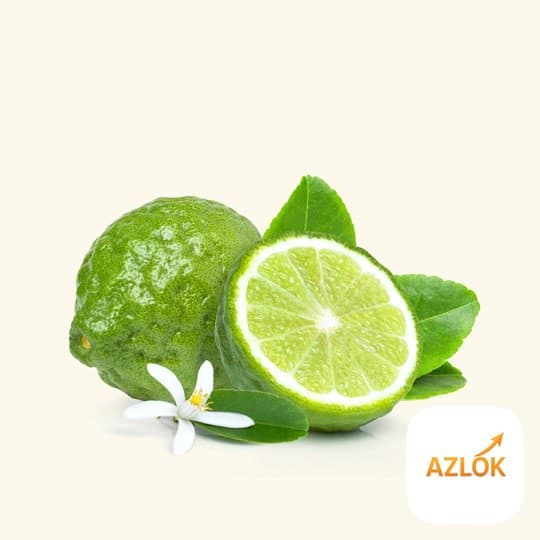

Bergamot essential oil is a bright, citrus-floral oil pressed from the rind of the bergamot fruit (Citrus bergamia), prized for its uplifting scent in perfumes, candles, soaps and skincare. At Azlok it starts at ₹399 and comes in sizes from 100 GM right up to 25 KG, so both home hobbyists and small businesses can find a pack that fits.
What is bergamot essential oil?
Bergamot trees grow along the Mediterranean coast, especially in Italy and France, and the oil carries a distinctive aroma: sweet, fruity and gently floral all at once. It is the same fragrance that gives Earl Grey tea its character. The oil is a light yellow to green liquid with a medium-strength, spicy-sweet citrus scent that most people find cheerful and clean.
Common uses
Bergamot is a favourite among people who like making their own natural beauty and home products. Because it dissolves in alcohol and carrier oils, it slots easily into a wide range of recipes.
- Aromatherapy and diffusers: A few drops in a diffuser fill a room with a fresh, mood-lifting citrus note.
- Skincare and massage: Diluted in a carrier oil, it adds a pleasant fragrance to face and body blends.
- Soap and candle making: A popular fragrance choice for cold-process soaps, melts and scented candles.
- Perfume and colognes: Bergamot is a classic top note in countless fragrance formulas.
- Home sprays: Blend with alcohol and water for a light, natural-smelling room mist.
How to use it
Essential oils are highly concentrated, so a little goes a long way. Here is a simple approach for everyday DIY.
- Dilute first. For skin use, add roughly 1–3 drops of bergamot per 10 ml of carrier oil such as coconut, jojoba or almond.
- Patch-test. Apply a small amount to your inner forearm and wait 24 hours before wider use.
- For diffusers, add 3–5 drops to water as per your device instructions.
- For candles and soaps, follow your recipe's recommended fragrance load and stir in at the correct temperature.
Blends beautifully with
Bergamot layers nicely with other oils. Try it with patchouli for depth, lavender for a calming feel, or lime for an extra-zesty citrus lift.
Safety notes
Bergamot is generally well tolerated, but sensible care matters.
- Always dilute before applying to skin. Never use neat.
- Citrus oils can increase photosensitivity. Avoid direct sunlight or tanning on treated skin for several hours after application.
- Do not ingest. This is a fragrance and cosmetic-grade oil, not a food product.
- Keep away from children and pets, and avoid contact with eyes.
- If you are pregnant, nursing or have a medical condition, check with a qualified professional first.
- Discontinue use if you notice any redness or irritation.
Buying and storage tips
Bergamot essential oil from Azlok is produced in India and has a shelf life of around four years when stored well. To keep it fresh:
- Store in a cool, dark place away from heat and direct sunlight.
- Keep the cap tightly closed to slow oxidation.
- Amber or dark glass bottles help protect the oil from light.
- Note the flash point is about 55°C, so keep it away from open flames until it is mixed into a finished product.
Choose your pack size based on how you plan to use it. The 100 GM size suits home experiments and small batches, while the larger 1 KG to 25 KG options are handy for makers producing soaps, candles or fragrances at scale. Check the specific gravity (0.863–0.873) and refractive index on the product documents if you need to match a formulation.
FAQ
Can I apply bergamot essential oil directly to my skin?
No. Always dilute it in a carrier oil first — about 1–3 drops per 10 ml — and do a 24-hour patch test before regular use.
Why should I avoid sunlight after using bergamot on my skin?
Citrus oils like bergamot can make skin more sensitive to sunlight, which may lead to irritation or discolouration. Wait several hours and cover treated skin before sun exposure.
What does bergamot essential oil smell like?
It has a sweet, fruity and floral citrus aroma with a slightly spicy-sweet character. The strength is medium, making it a popular top note in perfumes and candles.
Which oils blend well with bergamot?
Patchouli, lavender and lime are excellent partners. Bergamot also works with most other citrus and floral oils in perfume-style blends.
How long does bergamot essential oil last?
It has a shelf life of roughly four years when stored in a cool, dark place with the cap tightly closed to limit exposure to air and light.