

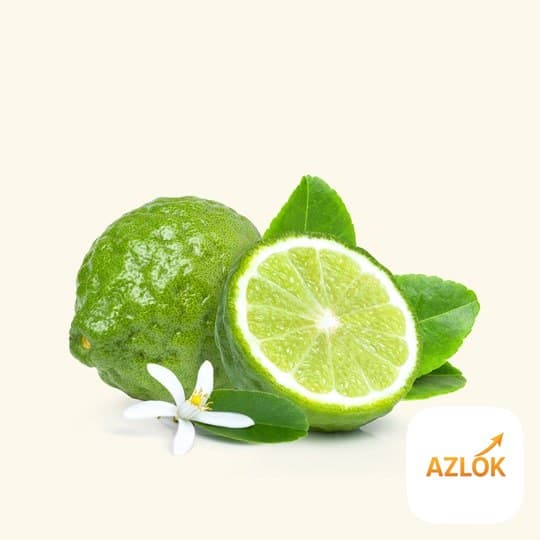

Bergamot Essential Oil
Minimum Order: 1 units
Description
Bergamot Essential Oil is a citrusy, floral-sweet oil steam-distilled from Citrus bergamia rind. CAS 8007-75-8, specific gravity 0.863–0.873, flash point 55°C. Widely used in perfumery, candle and soap making, and DIY skincare. Available at Azlok in sizes from 100 g to 25 kg.
History & Discovery
Bergamot (Citrus bergamia) is a citrus fruit most famously associated with the Calabria region of southern Italy, where it has been cultivated since at least the 18th century. The fruit is a hybrid, likely of lemon and bitter orange, and its peel oil became internationally recognised as the defining scent of Earl Grey tea. Italian perfumers began incorporating bergamot oil into colognes and eau de toilette formulations in the 1700s, and it remains one of the top notes in hundreds of classic European fragrances to this day. France also developed significant cultivation and distillation traditions, making bergamot one of the most commercially important citrus essential oils in the world.
Scientific & Medicinal Importance
Bergamot essential oil is steam-distilled from the ripe rind of Citrus bergamia fruit. Its major chemical constituents include linalyl acetate (30–60%), linalool (11–22%), and smaller amounts of limonene, beta-pinene, and gamma-terpinene, which together create its characteristic spicy-sweet citrus profile. The oil has a specific gravity of 0.863–0.873 at 20°C, a refractive index of 1.460, and an optical rotation of +20 to +40. Flash point is 55°C. It is soluble in alcohol and fixed oils but not in water. The naturally occurring compound bergapten (a furanocoumarin) in cold-pressed bergamot oil makes it potentially phototoxic; steam-distilled versions typically contain lower bergapten levels but users should still exercise caution when applying to skin before sun exposure.
Ayurvedic and Traditional Uses
Bergamot (Citrus bergamia) as a species does not have a direct classical Ayurvedic reference, as it is a Mediterranean crop not traditionally grown in the Indian subcontinent. Some modern Ayurvedic practitioners categorise citrus oils generally under tridoshic aromatherapy applications, but no classical Ayurvedic text mentions bergamot oil specifically. Any such claims should be treated with caution.
Modern-Day Applications & Benefits
In modern aromatherapy and personal-care formulation, bergamot essential oil is valued for its fresh, uplifting citrus-floral scent and its versatility as a blender. It is a standard top note in perfumery and blends well with patchouli, lavender, and lime. Soap and candle makers use it to add a light citrus character to their products; because it is steam-distilled and soluble in oils and alcohol, it incorporates cleanly into both cold-process soap and wax melts. In diffusers, a few drops create a bright, non-cloying atmosphere. Azlok supplies bergamot essential oil in sizes from 100 g up to 25 kg, making it accessible for individual DIY makers as well as small-scale manufacturers. Always dilute to 1–2% or less in a carrier oil before any skin application; do a patch test first; keep away from eyes, mucous membranes, and children; and avoid applying to skin that will be exposed to direct sunlight within 12 hours.
Why Azlok's Version is Trusted Today
Azlok
Frequently asked questions
Is Azlok's bergamot essential oil safe to apply directly on skin?
No. Bergamot essential oil must always be diluted in a carrier oil (1–2% or less) before skin application. Undiluted use can cause irritation. Bergamot can also increase skin sensitivity to sunlight, so avoid sun exposure for at least 12 hours after applying it to skin. Always patch-test first.
What does bergamot essential oil smell like?
Bergamot essential oil has a spicy-sweet, citrusy scent with distinct floral undertones. It is fresher and more complex than a standard lemon or orange oil, and is the characteristic fragrance of Earl Grey tea.
Which oils blend well with bergamot essential oil?
Bergamot blends particularly well with patchouli, lavender, and lime essential oils. It also works with other citrus oils, cedarwood, and neroli, making it a versatile choice for both perfumery and candle or soap formulations.
Can bergamot essential oil be used in candles and soaps?
Yes. Bergamot essential oil is soluble in oils and alcohol, making it straightforward to incorporate into cold-process or melt-and-pour soaps and into wax-based candles. Use at typical fragrance-load rates recommended for your wax or soap base. Its flash point is 55°C, so avoid adding it to wax above that temperature.
What is the shelf life of bergamot essential oil and how should it be stored?
Bergamot essential oil has a shelf life of 4 years when stored correctly. Keep it in a tightly sealed, dark glass bottle away from direct sunlight, heat, and moisture. Oxidised oil can cause increased skin irritation, so discard if the scent changes significantly.
Specifications
How to use Bergamot Essential Oil
Guides covering uses, dilution, safety and storage.