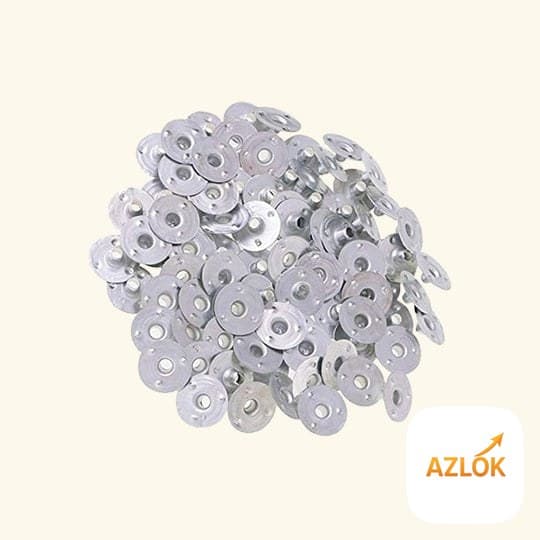
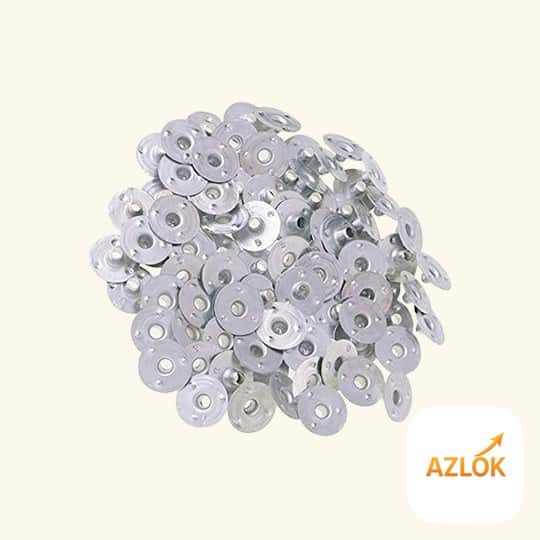
Candle wick sustainer tabs are the small metal discs, also called eyelets, that clamp onto the base of a candle wick to hold it straight and centred at the bottom of your container or mould. They keep the wick from drifting while the wax sets, and they stop the flame from burning right down into the wax at the end. Azlok's wick sustainer tabs are made in India and sold in packs from 100 pieces up to 10,000, so both hobbyists and small candle businesses can stock up.
What a wick sustainer tab does
When you pour hot wax around a loose wick, the wick tends to lean, curl or float. A sustainer tab solves three problems at once:
- Anchoring: the flat metal base sits on the bottom of the jar or mould and holds the wick in place during pouring and cooling.
- Centring: a tabbed wick is easy to position dead-centre so your candle burns evenly.
- Safety at the end: the tab stops the flame slightly above the base, leaving a thin layer of wax and preventing the container from overheating.
How to use candle wick tabs
Attaching a wick to a tab is simple, and there are two common ways depending on the tabs you have.
- Thread the wick: pass the wick through the small hole (eyelet) in the centre of the tab.
- Crimp to secure: use a pair of pliers to gently press the neck of the tab around the wick so it grips firmly and does not slide.
- Stick it down: add a small dab of hot glue or a wick sticker to the underside of the tab and press it firmly onto the clean, dry base of your container or mould.
- Keep it upright: lay a wick bar, chopstick or two pencils across the top and rest the wick between them so it stays centred while you pour.
- Pour and cool: pour your wax at the recommended temperature, let it set fully, then trim the wick to about 5–6 mm before lighting.
Choosing the right tab and wick
The tab is only part of the story — the wick size has to suit your candle. Match your wick thickness to the diameter of the container and the type of wax you use, whether that is soy, beeswax, paraffin or a blend. If the wick is too small the candle will tunnel; too large and it will smoke or produce a big, flickering flame. It is worth burning a test candle before making a large batch.
For bulk makers, buying larger packs of tabs keeps your per-candle cost low and means you are never held up mid-production. The 1,000, 2,000 and 5,000-piece packs are convenient for regular sellers, while a pack of 100 is plenty for weekend hobby projects.
Storage and handling tips
- Keep tabs in a dry, sealed container so the metal does not tarnish or attract moisture.
- Store away from direct heat and away from small children, as the small parts are a choking hazard.
- Make sure the container base is clean and free of wax or dust before sticking a tab down, or it may lift while burning.
- Always burn candles on a heat-safe surface and never leave a lit candle unattended.
Wick tabs are inexpensive and easy to overlook, but they make a real difference to how tidy and safe your finished candles are. At just ₹99 for a pack, they are one of the small supplies that quietly raise the quality of every candle you make.
FAQ
What is a candle wick sustainer tab used for?
It holds the wick upright and centred at the base of a container or mould while the wax sets, and it helps stop the flame from burning right down into the wax at the end of the candle's life.
How do I attach a wick to a sustainer tab?
Thread the wick through the central hole, then crimp the neck of the tab with pliers so the wick is gripped tightly. Fix the tab to the container base with hot glue or a wick sticker.
Which size wick tab do I need?
The tab hole should suit your wick thickness, and the wick itself should match your container diameter and wax type. Test-burn a sample candle to confirm the flame is steady and the candle burns evenly.
Can wick tabs be reused?
They are designed for single use per candle. Once a candle has burned down the tab is usually coated in leftover wax and best discarded, so it is practical to keep a larger pack on hand.
How many tabs should I buy?
For occasional home projects a pack of 100 is enough. Small businesses making candles regularly often prefer the 1,000 to 5,000-piece packs to reduce cost per candle and avoid running short.