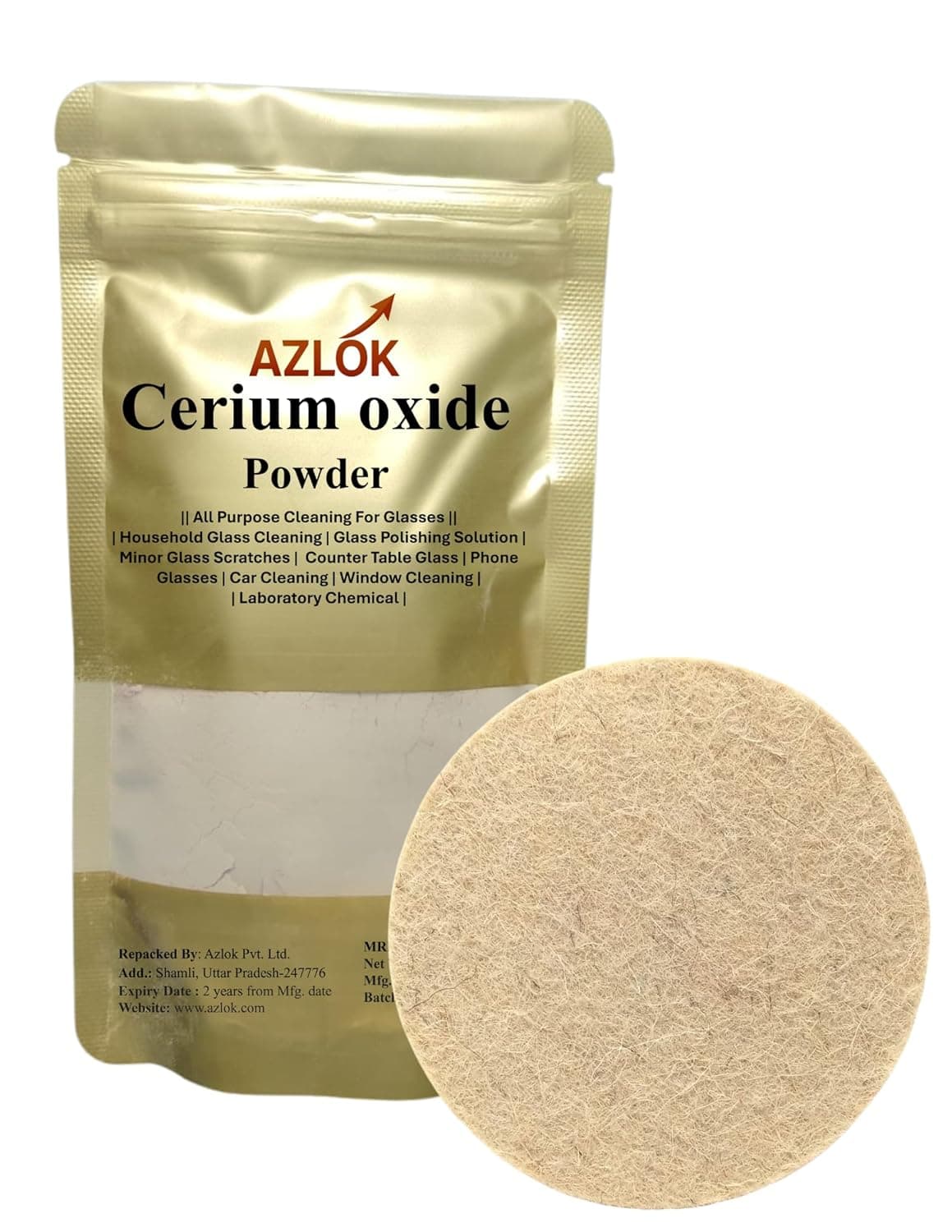
Cerium Oxide Glass Polishing Powder: How to Remove Scratches from Glass at Home
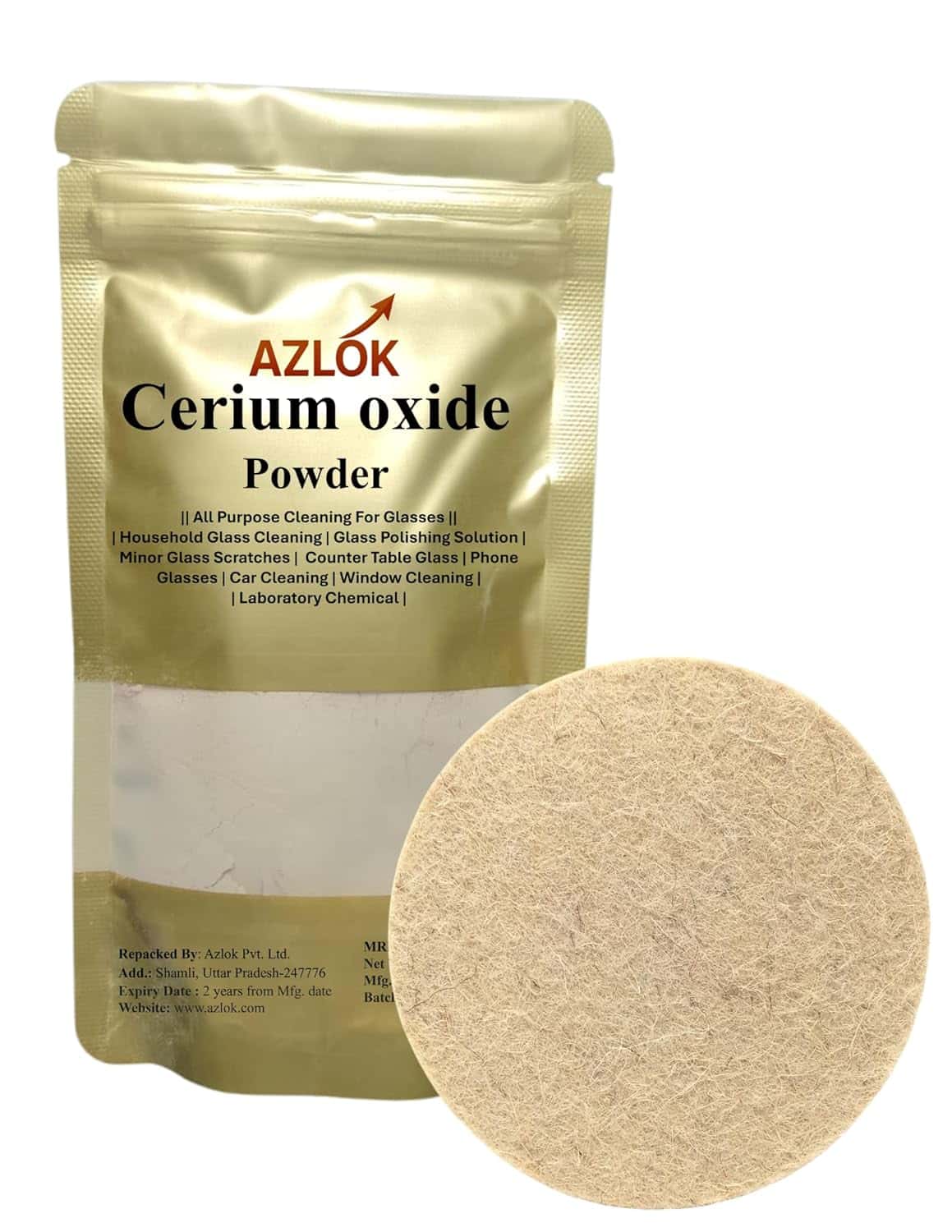
Cerium oxide is a fine rare-earth polishing powder that, when mixed with water into a paste and rubbed on with a felt pad, smooths and polishes glass and removes light surface scratches from windows, mirrors and glass tabletops. The Azlok pack gives you 250 grams of commercial-grade cerium oxide along with a 4-inch Namada (wool felt) disc, so you have both the abrasive and the applicator in one kit.
What cerium oxide is used for
Cerium oxide is the go-to compound for glass finishing because it polishes without scouring the surface the way coarser abrasives do. It works through a gentle chemical-mechanical action that leaves glass clear and bright. Common uses include:
- Polishing float glass, window panes and mirrors
- Buffing out fine scratches, water spots and mineral haze
- Restoring clarity to glass tabletops, cabinet doors and display cases
- Finishing ceramic tiles and certain glass ornaments
- Small workshop and hobby glasswork
It is best suited to light, shallow scratches and hazing. Deep gouges that catch your fingernail usually cannot be fully removed by polishing alone.
How to use cerium oxide for glass polishing
The method is simple, but patience matters more than pressure. Work in small sections and keep everything wet.
- Mix a suitable quantity of the powder with clean water to form a paste. Aim for a consistency like thin cream — not too thick, not too runny.
- Clean the glass first so no grit or dust is trapped under the pad.
- Fit the felt disc to your power tool (or use it by hand for small jobs) and set the tool to its slowest speed.
- Apply the paste and rub in small circular motions, working only one section at a time.
- Keep a spray bottle of water handy. Mist the area often so the paste never dries out.
- Do not let the glass overheat — pause if it feels warm, as heat can crack or stress the glass.
- When you are happy with a section, wipe off the slurry and rinse it clean, then move to the next section until the whole surface is done.
Tips for a better finish
- Low speed and steady, even pressure work far better than fast, hard rubbing.
- Keep the pad moist at all times; a dry pad can leave swirl marks.
- Check your progress against the light frequently so you know when to stop.
- For large windows, tape off the edges and work methodically so you do not miss patches.
Safety and handling
Cerium oxide is a fine powder, so treat it sensibly:
- Wear a dust mask when mixing the dry powder, and avoid breathing it in.
- Use safety glasses and gloves — the wet slurry sprays around when polishing with a power tool.
- Work in a well-ventilated area.
- Keep the powder away from children and pets, and do not ingest it.
- This is a polishing compound, not a food or cosmetic product. Store it as a workshop chemical.
- Rinse skin with water if the paste comes into contact, and wash the felt pad after use.
Buying and storage
A little cerium oxide goes a long way, so 250 grams is enough for many small to mid-sized jobs. The Azlok kit is priced at ₹249 and includes the felt disc, which saves you sourcing an applicator separately. Store the powder in a sealed container in a dry place, away from moisture, so it does not clump. If it does absorb humidity and cake, it is still usable — just break it up and mix it into paste as normal. Keep the felt disc clean and dry between uses to prolong its life.
FAQ
Can cerium oxide remove deep scratches from glass?
No. Cerium oxide is a polishing compound meant for light scratches, hazing and water spots. Deep scratches you can feel with a fingernail generally cannot be polished out completely.
Do I need a power tool to use it?
A power tool with a felt pad on its slowest setting makes larger jobs faster and more even, but you can polish small areas by hand with the felt disc. Consistent circular motion and keeping the surface wet matter most.
How much powder should I mix with water?
Start small. Add water gradually to the powder until you get a paste like thin cream — spreadable but not watery. You can always mix more, so avoid preparing a large batch that dries out before you use it.
Why should I keep the glass from overheating?
Friction from polishing builds heat, and glass can crack or stress under sudden temperature changes. Misting with water keeps the paste active and the surface cool, protecting the glass.
Can I use cerium oxide on ceramic tiles and mirrors?
Yes, it works on glass, mirrors and ceramic tiles. Always test a small, hidden section first to check the finish before polishing the whole surface.