Cetyl Alcohol (Ginol 16): The Fatty Alcohol That Thickens Creams and Softens Skin

Cetyl Alcohol (Ginol 16) is a coconut-derived fatty alcohol used in cosmetics as an emollient, thickener and co-emulsifier. In plain terms, it makes creams, lotions and hair conditioners feel richer, thicker and more stable, while leaving skin and hair soft. Despite the word "alcohol" in the name, it does not dry out or sting the skin the way drying alcohols like ethanol can.
What is Cetyl Alcohol?
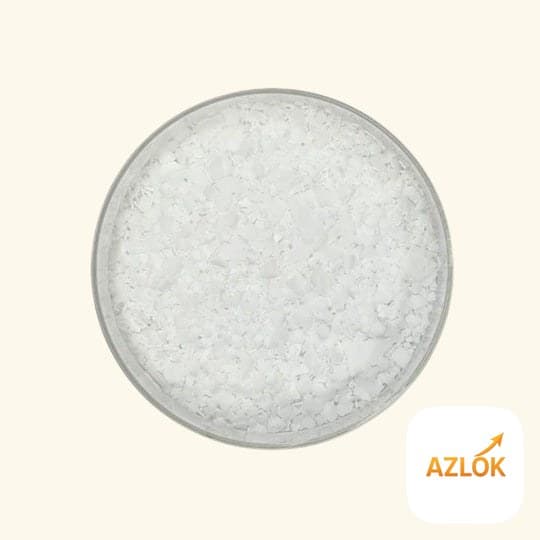
Cetyl Alcohol, also called palmityl alcohol or hexadecyl alcohol, is a long-chain fatty alcohol with the chemical formula C16H34O and the INCI name Cetyl Alcohol. Azlok's Ginol 16 is sourced from coconut oil, comes as odourless white flakes, and carries roughly 95% purity with a shelf life of about 24 months. Its CAS number is 36653-82-4 and its molecular weight is 242.44 g/mol.
Because it is a fatty alcohol rather than a volatile one, it behaves like a soft wax. It melts smoothly into oils, then thickens and gives body to a finished product as it cools.
What Cetyl Alcohol is used for
It is one of the most common building blocks in DIY and small-batch cosmetics. Typical uses include:
- Creams and lotions — adds thickness, a smooth glide and a stable texture.
- Hair conditioners and masks — coats the hair shaft so strands feel soft and detangle easily.
- Shampoos and body washes — used in small amounts as a thickener and to add slip.
- Makeup and balms — helps set the structure and improves spreadability.
- Emulsions — works alongside a primary emulsifier to keep oil and water phases from separating.
How to use it in your formulations
Cetyl Alcohol is added to the oil phase of a formula. Weigh out your oils, butters and Cetyl Alcohol together, then heat them gently until the flakes melt fully (it melts well below its boiling point of 344 °C, so a warm water bath is enough). Heat your water phase separately, combine the two, and blend until the emulsion thickens.
Usage rates vary by product, but as a general starting point:
- Lotions: about 1–3%.
- Thicker creams: around 3–5%.
- Hair conditioners: roughly 2–5%, often with a conditioning emulsifier.
Always work by weight, not volume, and make small test batches first. A little goes a long way — too much can leave a waxy, draggy feel on the skin.
Safety and handling
Cetyl Alcohol is considered a mild, skin-friendly ingredient, but sensible handling still matters:
- It is for external cosmetic use only. Do not ingest.
- Do a patch test on finished products before regular use, especially if your skin is sensitive.
- Melt it gently and keep it away from open flames; the flash point is around 110 °C.
- Molten flakes are hot — handle with care and let mixtures cool before touching.
- Store away from children and pets.
- This is an industrial-grade raw material intended for formulation, not a ready-to-use product.
Buying and storage tips
Azlok sells Cetyl Alcohol (Ginol 16) in packs from 100 Gm right up to 20 KG, so hobbyists making a few jars and small businesses running regular batches can both buy sensibly. The 100 Gm pack starts at ₹199, which is handy if you simply want to test it in a recipe before committing to a bulk size.
To keep the flakes in good condition:
- Store in a cool, dry place in an airtight container, away from direct sunlight and moisture.
- Keep the lid closed tightly to stop the flakes from picking up odours or clumping.
- Use clean, dry scoops to avoid contamination.
- Used well, it stays usable for around 24 months.
FAQ
Is Cetyl Alcohol drying like regular alcohol?
No. It is a fatty alcohol, not a volatile solvent alcohol. It works as an emollient and thickener, and is generally regarded as non-drying and gentle on skin.
Is Ginol 16 vegetable-based?
Yes. Azlok's Cetyl Alcohol is derived from coconut oil, making it a plant-sourced fatty alcohol.
What is the difference between Cetyl Alcohol and Cetearyl Alcohol?
Cetyl Alcohol is a single fatty alcohol (C16). Cetearyl Alcohol is a blend of cetyl and stearyl alcohols. Cetyl gives a lighter, silkier feel, while cetearyl tends to give firmer, waxier body.
How much Cetyl Alcohol should I add to a cream?
A common range is 1–5% by weight, depending on how thick you want the product. Start low, test the texture, and adjust in small steps.
Can I use it on its own to make a lotion?
Not alone. It thickens and stabilises, but you still need a primary emulsifier to properly bind the oil and water phases into a stable lotion.