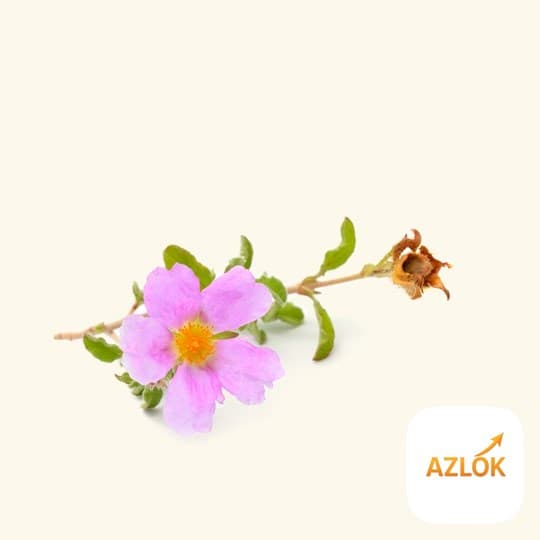

Cistus essential oil is a thick, warm-smelling oil steam-distilled from the resinous leaves and stems of the Cistus ladanifer plant. It is used mainly in skin care and aromatherapy, prized for its balsamic, woody-floral aroma and its traditional reputation for supporting the appearance of scars, wrinkles and mature, dry skin. Always dilute it in a carrier oil before applying to the skin.
You may also see cistus sold under names like rock rose, rose of Sharon or labdanum. The Azlok bottle is colourless to pale green with a yellow reflection, and has a fresh, balsamic, slightly spicy scent that many people find grounding and comforting.
What cistus essential oil is used for
Cistus is a favourite among people who make their own facial oils and blends. Its most common uses include:
- Mature and ageing skin: added to serums and face oils where a firming, regenerating feel is wanted.
- Scars and blemishes: diluted and massaged into old marks over time as part of a skin-care routine.
- Dry and damaged skin: its balsamic nature suits rough, weathered or tired-looking skin.
- Aromatherapy and meditation: the warm, resinous scent is calming in a diffuser or personal inhaler.
- Perfumery: labdanum is a classic base note and fixative in natural perfume blends.
How to use it
Cistus is potent and should always be diluted. A few practical ways to use it:
- Face oil: Add 1–2 drops of cistus per 10 ml of a carrier such as jojoba, rosehip or sweet almond oil. Patch test, then apply a small amount at night.
- Body massage blend: Keep dilution around 1–2% (roughly 6–12 drops per 30 ml carrier oil).
- Diffuser: Add 3–4 drops to a water diffuser. Pair it with lavender or cypress to soften the resinous edge.
- Custom blends: Cistus works beautifully with ylang ylang, lavender, neroli, clary sage and cypress. It is soluble in alcohol and fixed oils, which makes it handy for perfume and roll-on projects.
Safety notes you should not skip
Essential oils are concentrated plant extracts, so treat cistus with respect:
- It is meant for external use only. Do not ingest it.
- Always dilute before topical application and do a patch test on your inner arm 24 hours before wider use.
- Avoid direct sunlight on freshly treated skin.
- Keep well out of reach of children and away from eyes.
- Pregnant or breastfeeding women, and anyone with a medical condition, should consult a doctor first.
- Cistus is a supportive skin-care and aromatherapy ingredient, not a medicine or a cure for any condition.
Buying and storage tips
Because cistus is a thick oil, it can pour slowly, especially in cooler weather. Standing the bottle in warm water for a minute helps it flow. To keep it fresh through its roughly two-year shelf life:
- Store in a cool, dark place, tightly capped, away from heat and sunlight.
- Keep it in its original dark glass or an amber bottle to protect it from light.
- Buy a size that suits your usage. Azlok offers cistus essential oil from a small 10 gm bottle up to bulk 1 kg and 5 kg packs, so hobbyists and small businesses can both find a fit. The 10 gm starts at ₹299.
- Check that the botanical name reads Cistus ladaniferus and that the oil is steam distilled, as this one is.
FAQ
Is cistus the same as labdanum?
They come from the same plant, Cistus ladanifer. Cistus essential oil is steam distilled from the leaves and stems, while labdanum usually refers to the resin or its absolute. In everyday listings the names are often used together.
Can I apply cistus oil directly to my skin?
No. Always dilute it in a carrier oil first, keeping to about 1–2% for the body and even less for the face. Do a patch test before regular use.
What does cistus essential oil smell like?
Warm, balsamic and woody with a herbaceous, slightly spicy-floral edge. It is often described as sweet and resinous, which is why perfumers use it as a base note.
Which oils blend well with cistus?
It pairs nicely with ylang ylang, lavender, neroli, clary sage and cypress. These help balance its rich, resinous character.
How long does it last once opened?
Around two years when stored in a cool, dark place with the cap sealed. Light and heat shorten its life, so amber glass and a cupboard are ideal.