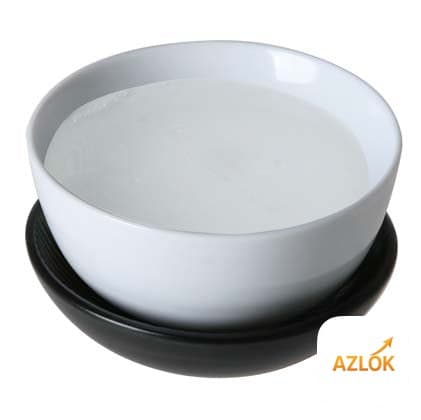

Coco Glucoside is a mild, non-ionic surfactant made from coconut-derived fatty alcohols and glucose, used to clean, foam and emulsify in homemade shampoos, face washes, body washes and cleansers. Because it is gentle on skin and readily biodegradable, DIY makers and small cosmetic brands reach for it when they want lather without harshness.
What Coco Glucoside Is
Also written as Cocoyl Glucoside, this ingredient belongs to the alkyl glucoside family. It is produced by combining fatty alcohols from coconut oil (C16 and C8 chains) with glucose from starch under controlled acidic conditions until a cloudy, viscous solution forms. The result is a light yellow to golden liquid with the INCI name Coco Glucoside (CAS 141464-42-8).
A few specifications worth noting from Azlok's technical-grade material:
- Source: coconut and palm kernel oils plus glucose
- pH: 11.5–12.5 (naturally alkaline as supplied)
- Shelf life: 24 months
- Solubility: water-soluble
What You Can Make With It
Coco Glucoside is a workhorse in gentle cleansing formulas. Common uses include:
- Shampoos and hair cleansers — for a soft, mild wash, often paired with a foam booster
- Face washes and micellar-style cleansers — where a low-irritation surfactant matters
- Body washes and shower gels
- Baby-friendly and sensitive-skin cleansers
- Creams, lotions and makeup removers — as a co-emulsifier and mild cleanser
On its own it produces a soft, low-to-moderate foam. Many formulators blend it with other mild surfactants, such as Decyl Glucoside or Coco Betaine, to improve lather and thickness.
How to Use It in a Formula
Coco Glucoside is typically used at around 5% to 40% of a formulation, depending on how much cleansing power you want. A simple approach:
- Weigh your water phase and add Coco Glucoside slowly to avoid excess foaming.
- Blend in a secondary surfactant if you want more bubbles.
- Adjust the pH. Because the raw material is alkaline (pH 11.5–12.5), a finished skin or hair product should be brought down to a skin-friendly range of about 4.5–6.0 using a mild acid such as citric acid solution. Check with pH strips or a meter.
- Thicken if needed. Glucoside surfactants can be tricky to thicken; a salt curve or a suitable gum or thickener usually helps.
- Add a broad-spectrum preservative, since any water-based product needs one.
Safety and Handling
This is a cosmetic raw ingredient, not a finished product, so treat it with normal care:
- The concentrate is strongly alkaline. Wear gloves and eye protection, and avoid contact with eyes and broken skin until it is diluted and pH-adjusted.
- Always patch-test your finished formula on the inner forearm before regular use.
- Work in a ventilated area and keep the container out of reach of children and pets.
- Do not ingest. It is meant for external, wash-off and leave-on cosmetic formulations only.
- Keep it away from strong acids and oxidisers during storage.
Buying and Storage Tips
Azlok stocks Coco Glucoside in sizes from 100 g right up to 25 kg, so you can start with a small batch before scaling to production. Prices begin at ₹199, and the multiple pack options suit both hobbyists and small businesses.
- Store in a cool, dry place away from direct sunlight, with the lid tightly closed.
- Use clean, dry utensils when scooping or pouring to avoid contamination.
- Mind the 24-month shelf life and note the batch date on decanted containers.
- Ask for the COA and MSDS if you are formulating for sale, so you have documentation on hand.
FAQ
Is Coco Glucoside safe for sensitive skin?
It is one of the milder surfactants available and is widely used in sensitive-skin and baby cleansers. Still, sensitivity varies from person to person, so patch-test any finished product first.
Why is the pH so high?
The raw concentrate is naturally alkaline at pH 11.5–12.5. Before use in a skin or hair product, adjust the finished formula down to roughly pH 4.5–6.0 with a mild acid such as citric acid.
Does Coco Glucoside foam well on its own?
It gives a soft, gentle foam rather than big bubbles. For richer lather, blend it with another mild surfactant like Coco Betaine or Decyl Glucoside.
Is it natural?
It is derived from coconut and palm kernel oils plus glucose from starch, so it is considered plant-derived. It is also readily biodegradable, which is why many eco-conscious formulators prefer it.
Can I use it undiluted as a cleanser?
No. It should be diluted and pH-adjusted within a proper formula. The concentrate is too alkaline to apply directly to skin or hair.