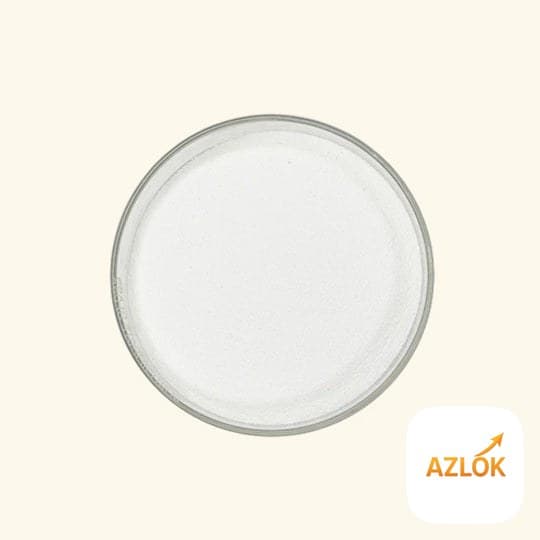
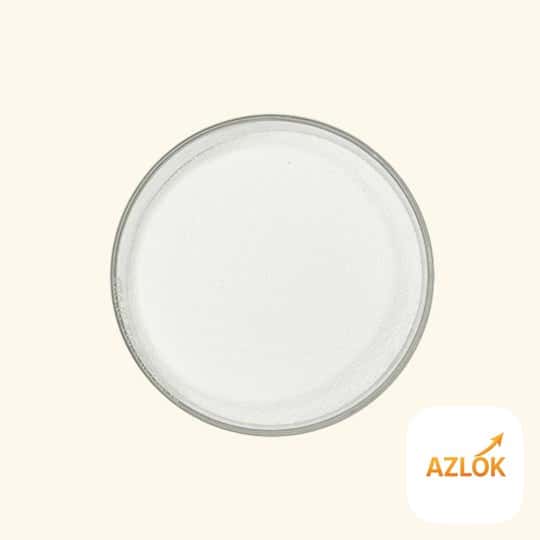
Ethylene Diamine Tetra Acetic Acid (EDTA) is a water-soluble chelating agent that binds stray metal ions like calcium, magnesium and iron in your formula. In cosmetics it stops hard-water minerals from clouding your product, dulling your lather or spoiling your preservative, so shampoos, creams and lotions stay stable and perform better. It is used only in tiny amounts and always for external products.
Azlok stocks cosmetic-grade EDTA in powder form at 99% purity, in pack sizes from 100 Gm up to 25 KG, so both home makers and small brands can buy what they actually need.
What EDTA actually does in a formula
Think of EDTA as a mineral trap. Tap water, plant extracts and even some raw materials carry dissolved metal ions. Those ions can react with your ingredients and cause a few familiar problems: soap scum, cloudy lotions, colour changes, rancid oils and weakened preservatives. By locking onto (chelating) those ions, EDTA keeps them out of trouble.
- Boosts preservatives: many preservative systems work far better once metal ions are neutralised, so a little EDTA helps your batch stay fresh through its shelf life.
- Improves lather and rinse-off: in shampoos, body washes and syndet bars it reduces the soap scum that hard water leaves on hair and skin.
- Protects colour and clarity: stops iron and copper traces from discolouring clear gels, serums and cleansers.
- Slows rancidity: metal ions speed up oil oxidation; chelating them helps oils last longer.
You will see it listed on labels as Tetrasodium EDTA (its INCI name), and it appears in shampoos, creams, makeup, sunscreens and lotions.
How to use EDTA in your recipes
EDTA is a supporting ingredient, not the star. A small dose does the whole job.
- Typical dose: most formulators use around 0.1% to 0.2% of the total batch weight. Rarely do you need more than 0.5%.
- Add it to the water phase: since it is soluble in water, dissolve it fully in your water phase before combining with oils. Warm water helps it disperse.
- Weigh, don't guess: use a small digital scale. For a 500 g batch, 0.1% is just 0.5 g, so accuracy matters.
- Pair with your preservative: add EDTA alongside your chosen preservative system rather than relying on it alone. EDTA is not a preservative by itself.
Safety and handling
EDTA is a synthetic compound, so treat it with the same care you give any raw chemical in your workspace.
- It is meant for external use only. Do not ingest it.
- Avoid direct contact with the eyes; wear gloves and rinse well if the powder touches skin.
- Work in a ventilated area and avoid breathing in the fine powder. A simple dust mask is sensible when weighing.
- Keep out of reach of children and pets.
- Stay within recommended use levels for cosmetics; more is not better and can affect the feel of your product.
Buying and storage tips
Azlok's EDTA is cosmetic grade, odourless, white in colour, with a stated purity of 99% and a shelf life of around 24 months. To keep it in good condition:
- Store in a cool, dry place, away from direct sunlight and moisture.
- Keep the pack tightly sealed. Powder that clumps has usually picked up humidity.
- Buy a pack size that suits your usage. Because doses are so small, a 100 Gm pack goes a long way for a home maker, while small brands may prefer the 1 KG or larger sizes.
- Ask for the COA and MSDS if you are formulating products to sell, and always test a small batch first.
FAQ
Is EDTA a preservative?
No. EDTA is a chelating agent that binds metal ions. It supports and strengthens your preservative system, but you still need a proper preservative to protect water-based products from microbes.
How much EDTA should I add to a lotion or shampoo?
Most makers use about 0.1% to 0.2% of the total weight, dissolved into the water phase. That is roughly 1 to 2 grams per kilogram of product.
Is EDTA safe for skin and hair?
Used at the small levels standard in cosmetics, EDTA is widely used in shampoos, creams and lotions for external application. It is not for ingestion, and you should avoid eye contact and keep it away from children.
Can EDTA be used in cold-process soap?
Yes, it is popular in soap making to reduce soap scum and DOS (dreaded orange spots) caused by metal ions. Dissolve it in your lye water or added water before mixing.
Why is my lotion still cloudy even with EDTA?
Cloudiness can also come from emulsion issues, temperature or oil choice. EDTA only addresses metal-ion-related clouding, so review your emulsifier and process if problems persist.