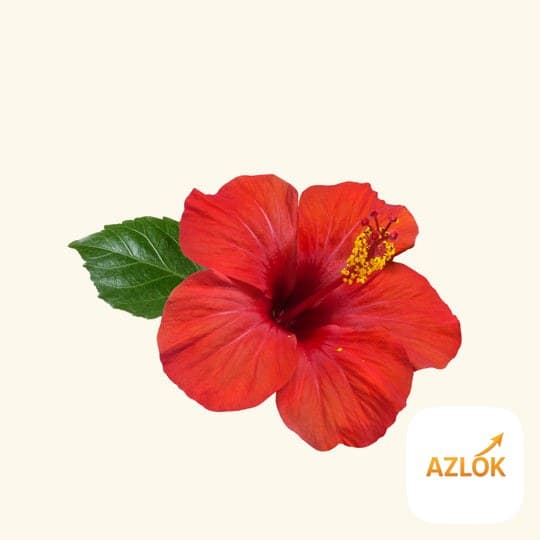

Hibiscus hydrosol is the aromatic water left behind when hibiscus flowers and leaves are steam-distilled. It is a light, colourless floral water you can use as a facial toner, a base for creams and lotions, a hair mist, or an ingredient in DIY skincare. Azlok's Hibiscus Hydrosol (INCI: Hibiscus Rosa-Sinensis Flower Water) is water-soluble, mildly aromatic and made in India, with prices starting at just ₹149.
What is hibiscus hydrosol?
A hydrosol, sometimes called a floral water or flower water, is the by-product of steam distillation. When steam passes through hibiscus leaves and flowers, it captures a small amount of the plant's water-soluble compounds. What condenses back into liquid is the hydrosol. It is far gentler than an essential oil and can usually be used on the skin without dilution.
This particular hydrosol is colourless with a soft, slightly green, fresh aroma that carries a sweet anise or licorice-like note. It dissolves in water and alcohol but does not mix with fixed oils, which matters when you are formulating.
Common uses
- Facial toner: Hibiscus water is often used to help balance the skin's pH after cleansing. Decant a little into a spray bottle and mist your face, or apply with a cotton pad.
- Soothing irritation: Its mild, cooling nature makes it a popular choice for calming the feel of redness, rashes or after-sun skin.
- DIY creams and lotions: Use it as the water phase in homemade emulsions, gels and masks.
- Facial steam and compresses: Add to warm water for a gentle steam, or soak a cloth for a refreshing compress.
- Hair mist: Spritz onto hair between washes for a light, fresh scent and a hydrating feel.
How to use it
For most people, hibiscus hydrosol can be used neat (undiluted). A simple routine looks like this:
- Cleanse your face and pat it dry.
- Mist the hydrosol on or sweep it over the skin with a cotton pad.
- Let it absorb for a moment, then follow with your serum or moisturiser.
If you like to experiment, the store notes it blends well with ingredients like seaweed extract and a touch of tea tree oil for a fresh, glow-focused face mist. Because it is insoluble in fixed oils, always pair it with the water phase of a formula, not the oil phase, and add a suitable preservative if you are making a batch to keep for weeks.
Tips and safety
- Patch test first. Apply a little to your inner forearm and wait 24 hours before using it on your face, especially if your skin is sensitive.
- For external use only. This is a cosmetic ingredient, not a food or medicine. Do not drink it, and keep it away from the eyes.
- Keep out of reach of children.
- Preservation matters. Hydrosols are water-based and can spoil. Store carefully, use clean hands or tools, and add a cosmetic preservative when blending into homemade products for longer shelf life.
- It is a supporting ingredient, not a treatment for medical skin conditions. See a dermatologist for persistent problems.
Buying and storage
Azlok offers Hibiscus Hydrosol in a 100 gm bottle with a 3 ml dropper for first-timers, and in larger 500 gm, 1 kg, 5 kg, 10 kg and 20 kg packs suited to soap makers, candle and cosmetic hobbyists, and small businesses. Look for the honest details: INCI name Hibiscus Rosa-Sinensis Flower Water, steam-distilled, India origin, and available COA and MSDS documents.
Store the bottle in a cool, dry place away from direct sunlight. Kept well, the shelf life is around two years. If you notice cloudiness, an off smell or floating particles, it is best to discard it.
FAQ
Can I use hibiscus hydrosol directly on my face?
Yes. It is gentle enough for most skin types to use undiluted as a toner or mist. Do a 24-hour patch test first if your skin is sensitive.
What is the difference between hibiscus hydrosol and hibiscus essential oil?
A hydrosol is the water-based product of steam distillation and is very mild, so it can often be used as-is. Essential oils are concentrated and must be diluted. Hibiscus is primarily valued as a hydrosol rather than an oil.
Does hibiscus hydrosol have a strong smell?
No. It has a soft, fresh, slightly green aroma with a sweet anise or licorice-like note. It is subtle and fades quickly.
Can I add it to my homemade cream?
Yes, use it as the water phase in creams, lotions, gels and masks. It will not mix into oils, so add it to the water part of your recipe and include a preservative for batches you plan to keep.
How long does it last?
Unopened and stored in a cool, dry place, it keeps for about two years. Use clean tools when dispensing to avoid contamination.