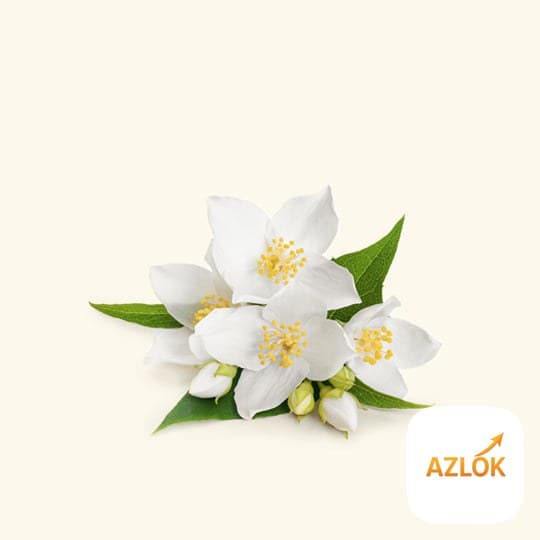

Jasmine essential oil is a richly floral oil steam-distilled from Jasminum sambac flowers, used mainly in perfumery, aromatherapy and diluted skincare to lift mood and add a sweet, lingering scent. Because it is highly concentrated, it should always be blended with a carrier oil before it touches your skin, and it is meant for external use only.
What Jasmine essential oil is
Azlok's Jasmine Essential Oil is a transparent, yellow to dark-yellow liquid with the warm, honeyed aroma most people associate with jasmine flowers. It is extracted by steam distillation and carries the plant's characteristic constituents, including benzyl acetate, indole, benzyl alcohol, linalool and eugenol. These compounds give the oil its intense, romantic scent that a little goes a long way.
A few quick facts worth knowing: botanical name Jasminum sambac, origin India, specific gravity around 0.899, and a shelf life of about two years when stored well. It is soluble in alcohol, which is why it works so smoothly in perfume and room-spray bases.
Common uses at home
- Aromatherapy: Add a few drops to a diffuser to create a calming, uplifting atmosphere. Many people find the scent helps ease everyday stress and low mood.
- Skincare: When diluted, it is used to moisturise dry skin, support skin elasticity, and soften the look of scars and stretch marks.
- Haircare: A drop or two mixed into your hair oil nourishes the scalp and leaves a soft floral fragrance behind.
- Perfumery and DIY: A prized note in natural perfumes, roll-ons, candles and soaps.
- Body care: Blended into massage oils for a relaxing, fragrant treatment.
How to use it
Never apply Jasmine oil neat. Dilute it first in a carrier oil such as coconut, almond, jojoba or sesame.
- For skin and massage: Use roughly 2–3 drops of Jasmine oil per 10 ml of carrier oil, then patch-test before wider use.
- For a diffuser: Add 3–5 drops to the water reservoir as directed by your device.
- For haircare: Mix 1–2 drops into a tablespoon of your regular hair oil and massage gently into the scalp.
- For DIY perfume: Since it dissolves in alcohol, blend small amounts into a perfumer's alcohol base and let it mature for a few days.
It blends beautifully with rose, geranium, sandalwood, lavender and frankincense, as well as all common carrier oils, so experiment in small batches.
Safety notes
Jasmine oil is potent, so treat it with respect.
- For external use only — do not ingest.
- Always dilute before applying to skin.
- Do a patch test on your inner arm and wait 24 hours before regular use.
- Avoid direct sun exposure on freshly applied areas.
- Keep out of reach of children and away from the eyes.
- Pregnant or breastfeeding women should consult a doctor before use.
Buying and storage tips
Azlok offers Jasmine Essential Oil starting at ₹899, with pack sizes ranging from 100 GM up to 20 KG, so both hobbyists and small businesses can buy what they need. When you receive it, store the bottle tightly closed in a cool, dark place away from heat and sunlight. Light and air speed up oxidation, so a well-sealed bottle protects both the aroma and the two-year shelf life. If you buy larger quantities, decant smaller working amounts into amber glass to keep the main stock fresh.
FAQ
Can I apply Jasmine essential oil directly to my skin?
No. It is highly concentrated and should always be diluted in a carrier oil before topical use. Start with about 2–3 drops per 10 ml of carrier oil and patch-test first.
Is Jasmine essential oil safe to ingest?
No. This oil is meant for external use only. Do not swallow it or add it to food or drinks.
Which oils blend well with Jasmine?
It pairs well with rose, geranium, sandalwood, lavender and frankincense, and combines easily with all common carrier oils for massage and skincare blends.
How long does Jasmine essential oil last?
It has a shelf life of about two years when stored in a tightly sealed bottle away from heat, light and air.
Can pregnant women use it?
They should consult a doctor before using Jasmine essential oil, as with most concentrated essential oils.