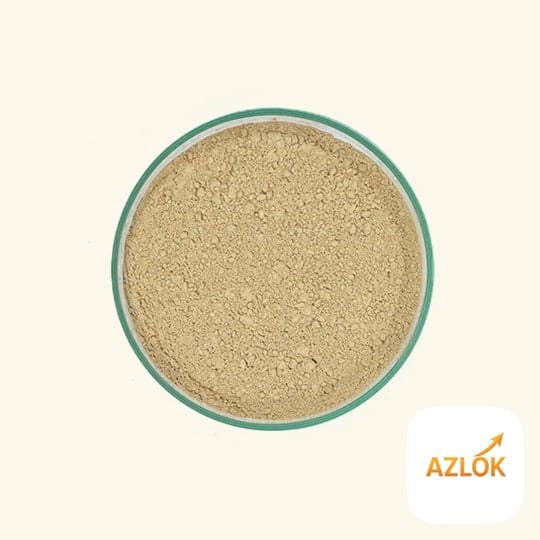

Licorice root powder, known in India as mulethi or yashtimadhu, is a finely ground herbal powder made from the dried root of the licorice plant. It is used mostly in DIY skincare and hair care for its brightening and soothing qualities, and traditionally in home remedies for throat comfort. Azlok's cosmetic-grade licorice root powder is sourced in India and starts at Rs. 149 for a 100 gm pack.
What licorice root powder is used for
This is a versatile herbal powder with a mild, sweet-woody smell. Most people reach for it for the following:
- Skin brightening: A popular ingredient in face packs to help fade the look of dark spots, uneven tone and post-acne marks.
- Soothing irritated skin: Its naturally calming properties make it a common choice for sensitive or blemish-prone skin.
- Hair and scalp care: Added to hair masks and oils to support a healthier-feeling scalp.
- Traditional home use: Mulethi has a long history in Indian households for soothing an irritated throat and easing a dry cough.
- Formulation ingredient: Small makers use it in soaps, creams and herbal blends.
How to use it
Because it is a concentrated powder, a little goes a long way. Here are simple ways to work it into your routine:
Brightening face pack
- Mix 1 teaspoon licorice root powder with enough rose water, milk or plain yoghurt to make a smooth paste.
- Apply an even layer to clean skin, avoiding the eye area.
- Leave on for 10–15 minutes, then rinse with lukewarm water.
- Use once or twice a week and follow with a moisturiser.
Hair and scalp mask
Blend a teaspoon of the powder into your usual hair oil or into a paste with water and a little amla or shikakai. Apply to the scalp, leave for 20–30 minutes and wash off with a gentle shampoo.
Throat comfort
Traditionally, a small pinch is steeped in warm water as a soothing drink. Keep quantities modest and treat this as a home remedy, not a medicine.
Tips and safety notes
Herbal does not automatically mean risk-free, so use a bit of common sense.
- Always patch-test a new pack on the inner forearm before applying to your face, and wait 24 hours.
- Do not overuse. Frequent or heavy use of licorice, especially taken internally, is not advisable. People with high blood pressure, kidney concerns, or who are pregnant or breastfeeding should consult a doctor before consuming it.
- Keep it out of the eyes. If any pack gets into your eyes, rinse well with water.
- This is cosmetic-grade powder. Use it mainly for external skin and hair applications; do not treat it as a cure for any medical condition.
- Store away from children and pets.
Buying and storage
Good licorice root powder should be pale beige to light brown, finely milled and free of grit or a stale smell. Azlok offers it in sizes to suit everyone, from a 100 gm pack for trying it out to 500 gm, 1 kg, 5 kg, 10 kg and 20 kg for regular users and small businesses making soaps, creams and herbal blends.
To keep it fresh for its full two-year shelf life:
- Store in an airtight container in a cool, dry place, away from direct sunlight.
- Use a clean, dry spoon each time to avoid moisture and clumping.
- Keep it away from strong-smelling spices, as fine powders can pick up odours.
FAQ
Is licorice root powder the same as mulethi?
Yes. Mulethi is the common Hindi name for licorice root, and yashtimadhu is its Sanskrit name. The powder is simply the dried root ground into a fine form.
Can I use licorice root powder on my face daily?
It is better to use it once or twice a week as part of a face pack. Daily use is not necessary, and over-exfoliating or over-treating the skin can cause irritation. Always patch-test first.
Does licorice root powder lighten skin permanently?
No powder gives permanent results. Licorice is valued for helping to reduce the appearance of dark spots and even out tone with regular use, but effects fade if you stop and vary from person to person.
Can licorice root powder be eaten?
Azlok's powder is cosmetic-grade and best used externally. Mulethi is used in small amounts in traditional throat remedies, but do not consume large quantities, and check with a doctor if you have blood pressure or kidney issues, or are pregnant.
How long does it last?
Stored properly in an airtight container in a cool, dry place, it stays good for about two years from packing.