Microcrystalline Wax: What It Is and How to Use It in Candles, Balms and More
Microcrystalline wax is a refined, petroleum-derived wax with a fine crystalline structure that makes it more flexible, sticky and water-resistant than ordinary paraffin. In short, it is the wax makers reach for when they want a product that bends without cracking, binds ingredients together, and holds up to moisture — which is why you will find it in everything from lip balms to candles to food packaging.
What makes microcrystalline wax different
Regular paraffin has larger crystals, so it is hard and can feel brittle. Microcrystalline wax has much smaller crystals, giving it a softer, tackier and more elastic feel. That single difference explains most of its useful properties:
- High flexibility and adhesion — it grips surfaces and binds oils, so it prevents cracking and separation.
- Excellent moisture barrier — it repels water, useful in protective coatings and skincare.
- Stable and durable — a higher melting range than paraffin means better heat resistance.
- Odourless and non-toxic in its refined form — suitable for cosmetic and food-contact grades.
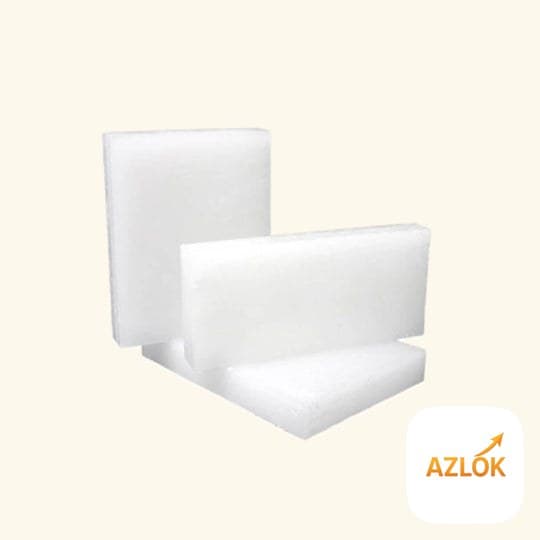
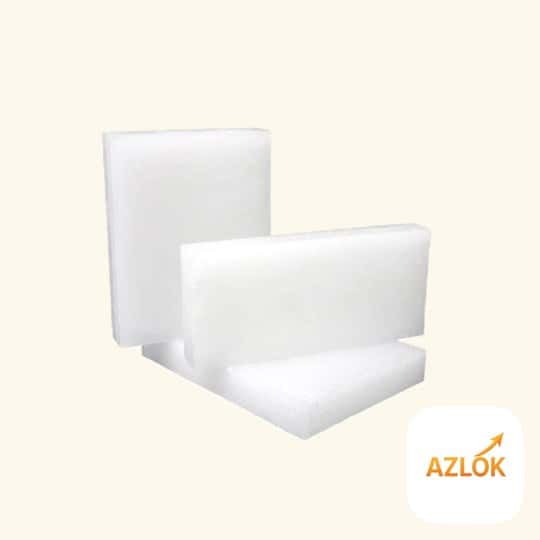
The Azlok microcrystalline wax comes as slabs, white to yellow in colour, and is available in packs from 500 g up to 25 kg for hobbyists and small businesses alike.
Common uses
Candle making
Blended into candle wax, microcrystalline wax raises the melting point, improves burn stability and helps candles hold their shape in warm Indian summers. A small percentage added to container or pillar blends also boosts fragrance retention and gives a smoother finish.
Cosmetics and skincare
This is where it truly shines. It thickens creams, lotions, lip balms and salves, giving them body and that soft, cushioned glide. Because it binds oils well, it keeps formulations from separating and adds a protective, moisture-sealing layer on skin.
Packaging, industrial and other applications
Microcrystalline wax is used as a moisture barrier in food packaging (using appropriate food-grade material), in coatings and polishes, in some pharmaceutical preparations, in electrical insulation work, and even in water filtration and treatment processes. Its stickiness makes it a good laminating and sealing wax too.
How to use it
- Melt gently. Cut or break the slab into smaller pieces and melt using a double boiler or a wax melter. Avoid direct high heat, which can scorch the wax.
- Blend by percentage. For candles, start by adding 5–15% to your base wax and adjust. For balms and creams, use it as your hard wax and combine with carrier oils and butters.
- Test small batches first. Because microcrystalline wax is tacky, a little goes a long way. Note your ratios so you can repeat a formula that works.
- Pour and cure. Let candles and balms set fully before handling; the wax firms up as it cools.
Safety and handling
Refined microcrystalline wax is generally considered non-toxic, but treat it sensibly:
- Work in a ventilated space when melting, and never leave hot wax unattended.
- Use a thermometer; overheating any wax is a fire risk.
- Do a patch test on your inner arm before using a new skincare formula.
- For any food-contact use, confirm you have a food-grade product and follow the guidance in the supplier's documentation.
- Keep the wax and hot melt away from children and pets.
Always ask for the COA and MSDS from your supplier and read them before industrial or cosmetic use.
Buying and storage tips
Choose your pack size by project: 500 g or 1 kg is plenty for home candle and balm making, while 5 kg and above suits small production runs. Store the slabs in a cool, dry place away from direct sunlight and strong heat. Keep them sealed to avoid dust and moisture. With correct storage, Azlok microcrystalline wax has a shelf life of around 24 months. If the wax picks up an off smell or an odd texture, retire that batch.
FAQ
Is microcrystalline wax the same as paraffin wax?
No. Both come from petroleum, but microcrystalline wax has finer crystals, making it softer, stickier, more flexible and more water-resistant, with a higher melting range than typical paraffin.
Can I use microcrystalline wax on my skin?
Refined cosmetic-grade microcrystalline wax is widely used in lip balms, creams and lotions as a thickener and moisture barrier. Do a patch test first and use a product intended for cosmetic use.
How much should I add to candles?
Start with about 5–15% of your total wax and adjust to taste. Small additions improve hardness, shape retention and fragrance hold without changing the base too much.
Does it melt easily in the heat?
It has a higher melting point than paraffin, so it resists softening better in warm weather — one reason it is popular for candles and balms in Indian climates.
How long does it last in storage?
Kept cool, dry and sealed away from sunlight, it stays usable for roughly 24 months.