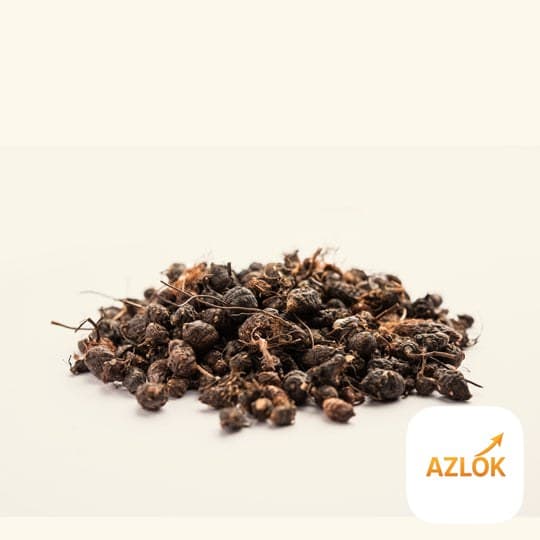

Nagarmotha essential oil is a rich, woody, earthy oil steam-distilled from the roots of the Cyperus scariosus plant, and it is used mainly in hair care, skincare and natural perfumery. Because it is highly concentrated, it should be diluted in a carrier oil before you apply it to the skin, and it is meant for external use only.
What is Nagarmotha essential oil?
Nagarmotha, sometimes called nut grass or Indian cypriol, has been part of Indian home traditions for a very long time. The oil comes from the plant's roots (not the leaves or flowers), which is where its deep, grounding aroma lives. Azlok's Nagarmotha essential oil is produced by steam distillation and ranges in colour from pale yellow to brown, with a characteristic smoky, woody scent that many people find close to vetiver.
A few quick technical notes for makers: the botanical name is Cyperus scariosus, CAS number 91771-62-9, specific gravity around 0.918, and it is soluble in alcohols. The shelf life is about two years when stored well.
Common uses of Nagarmotha oil
- Hair care: It is traditionally valued for supporting scalp health and strengthening hair. Add a few drops to your hair oil or a mask.
- Skincare: Its earthy character and soothing reputation make it a popular addition to face and body oil blends, always well diluted.
- Natural perfumery: Nagarmotha is a classic base and fixative note. It grounds a blend and helps the fragrance last longer.
- Aromatherapy and diffusing: The warm, woody aroma is calming and works well in the evening.
- Candles and soaps: A small amount lends an incense-like, grounding scent to handmade products.
How to use it safely
Essential oils are potent, so a little goes a long way. Follow these basics:
- Dilute first. Mix Nagarmotha oil into a carrier such as coconut, sesame, jojoba or almond oil. A general guide for adults is 1-2 drops per teaspoon of carrier oil.
- Patch test. Apply the diluted blend to a small area on your inner forearm and wait 24 hours before wider use.
- Blend it thoughtfully. Nagarmotha pairs beautifully with clary sage, vetiver, patchouli and cassia, and with all types of carrier oils.
- Mind the sun. Avoid direct sunlight on freshly applied blends.
- Keep it external. Do not ingest the oil, and keep it out of reach of children and pets.
If you are pregnant or have a medical condition, speak to your doctor before using it. This oil is not a medicine and should not replace professional care.
Buying and storage tips
Azlok offers Nagarmotha essential oil in sizes from 50 gm up to 10 kg, so hobbyists and small businesses can both find a practical quantity. Prices start at ₹899, and larger packs suit soap makers, candle makers and perfumers who use it regularly.
- Store in a tightly closed, dark glass bottle away from heat and light.
- Keep the cap sealed to prevent oxidation and scent loss.
- Do not store near open flames; the flash point is low, so treat it like any flammable liquid.
- Use within about two years for the best aroma and performance.
How to tell you are getting a good oil
Genuine Nagarmotha oil has a strong, distinctive woody-earthy smell and a colour ranging from pale yellow to brown. Ask for a COA (Certificate of Analysis) and MSDS if you are buying for commercial use, and check that the extraction method is steam distillation. A very cheap, weakly scented oil is usually diluted or adulterated.
FAQ
What is Nagarmotha essential oil used for?
It is used mainly in hair care, skincare, natural perfumery, aromatherapy, and in candles and soaps. Its woody, earthy aroma also makes it a valued base and fixative note in fragrance blends.
Can I apply Nagarmotha oil directly on my skin?
No. Always dilute it in a carrier oil first, roughly 1-2 drops per teaspoon of carrier, and do a 24-hour patch test before wider use. It is for external use only.
What does Nagarmotha oil smell like?
It has a deep, smoky, woody and earthy aroma, often compared to vetiver. This grounding scent is why it is popular in perfumery and evening aromatherapy blends.
Which oils blend well with Nagarmotha?
It blends well with clary sage, vetiver, patchouli and cassia essential oils, and with all common carrier oils such as coconut, sesame, jojoba and almond.
How long does Nagarmotha essential oil last?
About two years when stored in a sealed dark glass bottle, kept away from heat, light and open flames.