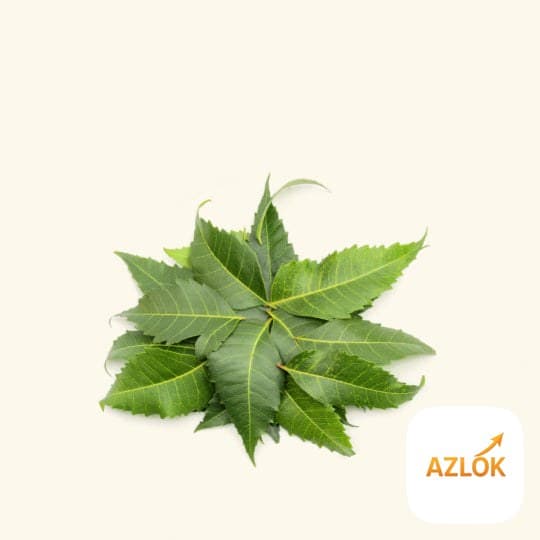

Neem Leaf Liquid Extract is a concentrated herbal extract made from the leaves of the neem tree (Azadirachta indica), used at 1–2% in soaps, shampoos, creams, face washes and other DIY personal care recipes. Prized in Ayurveda for its antimicrobial reputation, it lets you add neem's benefits to a formulation without the strong smell and dark colour of raw neem oil.
What is Neem Leaf Liquid Extract?
This is a solvent-extracted concentrate drawn from neem leaves, not the seed oil most people are familiar with. Azlok offers it in two versions to suit different recipes:
- Water soluble (alcohol free): extracted using vegetable palm glycerin or vegetable glycerol, so it blends into water-based products.
- Oil soluble: extracted using soy oil, suited to anhydrous and oil-phase formulations.
It carries a 4:1 herb-to-extract ratio, meaning 4 kg of neem leaf yields 1 kg of extract. The extract is described as tasteless and largely odourless, appears as a liquid, and uses BHT (butylated hydroxytoluene) as a preservative note. It is free from gluten, artificial colour, heavy metals and fertilisers.
Common uses
Neem has long been part of Indian household and grooming routines, and the extract makes it easy to work into modern formulations:
- Soap making — a natural botanical addition to cold-process, melt-and-pour or liquid soaps.
- Shampoos and hair oils — commonly chosen for scalp and hair care blends.
- Face wash, serums and creams — for those formulating with neem's traditional reputation for oily, blemish-prone skin.
- Lotions, body washes and DIY cosmetics — a broadly compatible herbal active.
Because it is tasteless and low in odour, it is easier to include than raw neem oil, which can overpower a fragrance.
How to use it in formulations
The recommended usage rate is 1–2% of your total recipe. A little goes a long way, so measure by weight rather than by eye.
- Choose the right version: water soluble for water-based products, oil soluble for oil-based ones.
- Add it during the cool-down phase of lotions and creams, or at trace in cold-process soap, unless your specific recipe advises otherwise.
- Stir thoroughly so it disperses evenly through the batch.
- Make a small test batch first and check the colour, feel and stability before scaling up.
Always work to a written formula in percentages. This keeps your results consistent from one batch to the next, which matters especially for small businesses selling handmade products.
Safety notes
Neem extract is intended for external, topical formulations — it is not a food or a medicine, so do not ingest it. No herb-drug interactions are known, but caution is sensible with any external application. A few sensible habits:
- Do a patch test on a small area of skin before using a new product widely.
- Avoid direct contact with the eyes; rinse with water if contact occurs.
- Keep it out of reach of children.
- Do not use it as a replacement for medical treatment or make health claims on products you sell.
If you are formulating commercially, request the COA and MSDS for the version you buy so you have documentation on file.
Buying and storage
Azlok stocks Neem Leaf Liquid Extract from 100 gm packs right up to 25 kg, so hobbyists and manufacturers can both buy sensibly. Pricing starts around ₹349, and packaging is arranged as per your requirement. The product is made in India.
To keep it fresh, store it in a cool, dry place, away from direct sunlight and heat. Kept well, it has a shelf life of about 2 years. Close the container tightly after each use and label it clearly with the batch and the soluble type so you don't mix up your water- and oil-soluble stock.
FAQ
What is the difference between neem leaf extract and neem oil?
Neem oil is pressed from neem seeds and has a strong smell and colour. This extract is drawn from neem leaves and is tasteless and largely odourless, which makes it easier to blend into scented cosmetics and personal care recipes.
How much Neem Leaf Liquid Extract should I use?
The recommended usage rate is 1–2% of your total formulation by weight. Start at the lower end and adjust after a test batch.
Which version should I choose — water soluble or oil soluble?
Use the water-soluble (glycerin-based) version for water-based products like face washes and lotions, and the oil-soluble (soy oil) version for oil-based or anhydrous formulations.
Can I take neem extract internally?
No. This product is meant for external, topical formulations only. Do not ingest it and keep it away from your eyes and out of children's reach.
How long does it last and how should I store it?
It has a shelf life of around two years when stored in a cool, dry place away from sunlight and heat, with the container kept tightly closed.