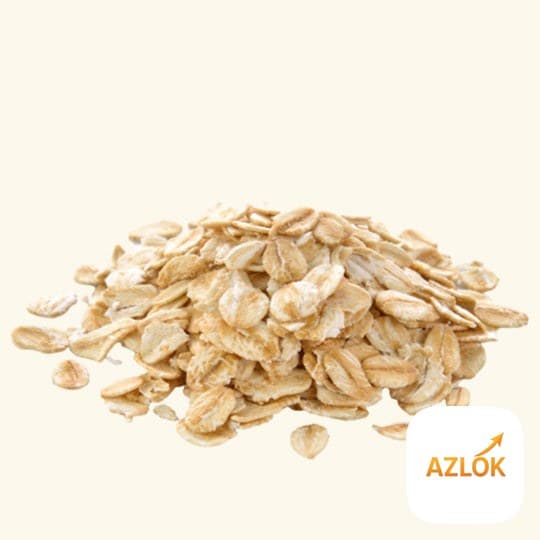

Oat Liquid Extract is a water- or oil-soluble herbal extract made from oat seed (Avena sativa), used at 1–2% in DIY skincare and haircare to add soothing, softening and antioxidant-rich actives to your formulations. It is colourless to pale yellow, has no odour or taste, and is designed to blend into soaps, creams, lotions, serums, shampoos and face washes without altering the fragrance or feel of your product.
What is Oat Liquid Extract?
This is a concentrated herbal extract drawn from oats, prized in cosmetics for their naturally calming and moisturising reputation. Oats carry protein, minerals, healthy fats, beta-glucan, polysaccharides and dietary fibre, along with plant compounds like flavonoids, saponins and sterols. In extract form, these come pre-dissolved and ready to stir into your recipe.
- Botanical name: Avena sativa
- CAS number: 84012-26-0
- Strength: 4:1 herb-to-extract ratio (4 kg of oats yield 1 kg of extract)
- Water-soluble version: alcohol-free, extracted in vegetable palm glycerin/glycerol
- Oil-soluble version: extracted in soy oil
- Free from: gluten, artificial colour, heavy metals and fertilisers
Common uses in DIY personal care
Oat extract is a versatile add-in for makers who want a gentle, familiar botanical in their products. Because it is odourless and tasteless, it slips into almost any formula without a fight.
- Soaps: cold process, melt-and-pour and liquid soaps
- Hair care: shampoos and conditioners
- Face: face washes, serums, toners and light gels
- Body: lotions, creams and body butters
Pick the water-soluble grade for water-based products like toners, gels, shampoos and most lotions. Choose the oil-soluble grade for anhydrous balms, facial oils and oil-phase blends.
How to use it
The recommended dose is 1–2% of your total formulation. That means for every 100 grams of product, you would add roughly 1 to 2 grams of extract.
- Decide whether your recipe is water-based or oil-based, then choose the matching grade.
- Add the extract to the correct phase — water-soluble into the water phase, oil-soluble into the oil phase.
- Stir it in during the cool-down stage, after high heat, to protect the delicate actives.
- Keep to the 1–2% range; more is not better and can affect your product's stability.
Always test a small batch first. New ingredients can change texture, thickness or how a preservative behaves, so confirm your full formula holds up before scaling up.
Safety notes
This is a cosmetic raw material meant for external use in properly formulated products. A few sensible precautions:
- Do a patch test on skin before using a new formula widely.
- Avoid direct contact with the eyes.
- Keep it away from children.
- This extract contains BHT (butylated hydroxytoluene) as a preservative note; handle it as a cosmetic ingredient, not a food.
- No herb–drug interactions are known, but caution is still advised with external applications, especially on sensitive or broken skin.
Buying and storage tips
Azlok offers Oat Liquid Extract in sizes from 100 gm right up to 25 kg, so hobbyists and small businesses can both find a suitable pack. Pricing starts around ₹309, and larger packs suit anyone formulating in bulk.
- Store in a cool, dry place away from direct sunlight.
- Keep the container tightly closed to avoid contamination.
- Shelf life is around 2 years when stored correctly.
- Ask for the COA and MSDS documents relevant to the water-soluble or oil-soluble grade you are buying, especially for commercial work.
- Confirm which grade you need before ordering — water-soluble and oil-soluble are not interchangeable.
FAQ
Is Oat Liquid Extract water-soluble or oil-soluble?
Both versions exist. The water-soluble grade is alcohol-free and made using vegetable glycerin, ideal for water-based products. The oil-soluble grade uses soy oil and suits oil-based formulas. Choose based on your recipe's main phase.
How much should I add to my product?
Use 1–2% of the total formulation. For 100 grams of finished product, that is about 1 to 2 grams of extract.
Does it have any smell or colour?
It is odourless and tasteless, and ranges from colourless to pale yellow, so it usually will not affect your product's scent or appearance at recommended levels.
Can I use it in soap making?
Yes. It is suitable for soap making along with shampoos, lotions, creams, face washes and serums. Add it during the cool-down stage to protect the actives.
Is it gluten-free?
The product is described as free from gluten, artificial colour, heavy metals and fertilisers. If gluten status is critical for your use, always cross-check the COA for your specific batch.