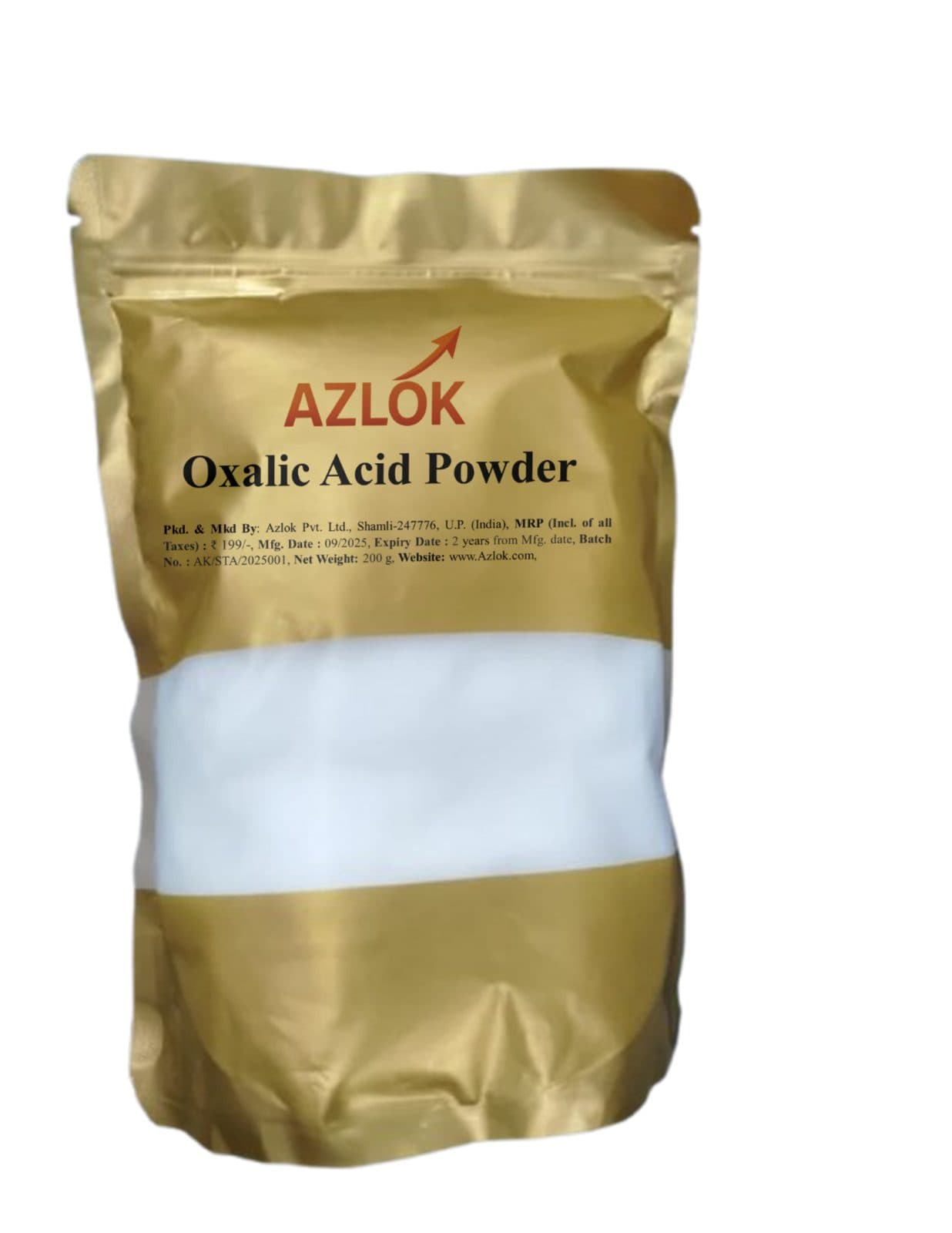
Oxalic Acid Powder: Uses, Dilution Ratios & Safe Handling (Rust, Tiles, Wood)
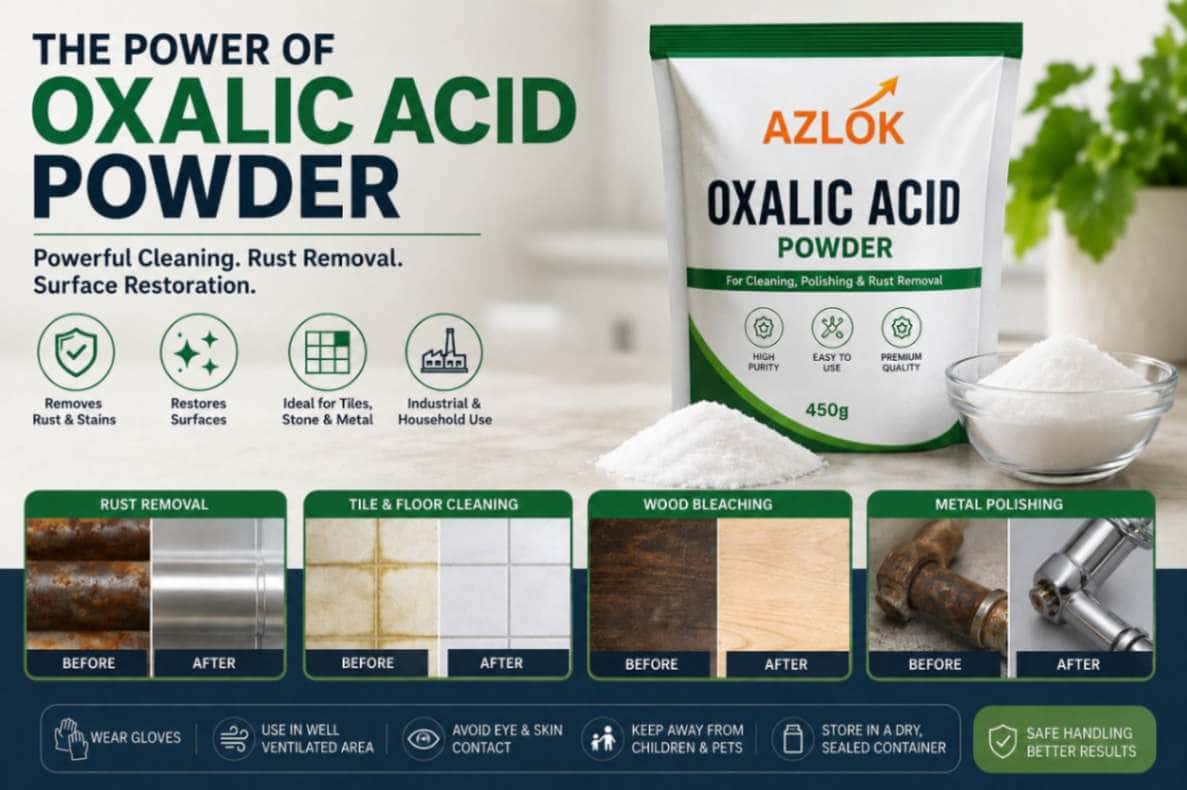
Oxalic acid powder is a strong organic acid used to dissolve rust, lift iron and hard-water stains from tiles and stone, and bleach dark water marks out of wood. To use it, dissolve a small amount in warm water (start with 1–2 teaspoons in 250 ml), apply it to the stain, leave it for 3–10 minutes, then scrub and rinse thoroughly. It is a cleaning and industrial chemical: wear gloves and eye protection, keep it away from food and children, and never mix it with bleach.
What oxalic acid is and why it removes rust
Oxalic acid (C₂H₂O₄, CAS 144-62-7; the dihydrate is CAS 6153-56-6) is a dicarboxylic acid that occurs naturally in plants such as spinach and rhubarb. The white crystalline powder sold for cleaning is made industrially.
It works in two ways. It is a chelating agent: it binds iron and forms a soluble iron–oxalate complex, so a rust stain dissolves and rinses away instead of having to be scraped off. It is also a reducing agent, which is why it lifts the dark iron and tannin stains that water leaves in wood. Ordinary detergents do neither, which is why rust marks on tiles survive months of mopping.
What it is used for
- Rust removal: taps, tools, metal grills and gates, bathroom fittings, and rust marks on concrete or tiles.
- Tiles and grout: yellowed floor tiles, bathroom walls and darkened grout lines.
- Hard-water stains: white scale around taps, in sinks and on glass.
- Granite and stone: rust runs and mineral haze. Spot-test first (see "Surfaces to avoid").
- Wood bleaching: removing black water rings and iron stains, and evening out tone before refinishing furniture or decks.
- Fabric: some rust and ink marks on white cotton. Test on a hidden seam, because it can lighten dyes.
- Industrial and workshop use: metal cleaning and surface preparation, and as a reducing or chelating agent in processing.
How much to mix: dilution guide
Always use a solution, never the dry powder, and start with the weakest mix that works. Raise the strength only if a stain resists. For stubborn rust, a second short application usually works better than one very strong one.
| Job | Starting mix | Leave for |
|---|---|---|
| Light stains on tiles, sinks, glass | 1–2 teaspoons in 250 ml warm water | 3–10 minutes |
| Rust on tiles, concrete, fittings | 1–2 tablespoons per litre of warm water | 10–20 minutes |
| Heavy rust on tools, wood bleaching | Up to about 1 part powder to 10 parts warm water by weight | Until the stain lifts; keep the surface wet |
Mix in plastic, glass or stainless steel, not aluminium or galvanised containers, which the acid attacks. Add powder to water, not water to powder. Warm water dissolves it faster.
Step by step: removing rust or stains
- Put on rubber or nitrile gloves and eye protection, and open a window or door.
- Dissolve the measured powder in warm (not boiling) water and stir until it is clear.
- Apply it to the stain with a cloth, sponge or old brush.
- Leave it to work, as in the table above. Don't let it dry on the surface.
- Scrub gently: a soft brush on grout, a non-scratch pad on tiles.
- Rinse very thoroughly with plenty of clean water so no residue is left.
- Dry the surface. Oil or seal bare metal afterwards so fresh rust doesn't form.
On wood: apply evenly across the whole board to avoid patchy bleaching. Rinse, then neutralise with a mild baking-soda solution, and let the wood dry fully before sanding or finishing.
Surfaces to avoid or test first
- Aluminium and galvanised metal: don't use. The acid attacks them.
- Polished marble, limestone and some coloured stone: acids can etch or dull them. Test a hidden corner, or skip.
- Enamel, coloured grout, dyed fabric and finished wood: can lighten or dull. Spot-test first.
- Ceramic and vitrified tiles, steel, concrete and bare wood usually take it well.
Safety: read this part
Oxalic acid works because it is strong, and the same strength makes it hazardous. It is harmful if swallowed or absorbed through the skin, and it can cause serious eye damage.
- Wear gloves and eye protection. Use a dust mask when handling the dry powder.
- Work with ventilation and don't breathe in the dust or the spray.
- Never mix it with bleach or other cleaning chemicals.
- Keep it labelled, sealed, and away from food, children and pets. Never use it in cooking or as a supplement.
- First aid: rinse skin splashes with plenty of water. For eye contact, rinse for at least 15 minutes and get medical help. If swallowed, don't induce vomiting; get medical help immediately and show the label.
Storage and disposal
Store the powder sealed in its original container in a cool, dry place, because moisture makes it clump. Make up only as much solution as you need. Use leftover solution the same day rather than storing it, and dispose of it with plenty of running water.
Which pack to choose
Azlok sells oxalic acid powder in a few pack sizes. A small pack covers occasional rust and tile jobs at home; a larger pack suits regular workshop, restoration or housekeeping use. See Oxalic Acid Powder, the 200 g tile and rust cleaner pack and the 1 kg pack. Current prices in your city are on the oxalic acid price page.
Frequently asked questions
What is oxalic acid powder used for?
Mainly for removing rust and iron stains from metal, tiles, concrete and stone, for lifting hard-water scale, and for bleaching black water stains out of wood before refinishing. Industry also uses it as a reducing and chelating agent.
How much oxalic acid should I mix with water?
For light stains, start with 1–2 teaspoons in 250 ml of warm water. For rust, use 1–2 tablespoons per litre. Go up to about 1 part powder to 10 parts water by weight only for heavy rust or wood bleaching, and always rinse well afterwards.
How long should I leave it on?
Usually 3–10 minutes for tile stains and 10–20 minutes for rust. Keep the surface wet while it works, then scrub and rinse. Repeat if needed rather than making the solution stronger.
Is oxalic acid safe on tiles, granite and marble?
It is generally fine on ceramic and vitrified tiles. It can dull polished marble and some natural stone, so test a hidden spot first. On granite, test and rinse thoroughly.
Can I use it on aluminium?
No. It attacks aluminium and galvanised metal. Use it on steel, ceramic, concrete, wood and stone, and mix it in plastic, glass or stainless steel containers.
Can oxalic acid bleach wood?
Yes. It is the standard way to remove black water rings and iron stains from wood. Apply evenly, rinse, neutralise with a mild baking-soda solution, and let the wood dry fully before sanding or finishing.
Is oxalic acid dangerous?
Yes, if it is mishandled. It is harmful if swallowed or absorbed through the skin and can seriously damage the eyes. Use gloves, eye protection and ventilation, never mix it with bleach, and keep it away from food and children.
Can oxalic acid be used in food?
No. The powder is a cleaning and industrial chemical. Never eat it, cook with it or store it near food.