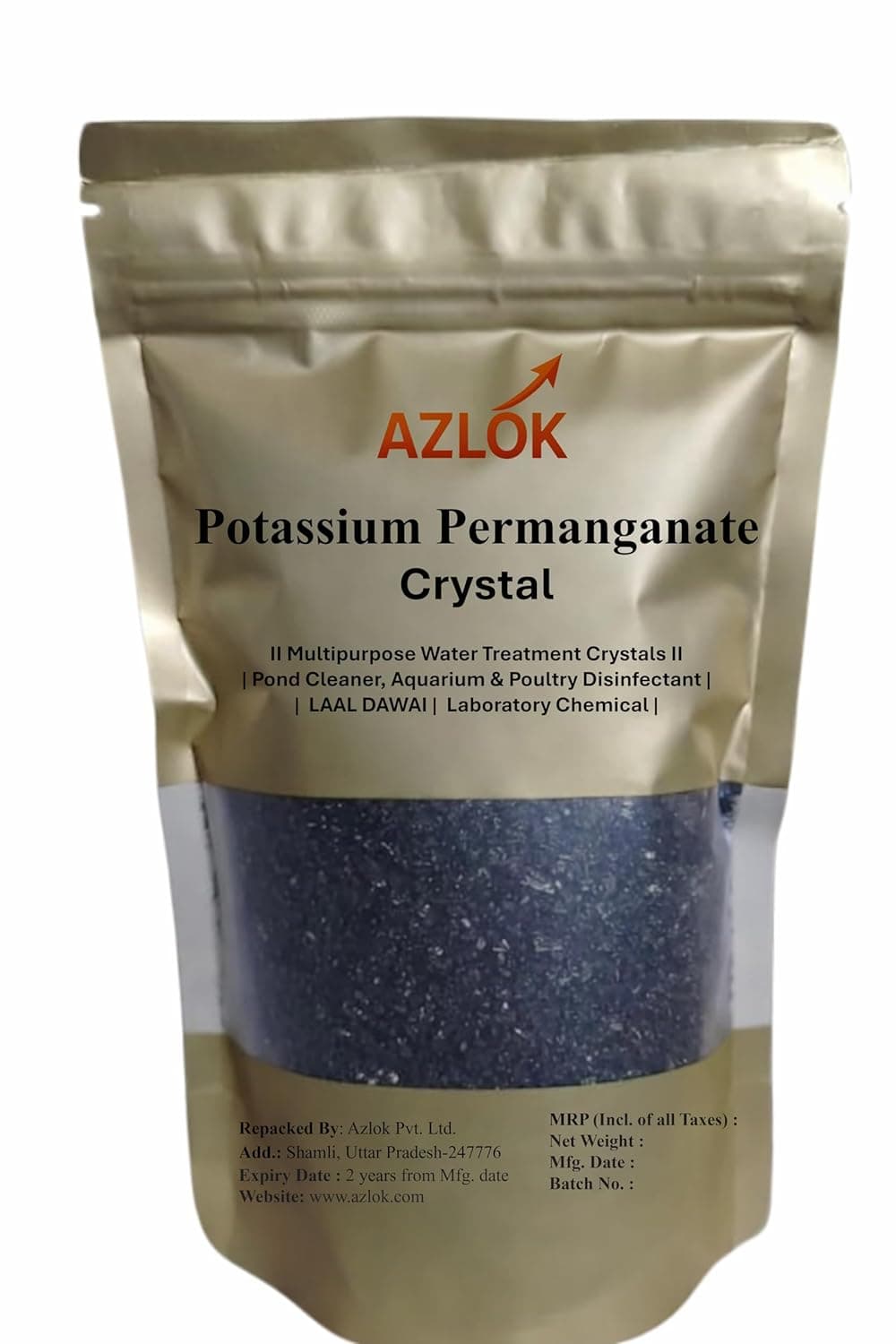
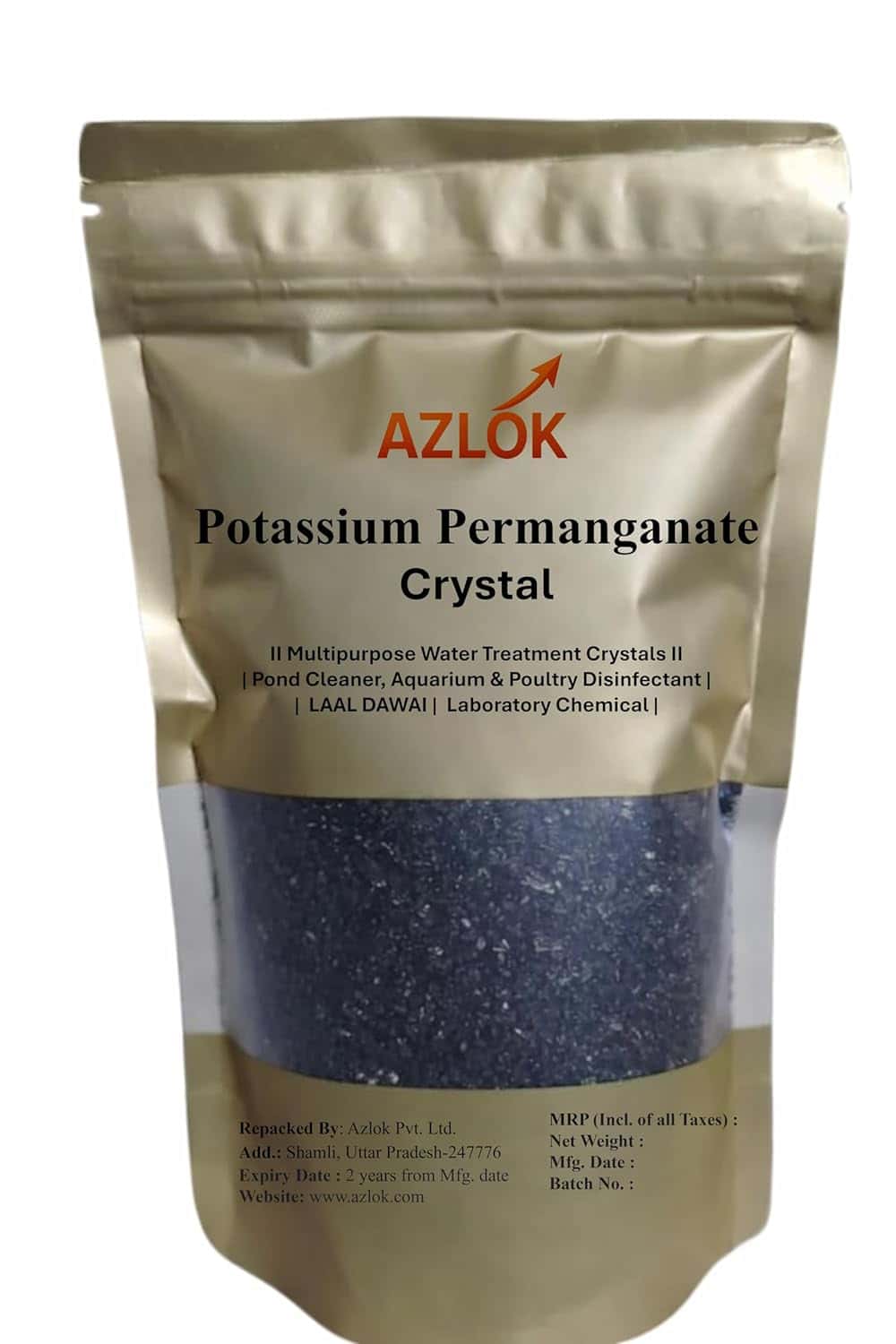
Potassium permanganate crystals are a strong oxidising compound used mainly for water treatment, disinfection and general cleaning. Azlok Potassium Permanganate Crystals (300g) dissolve into a bright purple solution that helps remove iron, manganese and unwanted microorganisms from water, and can also be used to sanitise surfaces and produce when diluted correctly. A little goes a long way, so accurate dosing and careful handling matter more than quantity.
What potassium permanganate is used for
These dark purple crystals are prized for one property: they are a powerful oxidiser. That single trait explains most of their everyday uses.
- Water treatment: commonly used in wells, borewells and treatment systems to oxidise dissolved iron and manganese, and to reduce off smells and taste.
- Disinfection: a very dilute solution is used to sanitise surfaces, containers and equipment.
- Produce and utility washing: highly diluted baths are sometimes used to rinse fruits and vegetables in agricultural and household settings.
- General cleaning: useful for treating tanks, pipes and utility areas where oxidation helps clear organic build-up.
- Laboratory and hobby work: a standard reagent for titrations and other basic chemistry tasks.
How to use and dose it
The golden rule with potassium permanganate is dilute, dilute, dilute. The correct concentration is always very low, and the colour of the water is your quickest guide.
- Wear gloves and work in a ventilated area over a surface that won't stain.
- Add a small amount of crystals to water — never the reverse — and stir until fully dissolved.
- Aim for a light pink to pale purple colour for most disinfection and rinsing uses. Deep purple is too strong for skin or produce contact.
- For water treatment systems, follow the equipment manufacturer's dosing instructions rather than guessing.
- Prepare fresh solution each time; it weakens as it reacts and oxidises.
Because the crystals are so concentrated, a 300g pack lasts a long time for household and occasional use. Measure with a dedicated spoon, not kitchen cutlery you use for food.
Safety notes worth taking seriously
This is a reactive chemical, so treat it with respect.
- Never swallow it and keep it well away from children and pets.
- Undiluted crystals and strong solutions can burn skin, eyes and clothing — always wear gloves and rinse any splashes immediately.
- It stains skin, nails, fabric and countertops brown or purple. Protect surfaces before you begin.
- Keep it away from glycerine, alcohols and other easily oxidised materials, as contact can cause a strong reaction or fire.
- Work with good ventilation and avoid breathing in dust from the crystals.
- If you are unsure about the right concentration for a specific job, start weaker and test.
Used sensibly and diluted correctly, potassium permanganate is a reliable, economical tool. Problems almost always come from using too much or handling the raw crystals carelessly.
Buying and storage tips
Look for high-purity crystals in a fine, uniform form so they dissolve cleanly without leaving grit. Azlok packs the 300g size to keep the crystals dry and stable, which matters because moisture and contamination degrade quality over time.
- Store in a tightly closed container in a cool, dry place, away from sunlight and heat.
- Keep it separate from fuels, oils and organic materials.
- Use a clean, dry scoop each time so you don't introduce moisture into the pack.
- Label the container clearly and store it out of reach of children.
At around ₹260 for 300g, it is a low-cost supply that covers a wide range of water treatment, disinfection and cleaning needs for homes, small businesses and hobby labs.
FAQ
How much potassium permanganate should I add to water?
Only a very small amount. For most disinfection and rinsing uses, aim for a light pink to pale purple colour, not deep purple. For borewell or system treatment, follow the dosing instructions of your equipment.
Why does the water turn purple then brown?
The bright purple colour comes from the dissolved crystals. As they oxidise impurities the colour fades, and a brownish tint or sediment can form. That colour change is a normal sign the solution has reacted.
Can I use it to wash fruits and vegetables?
A highly diluted, pale pink solution is sometimes used to rinse produce, followed by a thorough clean-water rinse. Never use a strong solution and never leave any purple residue on food.
Does potassium permanganate stain?
Yes. It stains skin, nails, clothes and surfaces brown or purple. Wear gloves, protect your work area, and rinse splashes quickly.
How should I store the crystals?
Keep them in a sealed container in a cool, dry, shaded place, away from oils, fuels and other easily oxidised materials, and out of reach of children.