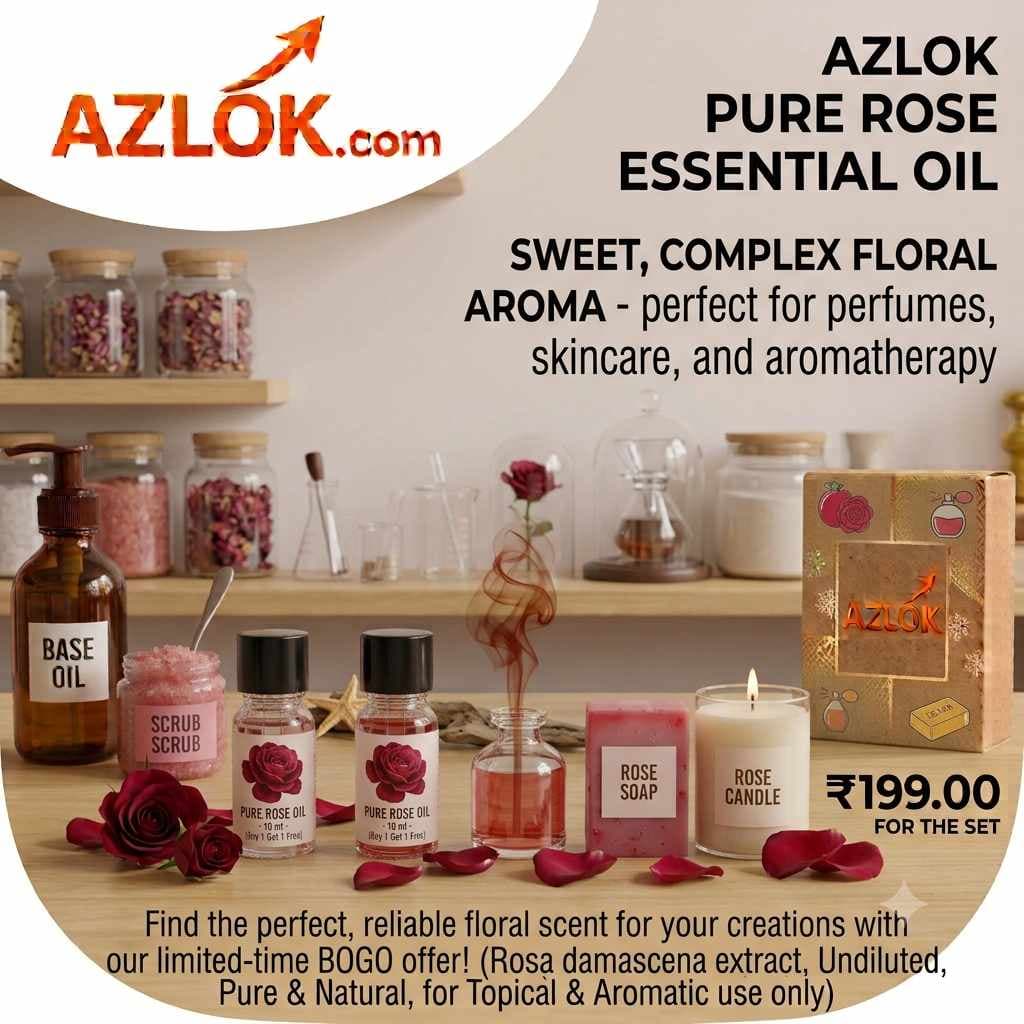
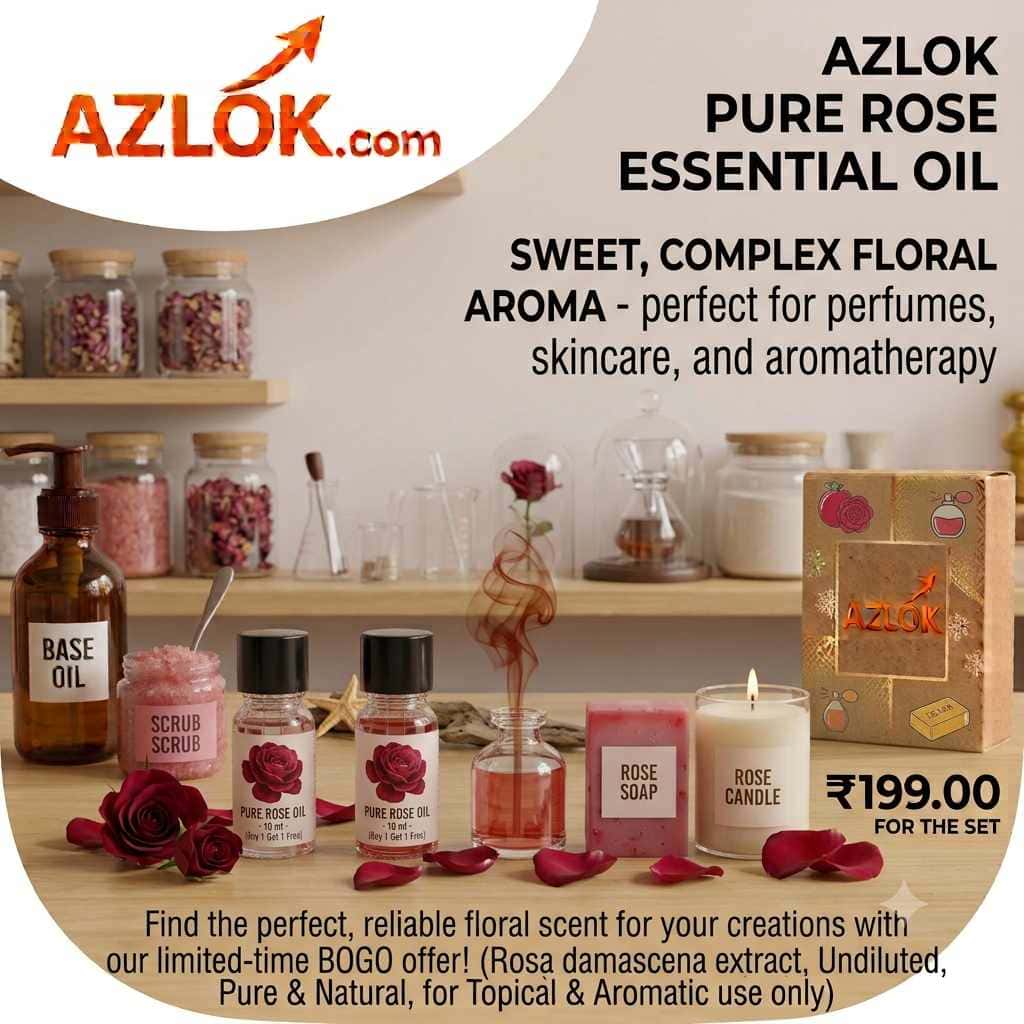
Rose essential oil is a floral extract from the petals of Rosa damascena, prized for its sweet, complex aroma in perfumes, skincare and aromatherapy. You use it heavily diluted — a few drops in a carrier oil, a diffuser or a fragrance blend — never neat on the skin or by mouth. Azlok's Rose Oil comes in a 10 ml bottle on a Buy 1 Get 1 Free offer at ₹199.
What is Rose essential oil?
This is a liquid extract obtained from rose petals through solvent extraction. It ranges from colourless to pale yellow and carries the characteristic deep, sweet-floral scent that has made rose a staple in the perfume trade for centuries. The botanical name is Rosa damascena, and the grade is often described as a rose absolute because of its rich, multi-layered fragrance.
A few technical details for makers: specific gravity is around 0.918, refractive index about 1.518, and it is soluble in alcohol. Shelf life is roughly two years when stored well.
Common uses
- Aromatherapy and diffusers: A few drops fill a room with a warm, romantic floral note that many people find calming.
- Perfumes and attars: Rose is a classic middle-to-base note. It blends beautifully with geranium, sandalwood, vetiver and frankincense.
- Skincare oils and balms: When properly diluted, it adds fragrance to facial oils, body butters and massage blends.
- Soap and candle making: Use it to scent cold-process soaps, melt-and-pour bases and container candles.
- Bath and body: A drop or two mixed into a carrier oil or unscented lotion gives a gentle rose finish.
How to use it
Rose oil is potent, so a little goes a long way. Follow these general guidelines:
- Dilute for skin: Add 1–2 drops per 10 ml of a carrier oil such as jojoba, sweet almond or coconut. Keep the total essential oil concentration low, usually 1–2%.
- For diffusers: Add 3–5 drops to the water reservoir as directed by your diffuser.
- For perfume blends: Because it dissolves in alcohol, blend it into perfumer's alcohol along with complementary notes.
- Patch test first: Apply a diluted drop to your inner forearm and wait 24 hours before wider use.
Tips and safety
- Do not apply undiluted rose oil directly to skin, and do not ingest it.
- Keep the bottle away from children and pets.
- Store in a cool, dark place; heat and light degrade the aroma over time.
- Pregnant or nursing women and anyone with sensitive skin or a medical condition should consult a doctor before use.
- The flash point is high (around 190°C), but treat all essential oils as flammable and keep them away from open flame.
- This is a fragrance and cosmetic ingredient, not a medicine — avoid making health claims for it.
Buying and storage
Look for clear labelling of the botanical name and origin. Azlok's Rose Oil is produced in India and supplied in a 10 ml bottle, with the current Buy 1 Get 1 Free pack giving you two bottles. Keep the caps tightly closed, store upright, and use within the roughly two-year shelf life for the best scent. If you buy in bulk for soap or candle work, decant small amounts into a working bottle so the main stock stays sealed.
FAQ
Can I apply Rose essential oil directly to my skin?
No. Always dilute it in a carrier oil first, usually 1–2 drops per 10 ml, and do a patch test before regular use.
What does Rose essential oil blend well with?
It pairs naturally with geranium, sandalwood, vetiver and frankincense, which is why it works so well in perfumes and layered aroma blends.
How long does it last?
About two years when stored in a cool, dark place with the cap tightly closed. Heat and light will shorten this and dull the fragrance.
Is this oil food grade?
It is intended for fragrance and cosmetic use. Do not ingest it or add it to food and drinks.
Why is rose oil so concentrated in scent?
Rose petals contain a very small amount of aromatic compounds, so the extract is intense. Just a few drops are enough for most diffuser, perfume or skincare blends.