Sea Buckthorn Liquid Extract: A DIY Maker's Guide to This Antioxidant-Rich Ingredient

Sea Buckthorn Liquid Extract is a concentrated, nutrient-rich liquid drawn from the berries, seeds and leaves of the Hippophae rhamnoides shrub, and it is used mainly as an active ingredient in skincare and cosmetic formulations. Azlok offers it as a 4:1 extract (four kilograms of herb yield one kilogram of extract), available in both water-soluble and oil-soluble versions, so you can add it to almost any DIY beauty recipe at a low dosage.
What is Sea Buckthorn Liquid Extract?
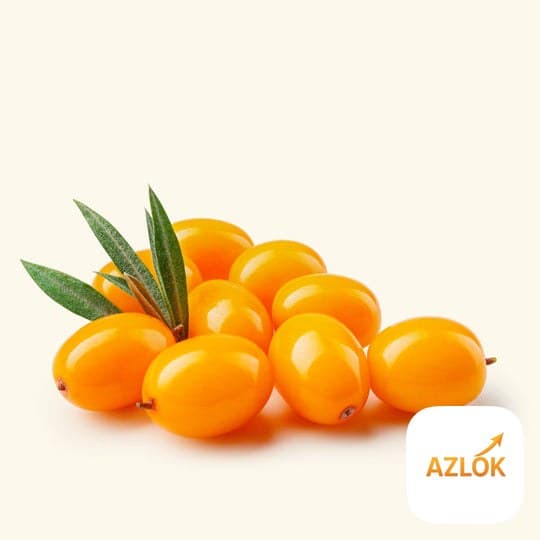
Also known as Siberian Pineapple, Sand Thorn, Sea Berry, Drilbu or Chharma, sea buckthorn is a hardy shrub prized for its bright orange berries. The extract is valued for its natural antioxidant content, vitamins A, C and E, and fatty acids, particularly the omega-7 group. In cosmetic terms it is used to help hydrate the skin, support the appearance of healthy tissue, and soothe the look of irritation.
Azlok's version comes in two solvent types so you can match it to your recipe:
- Water soluble: alcohol-free, extracted using vegetable palm glycerin (vegetable glycerol). Ideal for water-based products.
- Oil soluble: extracted using soy oil. Ideal for oil-based products, balms and facial oils.
Key specifications: INCI name Hippophae Rhamnoides, CAS No. 90106-68-6, strength 4:1, and it is essentially tasteless with no noticeable odour. BHT (butylated hydroxytoluene) is present as a preservative note.
Where to use it
Because the extract is neutral in colour, taste and smell, it slots easily into many formulations. Common applications include:
- Face and body serums
- Creams and lotions
- Face wash and cleansers
- Shampoo and hair conditioners
- Handmade soap
- General DIY personal care for face, hair, skin and body
How to use it in your formulations
The recommended usage rate is 1–2% of your total formula. That is a small amount, so a little goes a long way. A simple way to work it out:
- Choose the right type first — water-soluble extract for water-based products, oil-soluble for oil-based products.
- Weigh your batch. For a 100 g batch, 1% is 1 g and 2% is 2 g.
- Add the extract to the cool-down phase of your recipe (after heating and emulsifying), stirring gently until fully blended.
- Check that your finished product has an adequate broad-spectrum preservative if it contains water.
Always make a small test batch before scaling up, and keep notes on quantities so your results are repeatable.
Tips and safety notes
This is a cosmetic raw material meant for external use in leave-on and rinse-off products, not for eating or drinking. A few sensible precautions:
- Do a patch test on your inner arm before using any new formulation on your face.
- Avoid direct contact with the eyes; rinse well with water if contact occurs.
- Keep it away from children and store it out of reach.
- No herb–drug interactions are known, but caution should still be observed with external applications, especially on sensitive or broken skin.
- If you are formulating to sell, request the COA and MSDS (available for both water-soluble and oil-soluble grades) for your records.
Buying and storage
Azlok's Sea Buckthorn Liquid Extract is made in India and starts at ₹299. It is available in a wide range of pack sizes to suit hobbyists and small businesses alike: 100 g, 500 g, 1 kg, 5 kg, 10 kg, 20 kg and 25 kg. The shelf life is two years.
To keep it in good condition, store it in a cool, dry place, tightly capped and away from direct sunlight and heat. Use clean, dry tools when measuring to avoid contaminating the bottle. Buying a smaller pack first is a smart move if you are still testing recipes, then move up to bulk once you have settled on a formula.
FAQ
Is Azlok Sea Buckthorn Liquid Extract alcohol-free?
The water-soluble version is alcohol-free and extracted using vegetable palm glycerin. The oil-soluble version uses soy oil as the solvent.
How much should I add to a cream or serum?
The recommended usage rate is 1–2% of the total formula. For a 100 g batch, that is roughly 1–2 g. Add it during the cool-down phase and stir until blended.
Does it have any smell or colour that could affect my product?
No. The extract is described as tasteless with no odour, which makes it easy to include without changing the scent or flavour profile of your formulation.
Can I take it internally?
No. This is a cosmetic raw material intended for external use only. Do not ingest it, keep it away from children, and avoid contact with the eyes.
What is the 4:1 strength on the label?
It refers to the herb-to-extract ratio. A 4:1 extract means four kilograms of herb were used to produce one kilogram of concentrated extract.