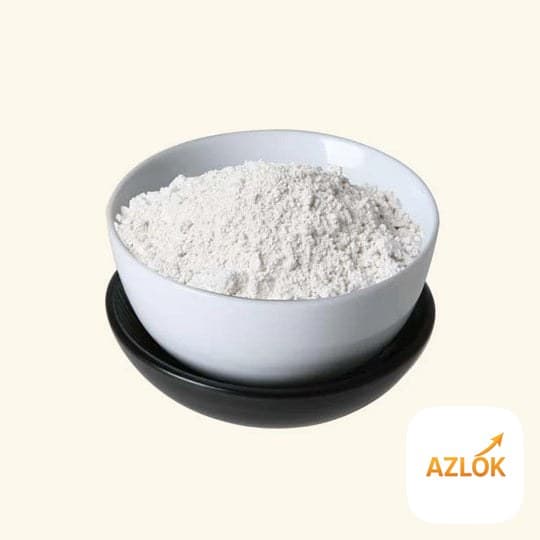

Sorbitol powder is a sugar alcohol (also called D-glucitol) used mainly as a humectant in cosmetics and personal care, and as a low-glycaemic sweetener in food and pharma. In simple terms, it draws and holds moisture, so it keeps skin products supple, soaps clear and toothpastes smooth. Azlok stocks it as a white-to-pale crystalline powder at 99% purity, from a 100 gm trial pack up to 25 kg bulk.
What is sorbitol powder?
Sorbitol is a polyhydric alcohol derived from dextrose (glucose). Its chemical formula is C6H14O6, CAS number 50-70-4, and its INCI name is simply Sorbitol. It has a mild sweet taste and odour, dissolves readily in water, and carries a near-neutral pH of around 6 to 7. Because the body metabolises it slowly, it is classed as a nutritive sweetener that still provides dietary energy.
Common uses
- Skincare and cosmetics: Added to creams, lotions, serums and gels as a humectant to prevent them drying out and to give a soft, hydrated feel on the skin.
- Soap making: A well-loved additive in melt-and-pour and cold-process soap. It boosts transparency in clear soap bases and encourages a creamier, more stable lather.
- Hair care: Used in shampoos, conditioners and masks to help retain moisture along the hair shaft.
- Oral care: A classic ingredient in toothpaste and mouthwash, where it adds sweetness without feeding cavity-causing bacteria and keeps the paste from hardening.
- Food and pharma: Acts as a sweetener, bulking agent and moisture-retainer in sugar-free confections, syrups and tablet coatings.
How to use it in DIY formulations
Sorbitol is straightforward to work with because it dissolves easily in water. A few practical pointers:
- Dissolve first. Stir the powder into the water phase of your formula until fully clear before combining with other ingredients.
- Start low. In lotions and creams, a humectant level of roughly 2 to 5 percent of the total recipe is a sensible starting point. In clear soap it is often higher; follow your specific base recipe.
- Balance moisture. Humectants pull water from the surroundings, so pair sorbitol with an emollient oil or butter in dry climates to lock hydration in rather than out.
- Test small batches. Make a tiny trial batch, check texture and feel, then scale up. This is where the 100 gm pack is handy.
Safety and handling
Sorbitol is widely used and generally considered safe for topical and food-grade applications, but sensible handling still matters:
- Buy the correct grade for your purpose. Use food-grade or pharmaceutical-grade material if the end product will be eaten or used in the mouth.
- In food, sorbitol has a laxative effect in large amounts, so keep quantities modest and label sugar-free products accordingly.
- Always patch-test a finished cosmetic on a small area of skin before regular use.
- Store away from children and pets, and keep the powder in a clean, dry workspace to avoid contamination.
- Refer to the product COA and MSDS for exact specifications before industrial use.
Buying and storage tips
Look for 99% purity and a clear pH range (6 to 7) so your formulas stay predictable. Sorbitol is hygroscopic, meaning it absorbs moisture from the air, so keep it in an airtight container in a cool, dry place. Well stored, it has a shelf life of about 24 months. If you are only experimenting, start with the 100 gm or 500 gm pack; small businesses and regular makers can move up to the 5 kg, 10 kg or 25 kg options for better value. Azlok offers all of these sizes with country of origin India.
FAQ
Is sorbitol powder the same as sugar?
No. Sorbitol is a sugar alcohol, not a true sugar. It tastes sweet but is metabolised more slowly, which is why it is used in many sugar-free and low-glycaemic products.
What does sorbitol do in soap?
It works as a humectant that improves transparency in clear soap bases and helps produce a creamier, longer-lasting lather while keeping the bar from drying out.
How much sorbitol should I add to a cream or lotion?
A humectant level of about 2 to 5 percent of the total formula is a common starting point. Always make a small test batch first and adjust to the feel you want.
Is sorbitol safe to use on skin?
It is widely used in cosmetics and generally well tolerated. As with any ingredient, do a patch test on a small area before applying a new product more broadly.
How should I store sorbitol powder?
Keep it in an airtight container in a cool, dry place away from moisture and children. Stored properly, it lasts roughly 24 months.