

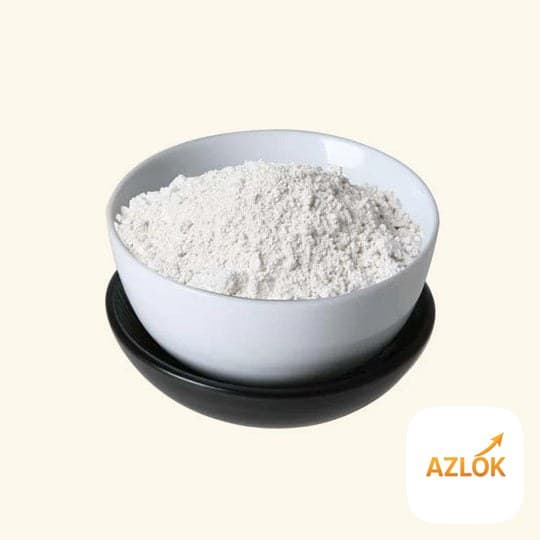

Sorbitol Powder
Minimum Order: 1 units
Description
Sorbitol Powder (D-Glucitol, CAS 50-70-4) is a polyhydric sugar alcohol derived from dextrose, available as a white to pale-yellow crystalline powder with mild sweet odour and pH 6–7. It is widely used as a humectant in skincare, a plasticiser in cosmetics, and a low-calorie sweetener in food and pharmaceutical formulations. Azlok supplies 99% pure sorbitol powder in packs from 100 g to 25 kg.
History & Discovery
Sorbitol was first identified in the berries of the rowan tree (Sorbus aucuparia) by French chemist Joseph Boussingault in 1872, which is where its name originates. It occurs naturally in many stone fruits — apples, pears, peaches, and plums — as well as in seaweed. For most of the 20th century it was commercially extracted from glucose syrup derived from corn or wheat starch via catalytic hydrogenation, a process that became economically viable at industrial scale from the 1930s onward. Today India is one of the significant producers of sorbitol, with the raw material typically sourced from wheat-derived dextrose or corn glucose.
Scientific & Medicinal Importance
Sorbitol (molecular formula C6H14O6, MW 182.17 g/mol, CAS 50-70-4) is a six-carbon sugar alcohol (polyol). It is produced industrially by the high-pressure catalytic hydrogenation of glucose, converting the aldehyde group of glucose to a hydroxyl group. The resulting compound is highly hygroscopic — it readily absorbs moisture from the environment — which makes it an effective humectant in both cosmetic and food applications. Its boiling point is 295 °C, it is freely soluble in water, and its aqueous solution has a near-neutral pH of 6–7. Sorbitol is metabolised more slowly than sucrose in the human body because it is absorbed via passive diffusion in the small intestine; it provides approximately 2.6 kcal/g versus sucrose's 4 kcal/g. In cosmetic formulations it acts as a humectant, skin-conditioning agent, and plasticiser — helping products retain moisture and improving texture. In toothpaste it additionally provides mild sweetness without promoting tooth decay.
Modern-Day Applications & Benefits
Today sorbitol powder is a common working ingredient for small cosmetic brands and home formulators. In skincare it goes into creams, lotions, face washes and gels as a humectant. It draws water into the formula and helps the finished product feel less dry on the skin. Toothpaste makers use it for body and a mild sweet taste. It is also a standard part of transparent and melt-and-pour soap bases, where it helps give clear, smooth bars. Outside cosmetics, sorbitol is used in sugar-free sweets, chewing gum and baked goods as a sweetener that keeps textures soft. It also works as a plasticiser in films and coatings. For skin products, dissolve the powder in the water phase first and keep use levels modest. Patch test the finished product before regular use.
Why Azlok's Version is Trusted Today
Azlok
Frequently asked questions
What is sorbitol powder used for in skincare?
Sorbitol acts as a humectant in skincare — it draws moisture from the air into the skin and helps the formulation retain that moisture. It is used in moisturisers, face washes, serums, and shampoos typically at 2–10% concentration.
Is Azlok's sorbitol powder food grade or cosmetic grade?
Azlok supplies 99% purity sorbitol powder that is suitable for both cosmetic and food-grade applications. Always verify suitability with relevant regulatory requirements for your specific use case.
How do I use sorbitol powder in DIY transparent soap?
In glycerine-based transparent soap, sorbitol is typically added at 10–15% of the total batch weight. It helps create clarity and a smooth lather. Melt your soap base, add sorbitol powder while stirring at low heat until fully dissolved, then pour into moulds.
Are there any safety precautions for handling sorbitol powder?
Sorbitol is generally considered safe to handle. However, as with any fine powder, avoid inhaling dust — work in a well-ventilated area or use a dust mask. Keep it away from children. Store in a cool, dry place in a sealed container to prevent moisture absorption. In large oral doses it can have a laxative effect.
What is the shelf life and storage condition for sorbitol powder?
Sorbitol powder has a shelf life of 24 months from the date of manufacture when stored in a cool, dry place away from direct sunlight and moisture. Because it is hygroscopic, always reseal the packaging tightly after use.
Specifications
Documents
Safety data sheet not yet published for this product — request one below and we will email it.
How to use Sorbitol Powder
Guides covering uses, dilution, safety and storage.