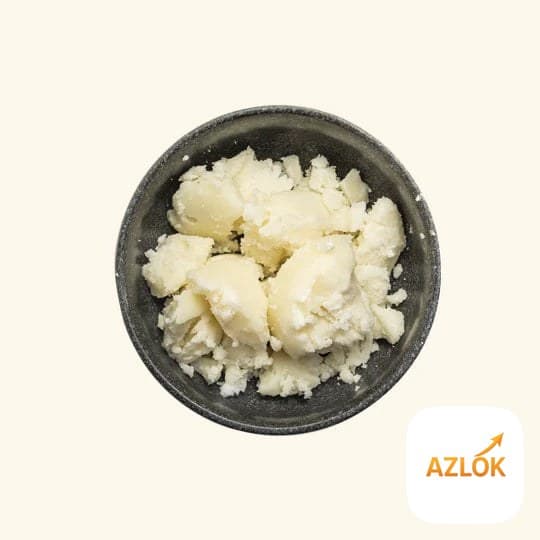

Soy butter is a soft, semi-solid fat pressed and processed from soybean oil, valued in skincare for being lightweight, nut-free and easy to blend. It carries natural vitamin E, B-group vitamins, omega-3 fatty acids, lecithin and sterolins, which help skin feel hydrated and smooth. If you make your own creams, balms or soaps, it is a friendly, affordable base to work with.
What is soy butter?
Azlok Soy Butter is derived from the natural oils in soybeans (hydrogenated soybean, CAS No. 8016-70-4). It appears as a white, semi-solid fat with a characteristic odour and a melting point of around 39°C, which means it softens close to body temperature. It is insoluble in water and made without added chemicals, preservatives, parabens, phthalates, sulfates, SLS or SLES.
Because it contains no tree nuts, soy butter is a useful alternative for people who prefer to avoid shea, cocoa or mango butter formulations, though anyone with a soy allergy should steer clear.
Common uses for soy butter
- Body butters and creams: whip it with a carrier oil for a rich, spreadable moisturiser.
- Lip and body balms: combine with beeswax and oils for a soft, protective balm.
- Lotion bars: its melting point makes it convenient for solid bars that glide on with warmth.
- Cold-process and melt-and-pour soap: adds conditioning properties and a creamy feel.
- Hair conditioners and masks: a small amount smooths and softens dry ends.
- Massage blends: melts easily on the skin for a slick, nourishing glide.
How to use soy butter
Soy butter melts gently, so a double boiler or a bowl over warm water is the safest way to work with it. A few simple approaches:
- Direct use: scoop a small amount, warm it between your palms, and massage into dry patches, elbows, knees or cuticles.
- Whipped body butter: melt soy butter, mix in a liquid oil such as sweet almond or jojoba, cool until it starts to set, then whip with a hand mixer until fluffy.
- Balms: melt soy butter with beeswax and a carrier oil, add a few drops of essential oil off the heat, and pour into tins.
- Soap: include it as part of your oil and butter blend at the trace stage, following your tested recipe percentages.
Start with a modest percentage in new formulations and adjust based on the texture you want — more butter gives a firmer, richer result.
Tips and safety notes
- Patch test first: apply a little to your inner forearm and wait 24 hours before wider use.
- Soy allergy: avoid entirely if you are allergic to soy.
- For external use: this is a cosmetic and formulating ingredient, not a food. Do not ingest.
- Temper your heat: gentle melting keeps the texture consistent; overheating can leave it grainy on cooling.
- Keep away from children and store finished products in clean, dry containers.
Buying and storage
Azlok offers Soy Butter starting at ₹569, with pack sizes ranging from 500 g and 1 kg for hobbyists up to 5 kg, 10 kg, 20 kg and 25 kg for small businesses and bulk makers. It is produced in India and has a shelf life of about two years when stored well.
Store it in a cool, dry place away from direct sunlight and heat, keeping the lid tightly closed to protect it from moisture and air. If it softens in warm weather, that is normal for a butter with a melting point near 39°C — simply let it firm up again in a cooler spot. Always use clean, dry hands or a spatula to avoid introducing water or contaminants.
FAQ
Is soy butter good for the face?
Yes, many people use it on the face as a moisturiser, thanks to its vitamin E and fatty acid content. Do a patch test first, and if you are prone to breakouts, use a thin layer and see how your skin responds.
Does soy butter contain nuts?
Soy is a legume, not a tree nut, so soy butter is a nut-free alternative to shea or cocoa butter. However, anyone with a soy allergy should avoid it.
Can I use soy butter in soap making?
Yes. It works in both cold-process and melt-and-pour soap, adding a conditioning, creamy quality. Add it as part of your tested oil-and-butter blend.
How long does soy butter last?
Stored in a cool, dry place with the container sealed, it keeps for roughly two years. Keep it away from water and heat to protect its quality.
Why has my soy butter turned soft?
With a melting point around 39°C, soy butter naturally softens in warm conditions. It will firm up again once cooled, and this does not affect its performance in your recipes.