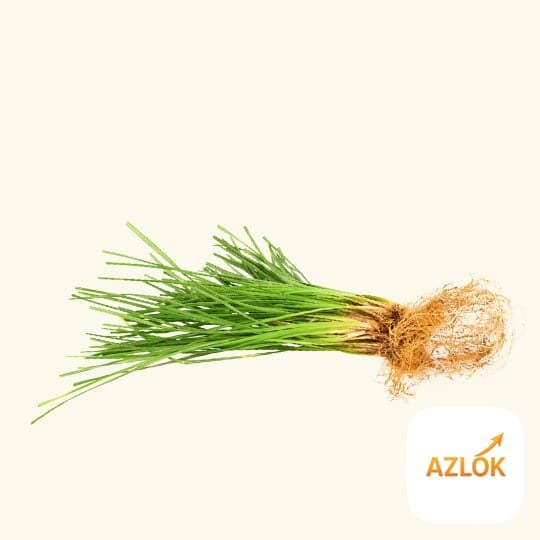

Vetiver essential oil is a thick, earthy oil steam-distilled from the roots of the vetiver grass (Chrysopogon zizanioides). It is best known for its deep, woody, smoky aroma and is widely used in aromatherapy, natural perfumery, skincare and haircare formulations. Because it is a concentrated essential oil, it should always be diluted before it touches your skin.
What is vetiver essential oil?
Unlike most essential oils that come from leaves, flowers or peels, vetiver is drawn from the plant's dense root network. Steam distillation of these roots gives a colorless to pale yellow liquid with a rich, musky, grounding scent. Perfumers value it as a natural fixative — it holds a fragrance together and makes lighter notes last longer. In India, where the vetiver plant (khus) grows well, it has a long history in cooling summer preparations and traditional attars.
A few specifications worth knowing: the botanical name is Chrysopogon zizanioides, CAS number 8016-96-4, specific gravity around 0.984 at 20°C, and a shelf life of about 2 years. It is soluble in alcohols and fixed oils, which makes it easy to work into most DIY bases.
Common uses
- Aromatherapy: Its grounding, calming aroma is popular in diffuser blends meant for winding down at the end of the day.
- Skincare: Added in small amounts to facial oils, serums and creams for its soothing quality and pleasant earthy scent.
- Haircare: Blended into scalp oils and hair masks alongside carrier oils.
- Natural perfumery: Used as a base note and fixative in solid perfumes, roll-ons and attars.
- Soaps and candles: A little vetiver deepens the fragrance profile of cold-process soaps and scented candles.
How to use it
Vetiver is potent and viscous, so a little goes a long way. Here are simple, safe ways to use it:
- Massage or body oil: Dilute to 1–2% in a carrier oil like coconut, jojoba or almond oil — roughly 6 to 12 drops per 30 ml of carrier.
- Diffuser: Add 3–5 drops to your diffuser, on its own or blended with citrus oils to lift the earthy base.
- Scalp treatment: Mix a few drops into warm carrier oil and massage into the scalp before washing.
- Perfume blend: Combine with a splash of high-proof alcohol or a fixed oil to build a personal fragrance.
Vetiver blends beautifully with cardamom, cedarwood, lavandin, bergamot and mandarin, as well as all types of carrier oils. If the oil feels too thick to pour, warm the bottle briefly in your hands.
Safety notes
- Always dilute before skin contact and do a patch test on your inner arm 24 hours before wider use.
- Do not ingest. This is a cosmetic and aromatherapy-grade oil, not a food product.
- Keep away from children and pets, and avoid contact with the eyes.
- If you are pregnant, nursing or managing a health condition, check with a qualified practitioner first.
- Store the flash point in mind (around 110°C) and keep the oil away from open flames when handling in bulk.
Buying and storage tips
Azlok offers vetiver essential oil in sizes from 50 gm up to 10 kg, so you can pick a small bottle for personal experiments or a larger pack for soap, candle and cosmetic production. Prices start at ₹499.
To keep it fresh through its two-year shelf life, store the bottle in a cool, dark place with the cap tightly closed. Amber glass is ideal because it limits light exposure. Vetiver actually matures with age — many perfumers find its aroma rounds out and improves over time — so a well-sealed bottle only gets better.
FAQ
Can I apply vetiver essential oil directly to my skin?
No. Dilute it in a carrier oil to about 1–2% before applying, and patch-test first. Undiluted essential oils can irritate the skin.
What does vetiver essential oil smell like?
Deep, earthy, woody and slightly smoky with a musky base. It is often described as grounding and is a favourite base note in natural perfumery.
What oils blend well with vetiver?
It pairs nicely with cardamom, cedarwood, lavandin, bergamot and mandarin, and it works with all common carrier oils.
Is vetiver oil the same as khus?
Yes. Khus is the traditional Indian name for the vetiver plant, and the oil comes from the same grass roots.
How long does the oil last?
Around two years when stored in a cool, dark place with the cap tightly sealed. Many users find the aroma deepens with proper ageing.