


Vetiver Essential Oil
Minimum Order: 1 units
Description
Vetiver Essential Oil by Azlok is steam-distilled from the roots of Chrysopogon zizanioides, yielding a thick, pale yellow oil with a deep earthy, woody, and smoky aroma. Widely used in perfumery, skincare, haircare, and aromatherapy. CAS# 8016-96-4. Available from 50 g to 10 kg.
History & Discovery
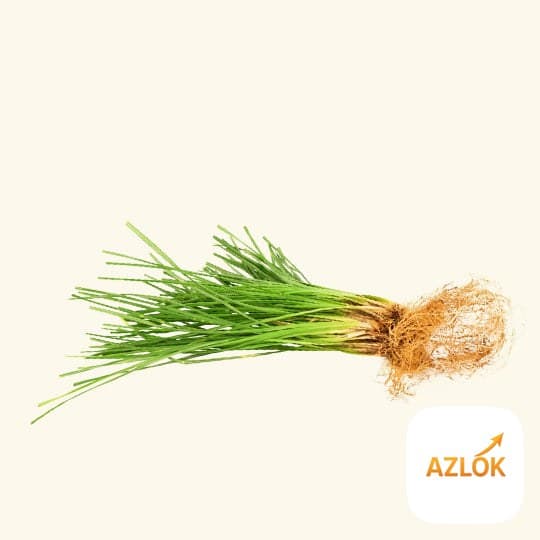
Vetiver (Chrysopogon zizanioides), known as 'khus' in Hindi, has been cultivated in India for centuries. Its dense root system was traditionally used to weave fragrant mats, window screens (khus tattis), and fans that released a cooling, earthy scent when sprinkled with water. The practice of using vetiver roots for cooling and fragrance dates back to ancient India, where it was also woven into baskets and stored with linen to repel insects. Vetiver spread from South Asia to the Caribbean, West Africa, and South America, and today India—particularly Rajasthan and Uttar Pradesh—remains one of the world's leading producers of vetiver oil, locally called 'ruh khus' or 'khus attar'.
Scientific & Medicinal Importance
Vetiver essential oil is obtained by steam distillation of the dried roots of Chrysopogon zizanioides. The oil is characteristically thick and viscous with a specific gravity of approximately 0.984 at 20°C and a refractive index of 1.5222 at 20°C. Its optical rotation falls between +19° and +34°. The flash point is 110°C, making it relatively safe in standard storage conditions. The major chemical constituents include khusimol, isovalencenol, vetiverol, vetivone, and various sesquiterpene alcohols and ketones—compounds responsible for its distinctive deep, smoky, earthy odour profile. The oil is soluble in alcohols and fixed oils but not in water. It blends well with cardamom, cedarwood, lavandin, bergamot, and mandarin essential oils as well as all carrier oils.
Ayurvedic and Traditional Uses
In Ayurveda, vetiver (khus) is classified as cooling (sheetala) and is used to pacify Pitta dosha. Khus roots and their preparations have traditionally been recommended to address heat-related discomfort, excessive thirst, and skin irritation. Khus water (khus sherbet) and khus-infused oils appear in classical Ayurvedic texts as agents that soothe the mind and body. The root is also described as having a grounding effect on the nervous system, and khus-based preparations have historically been used in ubtans (traditional face and body scrubs) for skin conditioning. Note: these are traditional uses; they are not a substitute for medical treatment.
Modern-Day Applications & Benefits
In modern cosmetic and fragrance formulations, vetiver essential oil is a valued base note in perfumery due to its long-lasting, deep woody-smoky character. It is incorporated into skincare products such as face serums, creams, and facial oils, where its sesquiterpene content is associated with soothing and antioxidant properties. In haircare, it is added to scalp oils and conditioners. Aromatherapy practitioners use vetiver for its reported grounding and calming effects, often diffusing it or blending it into massage oils. For aromatherapy or topical use, always dilute vetiver essential oil in a suitable carrier oil (typically 1–3%) before skin application; do not apply undiluted. Keep away from children. Avoid contact with eyes and mucous membranes. Not for internal use. Perform a patch test before widespread skin use. Store in a cool, dark place; shelf life is 2 years from manufacture.
Why Azlok's Version is Trusted Today
Azlok
Frequently asked questions
What does vetiver essential oil smell like?
Vetiver essential oil has a deep, earthy, woody, and smoky aroma with slight sweet undertones. It is a classic base note in perfumery that lingers for a long time on skin and fabric.
How should I dilute vetiver essential oil for skin use?
Dilute vetiver essential oil at 1–3% in a carrier oil such as jojoba, sweet almond, or coconut oil before applying to skin. For example, add 6–18 drops to 30 ml of carrier oil. Always do a patch test first.
Which essential oils blend well with vetiver?
Vetiver blends well with cardamom, cedarwood, lavandin, bergamot, and mandarin essential oils. It also mixes easily with all types of carrier oils, making it versatile for perfumery and cosmetic formulations.
Is vetiver essential oil safe to ingest or use undiluted?
No. Vetiver essential oil is not for internal use. Do not ingest it. Always dilute before applying to skin and keep away from eyes, mucous membranes, and children.
What sizes does Azlok offer for vetiver essential oil and what is the price?
Azlok offers vetiver essential oil in 50 g, 100 g, 500 g, 1 kg, 5 kg, and 10 kg packs, starting at ₹499. Bulk sizes are suitable for manufacturers and small businesses.
Specifications
How to use Vetiver Essential Oil
Guides covering uses, dilution, safety and storage.