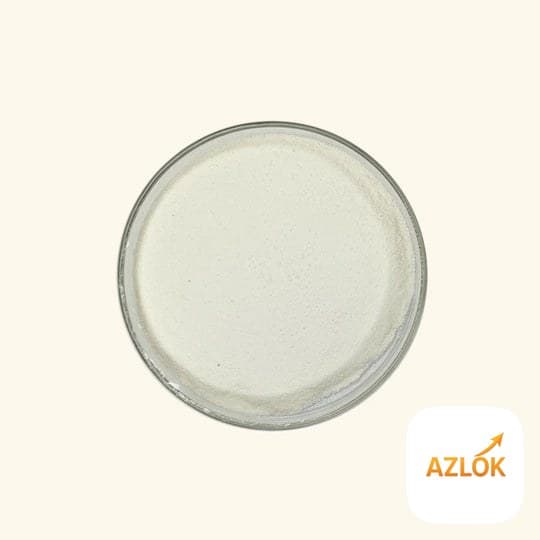
Xanthan Gum Powder: The Natural Thickener Behind Your DIY Creams and Lotions

Xanthan Gum Powder is a natural, plant-derived thickener and stabiliser used in DIY and small-batch cosmetics to give creams, lotions, gels and shampoos a smooth, even body. A tiny amount — usually well under one percent of your recipe — turns a thin, watery mix into a stable, pleasant-textured product that does not separate on the shelf.
It is produced by fermenting a carbohydrate (sugar) solution with the bacterium Xanthomonas campestris. The resulting polysaccharide is precipitated using isopropyl alcohol, then milled and dried into the fine white powder you receive. You will also see it listed under its INCI name, Xanthan Gum, and alternative names like corn sugar gum or bacterial polysaccharide.
What Xanthan Gum does in cosmetics
In formulation terms, xanthan gum is a rheology modifier — it controls how a product flows. That single property makes it one of the most useful ingredients on a maker's shelf.
- Thickening: Adds viscosity to water-based lotions, serums and toners.
- Stabilising: Holds emulsions together so oil and water phases do not split.
- Suspending: Keeps exfoliant beads, herbs or micas evenly floating instead of sinking.
- Improving feel: Gives gels a silky, cushioned slip.
You will find it in conditioners, body washes, shampoos, creams, shower gels and many other skin- and hair-care products.
How to use Xanthan Gum Powder
Xanthan is powerful, so restraint matters. As a general starting guide:
- Light lotions and sprays: 0.1% to 0.3%
- Creams and thicker lotions: 0.3% to 0.5%
- Gels: 0.5% to 1%
The main challenge is clumping, because the powder wants to gel the instant it touches water. Two reliable methods:
- Oil dispersion: Sprinkle the xanthan into a little glycerine or your oil phase first, stir into a smooth slurry, then add it to the water phase. This coats each particle and prevents lumps.
- Slow sprinkle with blending: Add the powder gradually to water while blending with a stick blender or whisk, then let it hydrate for a few minutes.
Give it time. The mixture will thicken further as it sits, so do not over-add in the first minute.
Tips, dosage and safety notes
A few practical pointers save a lot of trial and error:
- Weigh it on a small digital scale (0.01 g resolution helps). Guessing by eye leads to a snotty, over-thick batch.
- Too much xanthan gives a slimy or stringy feel. If that happens, dilute the batch rather than trying to fix it.
- It works across a wide pH range, which is why it plays well with most cosmetic ingredients.
- Always include a suitable preservative in water-containing products, as xanthan gum itself does not prevent microbial growth.
On safety: this is sold as an industrial-grade cosmetic raw material. Wear a dust mask when handling fine powder to avoid inhaling it, work in a ventilated space, and keep it away from children. Do a small patch test on your finished product before regular use, and follow the COA and MSDS supplied with your order. This grade is intended for cosmetic formulation, not for cooking.
Buying and storage
Azlok offers Xanthan Gum Powder in packs from 100 g right up to 25 kg, so both hobbyists and small brands can buy sensibly. A 100 g pouch goes a long way given the low usage rates, while bulk sizes suit regular production. It is manufactured in India with a stated purity of around 99% and a shelf life of about 24 months.
- Store in a cool, dry place, tightly sealed against moisture.
- Keep the powder away from direct sunlight and humidity, which can cause clumping.
- Use a clean, dry scoop each time to avoid contaminating the batch.
FAQ
How much xanthan gum should I add to a lotion?
Start at around 0.1% to 0.5% of the total recipe by weight. Begin low, mix well, and let it hydrate for a few minutes before deciding whether you need more.
Why does my xanthan gum go lumpy?
It gels on contact with water. Disperse it first in glycerine or oil, or sprinkle it slowly into water while blending, and the lumps will disappear.
Is xanthan gum natural?
It is produced by natural bacterial fermentation of a sugar solution, then purified and dried into a powder, so it is considered a naturally derived ingredient.
Can this cosmetic-grade xanthan gum be used in food?
No. This is an industrial-grade raw material intended for cosmetic formulation. Use a dedicated food-grade product for anything you plan to eat.
Does xanthan gum need a preservative in my product?
Xanthan gum does not preserve anything. Any water-based product still needs a proper broad-spectrum preservative to stay safe.