

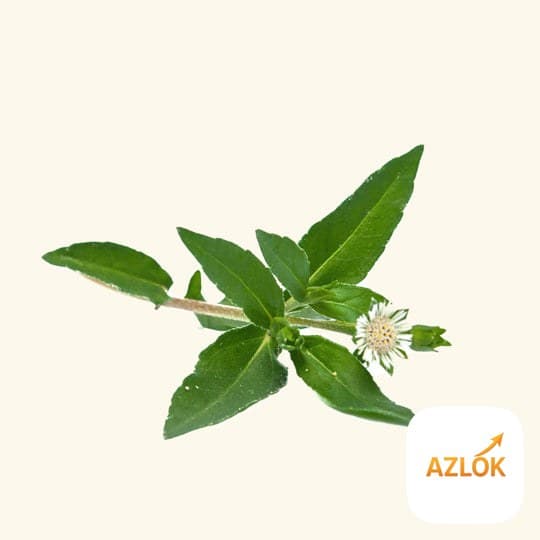

Bhringraj Liquid Extract
Minimum Order: 1 units
Description
Bhringraj Liquid Extract (Eclipta alba, CAS 93165-22-1) is a concentrated 4:1 herbal extract available in water-soluble (glycerin-based) and oil-soluble (soy oil-based) forms. Use at 1–2% in shampoos, serums, creams, face washes and other DIY personal-care formulations. Azlok supplies it from 100 g to 25 kg, free from gluten, artificial colour and heavy metals.
History & Discovery
Bhringraj (Eclipta alba), commonly called False Daisy in English, is a flowering herb of the Asteraceae (sunflower) family found widely across India, China and tropical America. Its name in Sanskrit translates roughly to 'king of hair', reflecting centuries of use in traditional Indian medicine. Ancient Ayurvedic texts such as the Charaka Samhita and Sushruta Samhita reference it as a Rasayana herb — one believed to promote longevity, hair health and liver function. For generations, rural communities have used fresh bhringraj juice and oil infusions as part of daily hair-care routines.
Scientific & Medicinal Importance
Bhringraj Liquid Extract is a concentrated liquid prepared from the Eclipta alba herb, a plant also listed botanically as Eclipta prostrata. Phytochemical studies of the plant report coumestans such as wedelolactone and demethylwedelolactone, along with flavonoids, triterpenoid saponins, phytosterols and thiophene compounds. The extract carries these plant constituents in a liquid base, so they are easier to measure and blend than dried herb or powder. The extract comes in two carrier bases. The glycerin-based version mixes into water-phase ingredients such as gels, toners and shampoo bases, and the glycerin adds a mild humectant feel. The soy oil-based version blends into oils, balms and the oil phase of emulsions. Because the extract comes from a whole herb, it may lightly tint a formulation and has a faint herbal odour. Colour and odour can vary slightly from batch to batch.
Ayurvedic and Traditional Uses
In Ayurveda, Bhringraj is known by several Sanskrit names, including Bhringaraja and Keshraja, and it appears in classical herbal compendiums (Nighantus) that list plants with their synonyms and qualities. The fresh herb, its juice and the dried whole plant have been part of Ayurvedic and folk practice in India for centuries. The plant grows freely on damp ground across much of the country, so it has long been easy for households to gather. Its best-known traditional form is Bhringraj taila, an oil made by slowly cooking the herb's juice with a base oil such as sesame or coconut. Applied externally as part of a regular hair-oiling routine, this preparation is the main reason the herb is still familiar in Indian homes. A liquid extract gives formulators a convenient way to include this traditional ingredient in modern products.
Modern-Day Applications & Benefits
Bhringraj liquid extract is today widely used by cosmetic formulators, indie beauty brands and home DIY makers in India. It suits shampoos, hair serums, hair masks, face washes, lotions and creams at a recommended usage of 1–2% of the total formulation weight. The water-soluble glycerin extract blends directly into water phases; the oil-soluble soy-based extract mixes into oil phases or anhydrous products. Azlok offers both variants in sizes ranging from 100 g trial packs to 25 kg bulk quantities, making it accessible to both hobbyists and small-to-medium manufacturers. The product is free from gluten, artificial colour and heavy metals, with a 2-year shelf life when stored in a cool, dry place.
Why Azlok's Version is Trusted Today
Azlok
Frequently asked questions
What is the recommended usage level for Bhringraj Liquid Extract in formulations?
Use at 1–2% of the total formulation weight. This applies to both the water-soluble and oil-soluble variants when adding to shampoos, conditioners, serums, creams or lotions.
What is the difference between the water-soluble and oil-soluble variants?
The water-soluble variant is extracted with vegetable glycerin (alcohol-free) and mixes into the water phase of formulations. The oil-soluble variant is extracted using soy oil and contains BHT preservative; it blends into oil phases or anhydrous products.
What does the 4:1 extract ratio mean?
A 4:1 ratio means 4 kg of dried Bhringraj herb is used to produce 1 kg of extract, so the extract is four times more concentrated than the raw herb by weight.
Can Bhringraj Liquid Extract be consumed or taken internally?
No. This product is formulated for external cosmetic use only — in skin and hair care products. It is not a food-grade or dietary supplement product. Do not ingest.
How should Bhringraj Liquid Extract be stored?
Store in a cool, dry place away from direct sunlight. Keep out of reach of children. Avoid contact with eyes. The shelf life is 2 years from the date of manufacture when stored correctly.
Specifications
How to use Bhringraj Liquid Extract
Guides covering uses, dilution, safety and storage.