

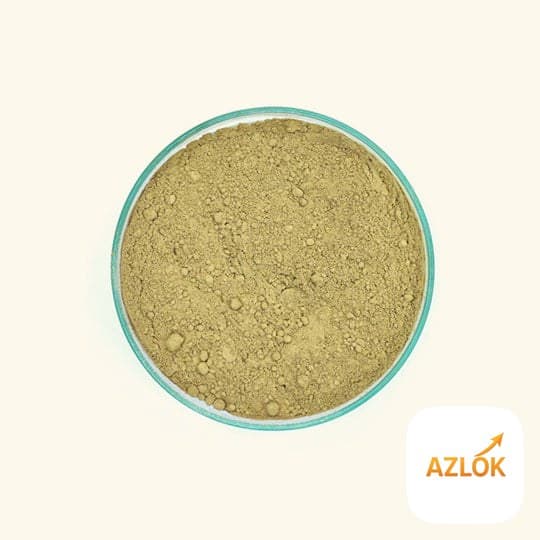

Henna Powder
Minimum Order: 1 units
Description
Azlok Natural Henna Powder is a pure, powder ground from dried Lawsonia inermis leaves. Free from artificial colours, fragrances, and preservatives, it is used as a natural hair dye, hair conditioner, and skin coolant. Available in packs from 100 g to 25 kg for personal and commercial use.
History & Discovery
Henna (Lawsonia inermis) has been used across South Asia, the Middle East, and North Africa for over 5,000 years. Ancient Egyptians used it to colour nails and hair, while in India it became central to wedding rituals and festivals under the name Mehandi. The reddish-brown dye it produces comes from lawsone, a naturally occurring naphthoquinone in the leaves. Trade records from the Mughal era show henna being cultivated in Rajasthan and Gujarat, regions that remain major producers in India today.
Scientific & Medicinal Importance
Henna powder is made by drying and finely grinding the leaves of Lawsonia inermis, a shrub grown widely in Rajasthan and other dry regions. Its colour comes from lawsone (2-hydroxy-1,4-naphthoquinone), a natural dye molecule present in the leaves in small amounts. Besides lawsone, the leaves contain tannins, flavonoids, coumarins, sugars and plant fibre, which give the powder its greenish colour and hay-like smell. Lawsone is released when the powder is soaked in a mildly acidic liquid and left to rest. It then binds to keratin, the protein in hair, skin and nails, leaving an orange-red stain that darkens over the next day or two as it oxidises. Pure henna does not give a black shade on its own. Store the powder in an airtight container, away from moisture and light, so the dye content holds up longer.
Ayurvedic and Traditional Uses
Henna has been part of Ayurvedic and folk practice in India for centuries. It appears in classical Sanskrit texts under names such as Mendhika and Madayantika. In this tradition it was described as cooling in nature, which is one reason it was commonly applied to the palms and soles during the summer months. In Indian homes, henna was traditionally blended with powders such as amla, shikakai and brahmi to make hair packs, or soaked overnight in iron vessels to deepen the shade. Mehandi on the hands also became an essential part of weddings, Teej and Karva Chauth. These customs are shared here as cultural history only. Before applying henna to skin or hair, do a patch test, use it externally only, and consult a doctor if pregnant or on medication.
Modern-Day Applications & Benefits
Today henna powder is widely used in cosmetic hair colour formulations, herbal hair masks, and Mehandi art. DIY users mix Azlok henna powder with water, lemon juice, or tea decoction to prepare a paste for hair colouring or body art. Commercially, it is an ingredient in herbal shampoos, conditioners, and hair oils. Bulk packs (1 kg to 25 kg) are suited for salons, Mehandi artists, herbal cosmetic manufacturers, and exporters. Store in a cool, dry place away from moisture to maintain potency; shelf life is two years from date of manufacture.
Why Azlok's Version is Trusted Today
Azlok
Frequently asked questions
Is Azlok henna powder safe for all hair types?
Yes. Azlok henna powder is cosmetic-grade, free from PPD, ammonia, and synthetic dyes, and is generally safe for all hair types. However, do a patch test on skin 24 hours before full application, as some individuals may be sensitive to lawsone or other plant compounds.
How do I prepare a henna paste for hair colouring?
Mix 100 g of henna powder with enough warm water (or cooled tea/lemon juice mixture) to form a smooth, yoghurt-like paste. Let it rest for 1–2 hours to allow dye release, then apply to clean, dry hair. Leave on for 1–3 hours and rinse thoroughly with water. Avoid metal bowls, as metal can interfere with the dye.
Will henna powder lighten or bleach hair?
No. Henna is a depositing-only dye. It adds colour (typically orange to reddish-brown on dark hair) but does not bleach or lift the natural pigment. Results vary depending on your natural hair colour and the duration of application.
Can henna powder be used directly on skin for Mehandi art?
Yes. Prepare a thick paste using henna powder, lemon juice, and a small amount of sugar. Apply with a cone or brush for body art designs. The stain develops over 6–12 hours after removing the dried paste. Avoid using on broken skin or if you have known sensitivity to plant dyes.
What pack size should I choose for salon or commercial use?
For personal home use, 100 g or 500 g packs are sufficient. Salons and Mehandi artists typically prefer 1 kg or 5 kg packs. Herbal cosmetic manufacturers and bulk buyers can opt for 10 kg, 20 kg, or 25 kg packs available at Azlok, which offer better per-gram value.
Specifications
How to use Henna Powder
Guides covering uses, dilution, safety and storage.