

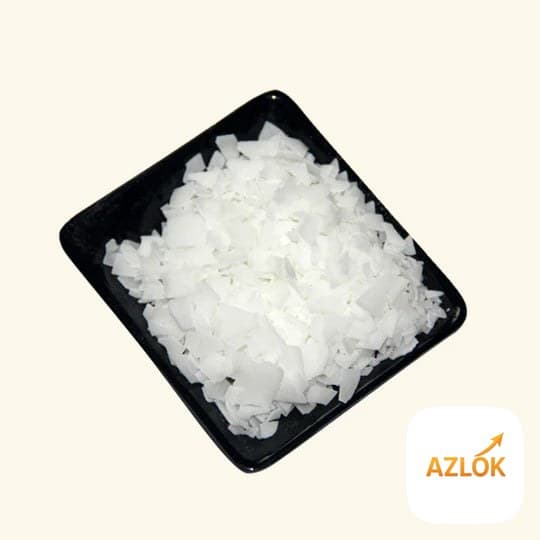

Hydrogenated Castor Oil Flakes ( NSA )
Minimum Order: 1 units
Description
Hydrogenated Castor Oil Flakes (NSA) are white, hard waxy flakes made by hydrogenating castor oil (Ricinus communis). CAS 8001-78-3, chemical formula C57H110O9. They melt to a clear liquid and are widely used in lipsticks, deodorants, soaps, greases, and industrial mold-release applications. Available at Azlok in packs from 250 g to 25 kg.
History & Discovery
Castor oil has been extracted from the seeds of Ricinus communis for thousands of years and used across ancient Egypt, India, and China for medicinal, lighting, and lubricating purposes. The hydrogenation of castor oil is an industrial development of the 20th century, arising from broader advances in catalytic hydrogenation chemistry. By adding hydrogen across the unsaturated bonds in ricinoleic acid, manufacturers convert the liquid oil into a hard, stable wax known commercially as castor wax or hydrogenated castor oil (HCO). India is one of the world's largest producers of castor oil and its derivatives, and Indian manufacturers supply HCO flakes to global cosmetic and industrial markets.
Scientific & Medicinal Importance
Hydrogenated castor oil is produced by passing hydrogen gas through liquid castor oil in the presence of a nickel catalyst under heat and pressure. The primary fatty acid in castor oil, ricinoleic acid (about 90%), contains one double bond and a hydroxyl group. Hydrogenation saturates the double bond, converting ricinoleic acid to 12-hydroxystearic acid, which gives the product its hard, waxy character. The resulting flakes have a melting point typically between 85–88°C, are insoluble in water, and exhibit good compatibility with waxes, oils, and many polymers. The hydroxyl group on the fatty acid chain provides polar functionality, contributing to thickening and gelling behaviour in both oil and polar systems.
Modern-Day Applications & Benefits
Hydrogenated castor oil flakes are a versatile cosmetic and industrial raw material. In cosmetics and personal care, HCO is used as a structuring agent and thickener in lipsticks, lip balms, deodorant sticks, hair pomades, and cream-based products, where it provides hardness and a smooth, waxy skin feel. In soap making, it contributes hardness to bars and helps produce a creamy lather. In the pharmaceutical industry, it is used as a tablet lubricant and excipient. Industrially, HCO flakes serve as a thickener in lithium and other greases, a mold-release agent in rubber and plastic processing, and a coating material for fertiliser granules in agrochemical applications. Azlok supplies NSA-grade HCO flakes in bulk sizes from 250 g to 25 kg, making them accessible for small DIY formulators as well as commercial manufacturers. Safe handling practice: HCO flakes are considered low-hazard but should be handled with basic precautions. Avoid inhaling dust when handling flakes in bulk. When melting, work in a ventilated area and avoid overheating, as smoking or decomposition products can irritate airways. Store in a cool, dry place away from direct sunlight. Keep out of reach of children.
Why Azlok's Version is Trusted Today
Azlok
Frequently asked questions
What is hydrogenated castor oil (HCO) and how is it different from regular castor oil?
Hydrogenated castor oil (HCO) is made by adding hydrogen to liquid castor oil under heat and pressure with a catalyst. This converts ricinoleic acid to 12-hydroxystearic acid, turning the oil into hard white flakes with a melting point of around 85–88°C. Unlike liquid castor oil, HCO is solid at room temperature and far more stable.
Can HCO flakes be used in lipstick and lip balm formulations?
Yes. HCO flakes are a standard structuring and hardening agent in lipsticks and lip balms. They provide a smooth, waxy texture and improve the stick's hardness and heat resistance. Typical usage levels in lip products range from about 5% to 20% depending on the desired firmness.
What is the melting point of hydrogenated castor oil flakes?
Hydrogenated castor oil flakes typically melt between 85°C and 88°C. They melt into a clear, colourless liquid that can be blended with other waxes, oils, and cosmetic ingredients before cooling.
Is this product food-grade or safe to use in edible products?
The product listed is NSA (Non-food / industrial / cosmetic) grade. It is not intended for direct human consumption. Do not use it in food or edible cosmetic products unless you have confirmed food-grade certification for the specific batch.
How should HCO flakes be stored and what is their shelf life?
Store HCO flakes in a cool, dry place away from direct sunlight and moisture. Keep containers tightly closed when not in use. The shelf life is 24 months from the date of manufacture when stored correctly. Keep out of reach of children.
Specifications
Documents
Safety data sheet not yet published for this product — request one below and we will email it.
How to use Hydrogenated Castor Oil Flakes ( NSA )
Guides covering uses, dilution, safety and storage.