


Kojic Acid
Minimum Order: 1 units
Description
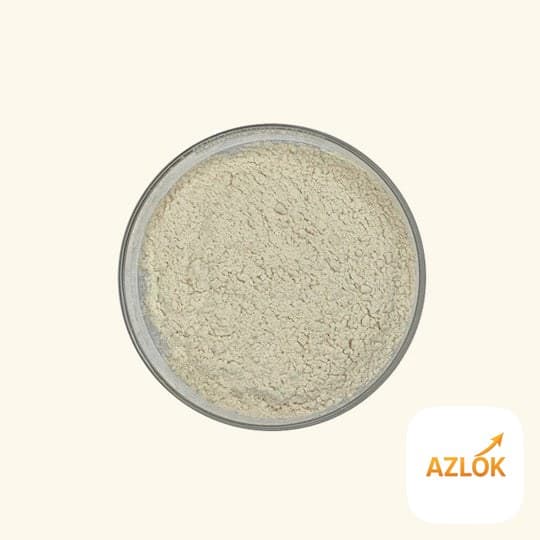
Kojic Acid is an off-white, odourless powder produced by fungal fermentation of sugars (Aspergillus oryzae). It works by inhibiting tyrosine, the amino acid needed for melanin synthesis, making it a widely used skin-lightening and brightening ingredient in cosmetic formulations. Available at Azlok in sizes from 50 g to 10 kg.
History & Discovery
Kojic acid was first isolated in 1907 by the Japanese scientist Saito from the mycelium of Aspergillus oryzae, the same mould used to ferment sake, soy sauce, and miso. The name derives from koji, the Japanese term for Aspergillus-fermented grain. For most of the 20th century it was studied primarily as a by-product of food fermentation. Its skin-lightening properties were noted in the 1980s when workers in Japanese sake breweries were observed to have unusually fair hands despite regular contact with koji mash. This observation triggered systematic cosmetic research and led to its commercial use as a skin-brightening active from the 1990s onward.
Scientific & Medicinal Importance
Kojic acid has the chemical formula C6H6O4 (IUPAC: 5-Hydroxy-2-(hydroxymethyl)-4H-pyran-4-one, molecular weight 142.11 g/mol, CAS 501-30-4). It is produced industrially by aerobic fermentation of glucose or starch-derived sugars by Aspergillus oryzae or Aspergillus flavus strains. The compound acts as a chelating agent, binding the copper ion at the active site of tyrosinase — the enzyme that catalyses the conversion of tyrosine to DOPA and subsequently to melanin. By blocking this enzyme, kojic acid reduces melanin formation in melanocytes without destroying the cells. It is water-soluble and stable in a pH range of 4–9. The powder is off-white to cream in colour, odourless, and has a purity of 99% in cosmetic-grade material.
Modern-Day Applications & Benefits
Kojic acid is widely used in cosmetic formulations such as serums, creams, soaps, and face washes at typical concentrations of 1–4%. It is commonly combined with other brightening actives such as niacinamide, alpha-arbutin, and vitamin C for enhanced effect. In soap-making, kojic acid is generally added at 1–2% of total batch weight, either at trace or dissolved in a small amount of water before incorporation. In DIY skincare, it is dissolved in water or a water-based phase at room temperature. Formulators should note that kojic acid can cause skin sensitisation in some individuals and may irritate eyes and mucous membranes. Always conduct a patch test before applying finished products on skin. Packaging should be airtight and away from light to prevent oxidation and yellowing. Shelf life is 24 months when stored correctly.
Why Azlok's Version is Trusted Today
Azlok
Frequently asked questions
What concentration of kojic acid is recommended for a skin-lightening cream?
For leave-on products such as creams and serums, 1–2% kojic acid is commonly used. Up to 4% may be used in rinse-off products like soaps, but higher concentrations increase the risk of irritation. Always patch-test the finished formula.
Is kojic acid safe to use on the face every day?
Kojic acid can cause skin sensitisation with prolonged daily use in some people. Dermatologists often recommend using it on alternate days or as part of a cycle. It is strictly for external use only — do not ingest or apply near eyes.
How do I dissolve kojic acid powder in a formulation?
Kojic acid is water-soluble. Dissolve it in the water phase of your formulation at room temperature with gentle stirring. Avoid high heat as prolonged exposure can degrade the compound and cause yellowing.
How should kojic acid powder be stored?
Store in an airtight container away from direct light, moisture, and heat. Proper storage gives a shelf life of 24 months. Exposure to air and UV light can cause oxidation and yellowing of the powder.
Can kojic acid be used in cold-process soap?
Yes. In cold-process soap, kojic acid is typically added at 1–2% of total oil weight. It can be dissolved in a small amount of distilled water and added at trace. Note that high-alkaline environments may reduce its stability slightly.
Specifications
Documents
Safety data sheet not yet published for this product — request one below and we will email it.
How to use Kojic Acid
Guides covering uses, dilution, safety and storage.