

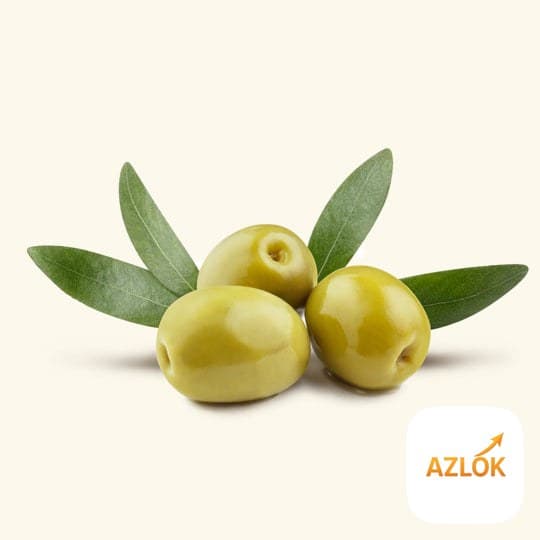

Olive Leaf Extract
Minimum Order: 1 units
Description
Olive Leaf Extract (Olea europaea) from Azlok is a 4:1 concentrated herbal liquid extract derived from olive plant leaves. Available in water-soluble (glycerin-based) and oil-soluble (soy oil-based) variants, it is used at 1–2% in soaps, shampoos, serums, creams, and other personal care formulations.
History & Discovery
Olive leaves (Olea europaea) have been used medicinally in the Mediterranean region for thousands of years. Ancient Egyptians regarded the olive tree as sacred and used leaf preparations for various topical purposes. Mediterranean folk traditions incorporated olive leaf in washes and poultices long before the active compounds were scientifically identified. The leaf, unlike the fruit or oil, contains a higher concentration of polyphenols such as oleuropein, which drew increasing attention from herbal formulators in the 20th century. In India, olive trees are found primarily in Rajasthan and Himachal Pradesh, and the plant—known locally as Jaitoon—has a growing presence in Ayurvedic and Unani traditions. As global interest in Mediterranean botanicals expanded, demand for olive leaf extracts in Indian cosmetic and herbal manufacturing grew steadily. Azlok sources olive leaf raw material and processes the extract domestically in India.
Scientific & Medicinal Importance
Olive leaf extract is standardised around oleuropein, a secoiridoid polyphenol that is the dominant bioactive in Olea europaea leaves. Oleuropein hydrolyses into hydroxytyrosol and elenolic acid, both of which are studied for antioxidant activity. The leaf also contains flavonoids (rutin, luteolin, apigenin) and triterpenes (oleanolic acid, ursolic acid) that are of interest in cosmetic formulation for their skin-conditioning properties. Azlok's Olive Leaf Extract carries a 4:1 herb-to-extract ratio, meaning 4 kg of dried olive leaves are used to produce 1 kg of extract. The water-soluble variant is extracted using vegetable palm glycerin (alcohol-free), making it suitable for water-phase cosmetic applications. The oil-soluble variant uses soy oil as the solvent, suitable for oil-phase applications such as balms and anhydrous creams. BHT (Butylated Hydroxytoluene) is used as a preservative/antioxidant. The extract is free from gluten, artificial colour, and heavy metals, and has a shelf life of two years when stored in a cool, dry place.
Ayurvedic and Traditional Uses
Olive is not one of the classical herbs of Ayurveda, as the tree is native to the Mediterranean rather than the Indian subcontinent. In India, the olive (known as zaitun in Hindi and Urdu) became familiar mainly through the Unani tradition. That tradition draws on Greek and Arab sources and has long valued olive oil for body massage and hair care. The leaf has a much smaller place in Indian traditional texts than the oil. Today, Indian formulators who follow herbal or Ayurveda-inspired approaches often pair olive leaf extract with familiar botanicals such as neem, tulsi or aloe vera in face washes, soaps and creams. It suits leaf-based ingredient stories. As with any extract used in skin products, keep to the suggested level, patch test the finished product and use it externally only.
Modern-Day Applications & Benefits
In the modern personal care and cosmetics industry, olive leaf extract is used as a functional additive in face washes, serums, creams, lotions, soaps, and shampoos. Formulators value it for its polyphenol content, which contributes antioxidant activity to the finished product. At a recommended usage level of 1–2%, it blends well into both water-phase and oil-phase systems depending on the variant chosen. The water-soluble glycerin-based extract is suitable for toners, gel serums, face washes, and water-continuous emulsions. The oil-soluble soy oil-based extract suits balms, solid conditioners, and oil-in-water creams where it is added to the oil phase. Both variants are alcohol-free, which reduces irritation potential in sensitive-skin formulations. Small-batch DIY makers and commercial soap and cosmetic manufacturers in India increasingly use olive leaf extract from suppliers like Azlok to add a botanical narrative and functional polyphenol content to their products.
Why Azlok's Version is Trusted Today
Azlok
Frequently asked questions
What is the recommended usage percentage of Olive Leaf Extract in formulations?
The recommended usage level is 1–2% of the total formulation weight. Adding more than 2% is generally not necessary and may affect the texture or colour of the finished product.
What is the difference between the water-soluble and oil-soluble variants?
The water-soluble variant is extracted using vegetable palm glycerin and mixes into the water phase of formulations (toners, gels, face washes). The oil-soluble variant is extracted in soy oil and is added to the oil phase (balms, creams, body oils). Choose based on your formulation type.
Is Olive Leaf Extract safe to use on sensitive skin?
Both variants are alcohol-free, which reduces irritation risk. However, a patch test on a small area of skin is recommended before full application, especially for sensitive skin. The extract contains BHT as a preservative; if you have a known sensitivity to BHT, consult a dermatologist before use.
Can Olive Leaf Extract be eaten or ingested?
No. Azlok's Olive Leaf Extract is a cosmetic/personal care ingredient, not a food-grade or edible product. It contains BHT as a preservative and is intended for external use only in formulations. Do not ingest.
What is the shelf life and how should it be stored?
The shelf life is 2 years from the date of manufacture. Store in a cool, dry place away from direct sunlight and heat. Keep the container tightly closed and out of reach of children.
Specifications
How to use Olive Leaf Extract
Guides covering uses, dilution, safety and storage.