

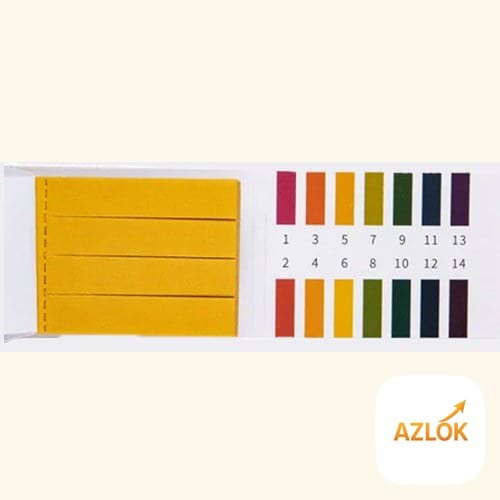

Ph Test Strips - 1-14 Test Indicator
Minimum Order: 1 units
Description
Azlok pH Test Strips measure acidity and alkalinity across the full 1–14 pH range using colour-change litmus paper. Each book contains 80 strips coated with pH-sensitive dyes; simply dip, wait, and compare against the included reference chart. Suitable for testing soap, water, milk, cosmetics, and chemicals. Available in packs of 1 to 20 books.
History & Discovery
pH measurement has been central to chemistry and industry since Søren Sørensen introduced the pH scale in 1909. Early methods relied on bulky glass electrodes; litmus paper — derived from lichen-based dyes — was one of the first practical field tools for gauging acidity or alkalinity. By the mid-20th century, multi-zone indicator strips coated with several dyes were developed, allowing a single strip to distinguish pH values across the full 1–14 range. Today, pH strips remain the most accessible and portable testing method worldwide, used in laboratories, kitchens, farms, and home workshops alike.
Scientific & Medicinal Importance
pH strips work through acid-base indicator dyes impregnated into paper. These dyes are weak acids or bases that change molecular structure — and therefore colour — when hydrogen ion (H⁺) concentration changes. Azlok's 1–14 strips use a combination of indicators so different colour zones correspond to different pH bands. Dipping the strip into a liquid for 1–2 seconds allows the dye to equilibrate with the solution; the resulting colour is then compared to the printed reference chart supplied with each book. Accuracy is typically ±1 pH unit, which is sufficient for most home, soap-making, and DIY cosmetic applications. For highly precise measurements (±0.1), a digital pH meter is recommended.
Modern-Day Applications & Benefits
pH strips have broad modern applications across home and professional settings. In soap making, a finished cold-process soap should ideally read pH 8–10; strips help makers confirm the saponification is complete and the soap is safe for skin. In cosmetics formulation, serums, toners, and creams work best at specific pH ranges (e.g., vitamin C serums at pH 2.5–3.5, skin-care products generally at pH 4.5–6). For water quality, strips can quickly flag highly acidic or alkaline tap or bore water. In small food businesses, milk and fermented products can be spot-checked. Azlok offers these strips in bulk packs (up to 20 books) making them cost-effective for small businesses, cosmetic formulators, and chemistry students.
Why Azlok's Version is Trusted Today
Azlok
Frequently asked questions
How many strips are in one Azlok pH test book?
Each Azlok pH test strip book contains 80 strips, covering the full pH range of 1 to 14.
How do I use these pH strips correctly?
Dip one strip into the liquid for 1–2 seconds, remove it, and immediately compare the colour to the reference chart printed on the book. Read the result within 15 seconds for best accuracy.
Are these strips accurate enough for soap and cosmetic making?
Yes. These strips give ±1 pH unit accuracy, which is adequate for checking soap safety (pH 8–10) and general cosmetic formulation. For pharmaceutical-grade precision, a calibrated digital pH meter is recommended.
Can I test strongly coloured liquids like herbal extracts with these strips?
Coloured liquids can make it difficult to read the strip's colour change accurately. For dark-coloured solutions, consider diluting with distilled water or using a digital pH meter for a reliable reading.
How should I store pH test strips to keep them effective?
Store the strips in a cool, dry place away from direct sunlight, humidity, and chemical fumes. Keep the book sealed when not in use. Exposure to moisture or strong odours can alter the dye and give inaccurate readings.
Specifications
How to use Ph Test Strips - 1-14 Test Indicator
Guides covering uses, dilution, safety and storage.