

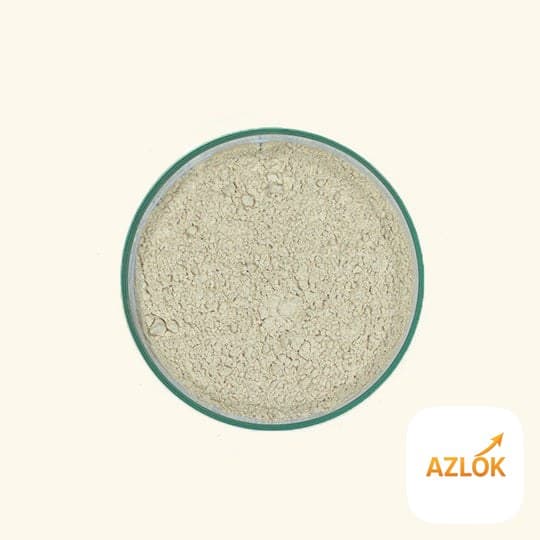

Shatavari Powder
Minimum Order: 1 units
Description
Shatavari Powder is made from the dried roots of Asparagus racemosus, a climbing herb native to India. Used for centuries in Ayurvedic practice, it is valued as an adaptogenic and rejuvenating herb, particularly for women's health. Azlok supplies pure, unadulterated Shatavari root powder in sizes from 100 g to 20 kg.
History & Discovery
Shatavari (Asparagus racemosus) has been used in Indian Ayurvedic medicine for over two thousand years. The Sanskrit name translates roughly to 'she who possesses a hundred husbands', reflecting its traditional reputation as a potent tonic for female reproductive health and vitality. Ancient texts such as the Charaka Samhita and Sushruta Samhita list it among the most important Rasayana (rejuvenating) herbs. The plant is a thorny, climbing shrub native to the forests and grasslands of India, Nepal, and Sri Lanka. Its tuberous roots — the part used medicinally — were harvested seasonally and dried before being ground into a fine powder for consumption.
Scientific & Medicinal Importance
The primary bioactive compounds in Shatavari roots are steroidal saponins collectively called shatavarin (I–IV), along with isoflavones, polysaccharides, and flavonoids such as quercetin and rutin. Shatavarins are believed to be responsible for many of the herb's observed effects on the endocrine and immune systems. The polysaccharides have shown immunomodulatory activity in laboratory studies. Research also indicates antioxidant properties linked to the flavonoid content. Shatavari is classified as an adaptogen, meaning it may help the body manage physiological stress, though large-scale human clinical trials are still limited and more research is needed before definitive medical claims can be made.
Ayurvedic and Traditional Uses
In Ayurveda, Shatavari is classified as a Madhura (sweet) and Tikta (bitter) herb with a cooling potency (Sheeta Virya). It is considered the foremost herb for female health — supporting menstrual regularity, lactation, and menopausal comfort — and is used in formulations to balance Vata and Pitta doshas. It is categorised as a Rasayana, meaning it is believed to promote longevity and overall tissue nourishment (Dhatu Pushti). Ayurvedic practitioners traditionally combine Shatavari powder with warm milk, ghee, or honey. It is also used in formulations for digestive support and to soothe the gastric lining, owing to its Snigdha (unctuous) quality.
Modern-Day Applications & Benefits
Today Shatavari powder is widely used in food supplements, women's health products, Ayurvedic proprietary medicines, and functional foods across India. It is also incorporated into cosmetic and personal care formulations — face masks, hair masks, and creams — for its reported soothing and moisturising properties. In the herbal supplement industry, it is sold as a standalone powder, in capsule form, and blended with other adaptogens. Azlok offers Shatavari powder in bulk sizes (up to 20 kg) suitable for Ayurvedic practitioners, herbal product manufacturers, and wellness brands, as well as smaller packs for home users. Store in a cool, dry place in an airtight container and use within two years of manufacture.
Why Azlok's Version is Trusted Today
Azlok
Frequently asked questions
What is Shatavari powder used for?
Shatavari powder (Asparagus racemosus root powder) is traditionally used in Ayurveda to support female hormonal balance, lactation, and digestive comfort. It is also used in cosmetic formulations for skin and hair. Note that while traditional use is well-documented, consult a qualified healthcare practitioner before using it for any health condition.
How do I consume Shatavari powder?
A common traditional method is to mix 3–5 g (roughly half to one teaspoon) of Shatavari powder in a glass of warm milk, with or without honey or ghee, once or twice daily. Always follow the dosage recommended by your Ayurvedic practitioner.
Is Azlok's Shatavari powder food-grade?
Yes. The product is listed for use in food, cosmetic, and personal care industries. It is made from Asparagus racemosus roots and is suitable for both internal (food supplement) and external (cosmetic) use. Store in a cool, dry place and keep the container sealed after use.
Are there any side effects or contraindications for Shatavari powder?
Shatavari is generally well-tolerated, but individuals with known asparagus allergy should avoid it. People with oestrogen-sensitive conditions should consult a doctor before use. Pregnant and breastfeeding women should take it only under medical supervision. Excessive intake may cause digestive discomfort.
What pack sizes are available and what is the price?
Azlok offers Shatavari powder in 100 g, 500 g, 1 kg, 5 kg, 10 kg, and 20 kg packs, starting at ₹169 for 100 g. Bulk sizes are well-suited for Ayurvedic practitioners, herbal manufacturers, and wellness brands.
Specifications
How to use Shatavari Powder
Guides covering uses, dilution, safety and storage.