

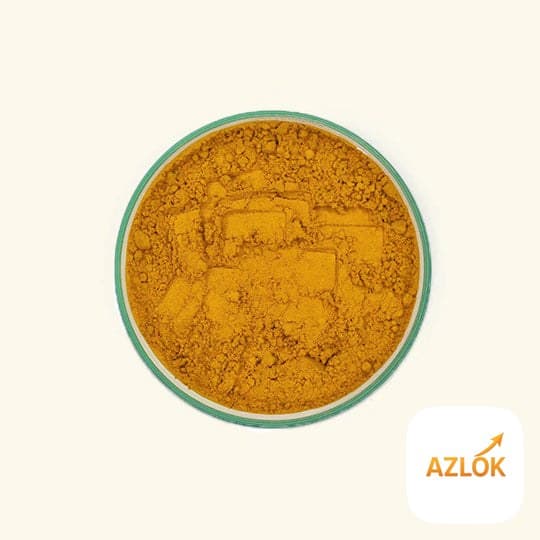
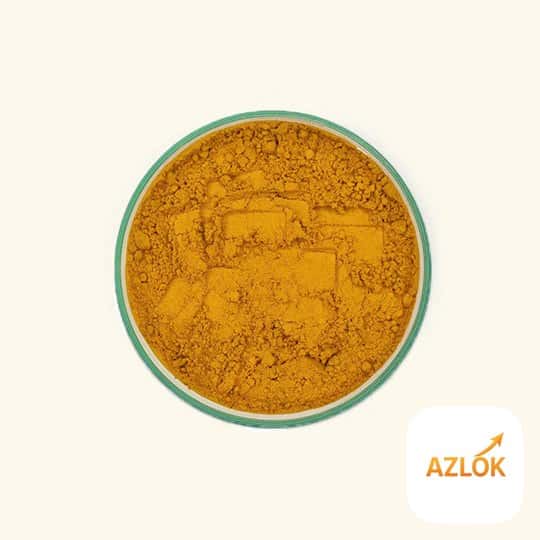
Wild Turmeric Powder
Minimum Order: 1 units
Description
Wild Turmeric Powder (Curcuma aromatica) is a cosmetic-grade herbal ingredient available from Azlok. Unlike common turmeric, it is non-staining and gentle enough for regular skin use.
History & Discovery
Wild turmeric, known botanically as Curcuma aromatica and commonly called Jangli Haldi or Kasturi Manjal in India, has been used in traditional Indian beauty rituals for centuries. It is distinct from the kitchen turmeric (Curcuma longa) and has historically been reserved for topical cosmetic use rather than cooking. In South India, it is a central ingredient in bridal ubtans and pre-bath pastes, prized precisely because it brightens skin without leaving the yellow stain associated with common turmeric. Ancient texts and regional folk traditions reference it as a purifying herb for the skin, and its aromatic quality — owing to a different essential-oil profile — set it apart from its culinary cousin.
Scientific & Medicinal Importance
Wild turmeric powder is made by drying and grinding the rhizomes of Curcuma aromatica, a member of the ginger family (Zingiberaceae). The rhizome is creamy-yellow inside rather than deep orange, so the powder is pale yellow to light cream, with a warm, earthy, slightly camphor-like aroma. This scent comes from the rhizome's volatile oil, which contains sesquiterpenes such as germacrone and curdione. The rest of the powder is mostly starch and plant fibre. Wild turmeric has much less curcumin than kitchen turmeric (Curcuma longa), which is why it leaves far less yellow tint on skin and fabric. The powder is fine and soft, mixes easily with water, rose water, curd or clay, and holds together well in pastes. Store it airtight, away from moisture and light, to retain the aroma. For skin use, patch test first; external use only.
Ayurvedic and Traditional Uses
In Ayurveda, Curcuma aromatica is known as Vana Haridra or Kasturi Haridra and is classified under herbs used for skin care (Tvak prasadana dravyas). Classical texts mention its use in lepa (topical paste) formulations for skin disorders, brightening complexion, and reducing inflammation. It is considered to balance Kapha and Pitta doshas when applied externally. Traditional vaidyas used it in combination with sandalwood, rose water, or milk to prepare ubtans for brides and for general skin cleansing. It is important to note that the Ayurvedic applications are primarily external; it is not a standard culinary spice in classical Ayurvedic cooking recipes.
Modern-Day Applications & Benefits
Today, wild turmeric powder is widely used by cosmetic formulators, home DIY makers, and herbal beauty brands in India and globally. It appears in face packs, ubtans, herbal soaps, bath powders, and skin-brightening creams. Azlok supplies it in cosmetic grade in pack sizes ranging from 100 g to 20 kg, making it accessible to both individual consumers and small manufacturing businesses. When formulating, it blends well with besan (gram flour), sandalwood powder, rose clay, and carrier oils. As with any plant-based cosmetic ingredient, a patch test on a small area of skin is recommended before first use, particularly for people with sensitive skin or known plant allergies. Keep the powder away from eyes, store in a cool dry place, and keep out of reach of children.
Why Azlok's Version is Trusted Today
Azlok
Frequently asked questions
Is wild turmeric (Curcuma aromatica) the same as regular kitchen turmeric?
No. Regular kitchen turmeric is Curcuma longa; wild turmeric is Curcuma aromatica. Wild turmeric has a different chemical profile, a more aromatic scent, and crucially does not stain the skin yellow, making it preferred for cosmetic use.
Can wild turmeric powder be consumed or used in cooking?
The Azlok wild turmeric powder is supplied as cosmetic grade and is intended for topical/external use only. It is not a food-grade product and should not be ingested.
How do I use wild turmeric powder in a face mask at home?
Mix 1–2 teaspoons of wild turmeric powder with besan, rose water, or plain yoghurt to form a paste. Apply to clean skin, leave for 10–15 minutes, then rinse with lukewarm water. Always patch-test first on a small area. Avoid contact with eyes.
Will wild turmeric stain my skin or clothes yellow?
Wild turmeric (Curcuma aromatica) is significantly less staining than common turmeric (Curcuma longa) due to its lower curcumin content. It generally does not leave a lasting yellow stain on skin. However, it may still lightly stain light-coloured fabrics, so use with care.
What pack sizes are available and is it suitable for bulk purchase by small businesses?
Azlok offers wild turmeric powder in 100 g, 500 g, 1 kg, 5 kg, 10 kg, and 20 kg packs, making it practical for both personal use and small-scale cosmetic manufacturing. The shelf life is 2 years when stored in a cool, dry place away from moisture.
Specifications
How to use Wild Turmeric Powder
Guides covering uses, dilution, safety and storage.