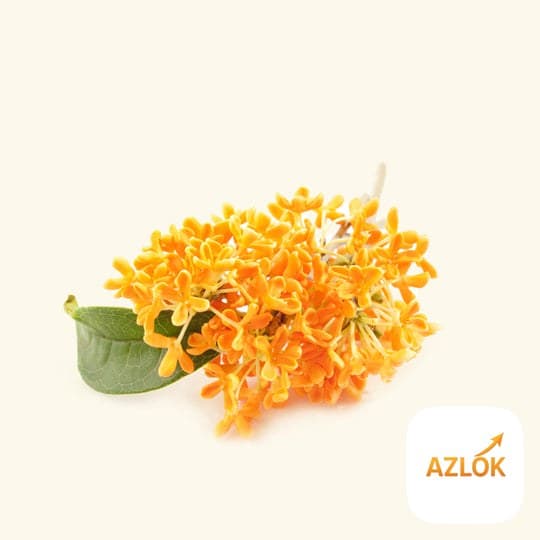
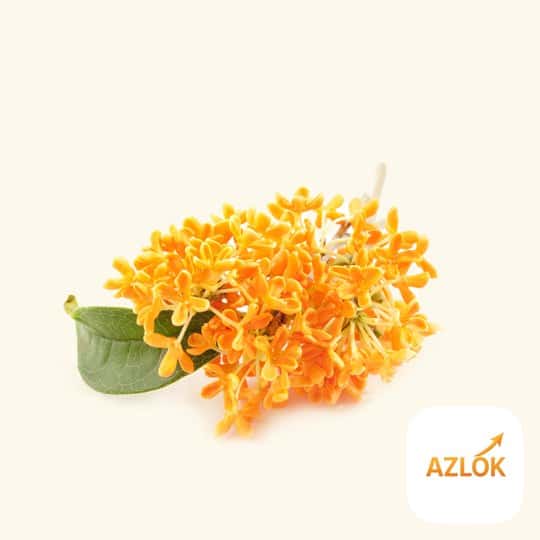
Osmanthus essential oil is a golden-yellow oil steam-distilled from the flowers and leaves of Osmanthus fragrans, prized for its rich, fruity-floral aroma with clear notes of apricot and honey. It is used mainly in natural perfumery, diffusing and diluted skincare blends, and is meant strictly for external use.
What Osmanthus Essential Oil Smells Like
If you have never come across it, imagine a soft floral bouquet wrapped around ripe apricot, with a warm, honeyed sweetness underneath. There is a fresh, herbaceous edge too, which stops the scent from feeling cloying. This complexity is exactly why perfumers reach for osmanthus even in small quantities. A single drop can round out and deepen a blend that would otherwise smell flat.
Common Uses
- Natural perfumery: A prized heart note in floral and fruity accords. It lends body and a luxurious finish.
- Diffusing and aromatherapy: A few drops in a diffuser fill a room with a gentle, mood-lifting floral warmth.
- Skincare blends: Traditionally valued for skin-soothing and anti-ageing appeal when properly diluted in a carrier oil.
- Candles and soaps: Adds a premium, long-lasting floral character to handmade products (check compatibility for your recipe).
- Bath and body oils: A small amount in a carrier oil makes a fragrant, relaxing massage blend.
How to Use It
Osmanthus is potent, so a little goes a long way. Here is a simple approach:
- Always dilute. For skin use, mix 1-2 drops of osmanthus into 10 ml of a carrier oil such as jojoba, almond or coconut. This keeps the concentration gentle.
- Patch test first. Apply the diluted blend to a small area on your inner forearm and wait 24 hours before using it more widely.
- For diffusing, add 3-5 drops to your diffuser with water as per the device instructions.
- For perfumery, blend by the drop and let the mixture rest for a day or two so the notes settle.
Osmanthus blends beautifully with ginger, lemon, lime and linden absolute. Citrus lifts its brightness, while ginger adds a subtle spicy warmth.
Safety Notes
Essential oils are concentrated, so a few sensible precautions matter:
- For external use only. Do not swallow it.
- Never apply undiluted oil directly to skin.
- Avoid direct sunlight on treated skin after topical use.
- Keep the bottle tightly closed and out of reach of children and pets.
- Pregnant or breastfeeding women, and anyone with a medical condition, should consult a doctor before use.
- Store away from open flames; the oil has a flash point of around 100°C.
Buying and Storage Tips
Azlok offers Osmanthus essential oil starting at ₹599, with sizes ranging from 50 gm up to 10 kg, which suits everyone from hobby crafters to small businesses. When buying, look for the product details you would expect: botanical name (Osmanthus fragrans), steam-distilled processing, and a clear golden-yellow transparent liquid.
To protect the aroma and shelf life (about two years), store the oil in a cool, dark place, ideally in a tightly sealed amber bottle. Keep it away from heat and direct light, as both can degrade the delicate floral notes over time. Always close the cap firmly after use to reduce oxidation.
FAQ
Can I apply Osmanthus essential oil directly to my skin?
No. Always dilute it in a carrier oil, usually 1-2 drops per 10 ml, and do a 24-hour patch test before wider use.
What does Osmanthus essential oil smell like?
It has a rich, fruity-floral aroma with notes of apricot and honey, plus a fresh, herbaceous undertone that keeps it from being overly sweet.
Which oils blend well with Osmanthus?
It pairs nicely with ginger, lemon, lime and linden absolute. Citrus brightens it while ginger adds gentle warmth.
How long does Osmanthus essential oil last?
It has a shelf life of about two years when stored correctly, in a cool, dark place with the cap tightly sealed.
Is it safe during pregnancy?
Pregnant and breastfeeding women should consult a doctor before using it, as with most concentrated essential oils.